乐单
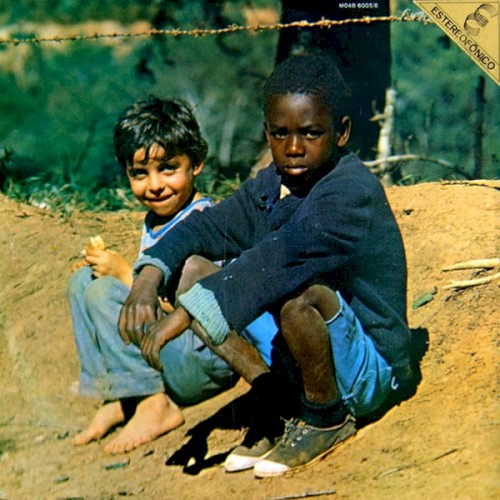
Clube da Esquina (1972)
曲目
第 1 张 · 12" Vinyl
- 1Tudo que você podia ser2:56
- 2Cais2:45
- 3O trem azul4:05
- 4Saídas e bandeiras nº 10:45
- 5Nuvem cigana3:00
- 6Cravo e canela2:32
- 7Dos cruces5:22
- 8Um girassol da côr de seu cabelo4:13
- 9San Vicente2:47
- 10Estrêlas0:29
- 11Clube da Esquina nº 23:39
第 2 张 · 12" Vinyl
- 1Paisagem da janela2:58
- 2Me deixa em paz3:05
- 3Os povos4:30
- 4Saídas e bandeiras nº 21:30
- 5Um gôsto de Sol4:20
- 6Pelo amor de Deus2:06
- 7Lilia2:33
- 8Trem de doido3:58
- 9Nada será como antes3:23
- 10Ao que vai nascer3:20
21 首 · 约 64 分钟 · 依据 1972 BR 发行的版本,在 MusicBrainz 看这个版本。
介绍
这个词条没有中文维基百科条目,下面是英文维基百科的原文。
Clube da Esquina (Brazilian Portuguese pronunciation: [ˈklubi dɐjsˈkinɐ], in English "Corner Club") is a collaborative album by Brazilian musicians Milton Nascimento and Lô Borges, released as a double album in March 1972 by EMI-Odeon Records. It was Nascimento's fifth studio album and Lô's first, after which the latter pursued a solo career. The duo recorded the album in November 1971 at Piratininga Beach in Niterói and Odeon Studios in Rio de Janeiro, where they collaborated with musicians from the eponymous musical collective, which they helped to establish.
Musically, Clube da Esquina features a mixture of MPB, baroque pop, folk and jazz pop with elements of rock, psychedelia and classical music. Conceived at a time of political tension during Brazil's military dictatorship, it explores themes of friendship, liberty and youth. The cover, photographed by Carlos da Silva Assunção Filho, better known as Cafi, shows two boys, Cacau and Tonho, on a dirt road near Nova Friburgo, in the mountains of Rio de Janeiro, close to where Nascimento's adoptive parents lived.
Clube da Esquina initially received negative reviews from contemporary Brazilian critics, who viewed it as "poor and disposable" and did not understand the album's mixture of genres and influences. It was nevertheless commercially successful in Brazil and abroad. With the help of word of mouth and changing critical perceptions, it retrospectively received acclaim. Featured in the reference book 1001 Albums You Must Hear Before You Die (2010), Clube da Esquina was named the Greatest Brazilian Album of All Time by the Discoteca Básica podcast in 2022, with Paste ranking it as the ninth greatest album of all time in 2024.
Following its release, a sequel, Clube da Esquina 2, was released in 1978, expanding the original's collective discography, incorporating a broader range of collaborations. While sung mostly by Milton Nascimento, the album saw reduced involvement from Lô Borges and included contributions from various artists such as Elis Regina, Chico Buarque, and Francis Hime.
Background
The Clube da Esquina musical collective originated in the 1960s at the corner of Divinópolis and Paraisópolis streets in Belo Horizonte, Minas Gerais, where Milton Nascimento and the Borges brothers—Lô Borges, Márcio Borges, and Marilton Borges—began collaborating. Nascimento moved to Belo Horizonte, the capital of Minas Gerais, in 1963 to study and work, meeting the Borges brothers at the Levy Building. He had left his hometown, Três Pontas, where he played in the band W's Boys with pianist Wagner Tiso, and performed at night with Marilton in the group Evolussamba.
When Lô was just ten years old, his mother asked him to go and buy eggs and milk. When he got to the street, Lô encountered a young man in his twenties playing the guitar,—Milton Nascimento. Intrigued, he approached him, leading to a connection. Nascimento would often visit Lô's home to introduce and teach him guitar and composition. A few months later, Lô met Beto Guedes, another future member of the collective, after noticing him riding a scooter through the streets. As Nascimento's career gained momentum—particularly after Elis Regina recorded his song "Canção do sal"—his collaborations with the Borges brothers and other local musicians laid the foundation for Clube da Esquina.
Recording and production
Clube da Esquina was mostly recorded in the beach house of Piratininga, in the district of Mar Azul, Niterói, where long creative sessions and rehearsals took place, during which recordings were made in November 1971. The group stayed there for six months, while the final recordings took place both in Santa Tereza and in the bars of the city center or at the Borges brothers' house, as well as at Odeon Records' studio in Rio de Janeiro. Odeon Studios gave the Clube da Esquina collective several weeks to record, with long sessions spanning entire days and evenings, marked by an intense collaboration between the musicians, with lots of improvisation and experimentation.
The musicians alternated between roles, with Beto Guedes being the most active in the production of the album, playing 17 out of the 21 tracks, switching between bass and drums. Nascimento had selected the choosing on who would write the lyrics of each song according to his personal criterion. Márcio Borges and Fernando Brant worked on the lyrics, while musicians like Toninho Horta developed musical ideas. Orchestrations were handled primarily by Eumir Deodato and Wagner Tiso. During the recording at Odeon Studios, the album was recorded in two channels; one dedicated to vocals and the other to instruments.
正文摘自英文维基百科「Clube da Esquina (album)」,按 CC BY-SA 4.0 使用;删去了参考文献、外部链接、表格和图片;篇幅所限只节选了前面一部分,全文见原条目。
资料卡
- 作品性质
- 音乐专辑
- 表演者
- Clube da Esquina
- 发行日期
- 1972 年 3 月
- 流派
- 巴西全域音乐、迷幻摇滚、交响摇滚
- 唱片公司
- 奥迪恩唱片公司
- 下一部
- Milagre dos peixes
资料来自 Wikidata Q18244395(CC0)。
制作名单
- 厂牌
- Odeon(目录号 MOAB 6005/6)
演奏与演唱
- 主唱
- Milton Nascimento(其中 8 首)、Lô Borges(第 3、6、8、10 首)、Beto Guedes(第 4 首)
- 风琴
- Wagner Tiso(第 1、2、3、8、11 首)
- 鼓
- Rubinho(第 4、5、7、8、9 首)、Roberto Silva(第 1、3、6、11 首)
- 贝斯
- Beto Guedes(第 1、3、4、8 首)、Toninho Horta(第 5、7 首)、Luiz Alves(第 6、11 首)
- 原声吉他
- Milton Nascimento(第 2、4、7、11 首)、Lô Borges(第 1、10 首)、Tavito(第 7、9 首)、Toninho Horta(第 6 首)
- 打击乐
- Roberto Silva(第 2、6、7、9 首)、Luiz Alves(第 6、7、9 首)、Toninho Horta(第 2、4 首)、Beto Guedes(第 6、7 首)、Nelson Angelo(第 7、9 首)、Lô Borges(第 4 首)、Paulinho Braga(第 9 首)
- 原声贝斯
- Luiz Alves(第 2、5、7 首)
- 和声
- Beto Guedes(第 3、8、10 首)、Toninho Horta(第 3、8、10 首)、Lô Borges(第 3、8 首)、O Povo(第 7 首)、Gonzaguinha(第 10 首)、Milton Nascimento(第 10 首)、Roberto Silva(第 10 首)、Wagner Tiso(第 10 首)
- 电吉他
- Nelson Angelo(第 4、8、11 首)、Lô Borges(第 5、9、11 首)、Toninho Horta(第 1、3 首)、Tavito(第 6、8 首)、Beto Guedes(第 7 首)
- 指挥
- Paulo Moura(第 8、10、11 首)
- 钢琴
- Milton Nascimento(第 2、5 首)、Wagner Tiso(第 6、9 首)、Lô Borges(第 8 首)
- caxixi
- Luiz Alves(第 1 首)
- 康加鼓
- Rubinho(第 1 首)
- 十二弦吉他
- Tavito(第 1 首)、Beto Guedes(第 5 首)
- 吉他
- Lô Borges(第 3 首)
- 苏尔多鼓
- Lô Borges(第 6 首)
- carillon
- Beto Guedes(第 9 首)
- 演唱
- Tavito(第 9 首)
- 人声
- Milton Nascimento(第 11 首)
词曲与编曲
- 作曲
- Lô Borges(第 1、3、5、8、10、11 首)、Márcio Borges(第 1、8、10、11 首)、Ronaldo Bastos(第 2、3、5、6 首)、Milton Nascimento(第 2、4、9、11 首)、Fernando Brant(第 4、9 首)、Carmelo Larrea(第 7 首)
- 编曲
- 犹米勒·德奥达托(第 8、10、11 首)
- 配器
- Wagner Tiso(第 5 首)
- 作词
- Milton Nascimento(第 6 首)、Carmelo Larrea(第 7 首)、Fernando Brant(第 9 首)
名单来自 MusicBrainz(CC0)这一发行版本的关系数据,由志愿者录入,不一定齐全。
更多资料与乐评
在哪听
相似的专辑


同在 1972 年发行