乐单

曲目
- A1Ponta de lança africano (Umbabarauma)3:52
- A2Hermes Trismegisto escreveu3:03
- A3O filósofo3:27
- A4Meus filhos, meu tesouro3:53
- A5O plebeu3:08
- A6Taj Mahal3:09
- B1Xica da Silva4:05
- B2A história de Jorge3:50
- B3Camisa 10 da Gávea4:05
- B4Cavaleiro do cavalo imaculado4:46
- B5África Brasil (Zumbi)3:47
11 首 · 约 41 分钟 · 依据 1976 BR 发行的版本,在 MusicBrainz 看这个版本。
介绍
这个词条没有中文维基百科条目,下面是英文维基百科的原文。
África Brasil is a studio album by Brazilian singer-songwriter and guitarist Jorge Ben. It was released in 1976 by Philips Records. The album was recorded in ten days at Phonogram Studios in Rio de Janeiro with a large ensemble of musicians, including Ben's backing band Admiral Jorge V. During these sessions, Ben adopted the electric guitar in place of the acoustic guitar that had been central to his earlier recordings.
Musically, the album blends MPB, samba-funk, samba-rock and soul with Afro-Brazilian percussion. Its lyrics include references to football, love, childhood and Afro-Brazilian cultural themes. Upon release, África Brasil received critical acclaim, with reviewers noting its blend of genres. Featured in the reference book 1001 Albums You Must Hear Before You Die (2005), the album was ranked 22nd place in Rolling Stone's list of the 50 best albums of all time.
Background
Jorge Ben began his professional recording career with Philips Records in 1963, when the label released his debut album Samba Esquema Novo. The record blended Afro-Brazilian heritage with global African-American music. After the album's success, Philips encouraged Ben to record additional albums in a similar style, leading to the release of three albums within 18 months. The series' musical style was described by Robert Leaver as "a modern, urban take on samba infused with other Afro-Brazilian rhythms", which "made him popular with the youth". After leaving Philips in the mid-1960s, Ben briefly worked as an independent artist. His only album during this period, O Bidú: Silêncio no Brooklin, was released in 1967 by an independent label and had limited commercial impact. The record nevertheless renewed industry interest in Ben, and in 1969 he re-signed with Philips under the leadership of executive André Midani. From 1969 onwards, Ben released a series of albums for Philips throughout the 1970s.
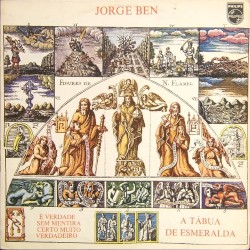
Since the beginning of Ben's professional musical career, when he was already moving away from the bossa nova arrangements that were popular in the Brazilian music scene at the time, Ben incorporated strongly syncopated elements of Afro-Brazilian popular music into his work, blending them with influences from American funk and rhythm and blues. Ben's pre-África Brasil work had long been characterized by riff-driven structures, rhythmic precision, and the use of percussion to create distinctive, danceable grooves. Alongside the strong influence of African-American music on his early albums, his work began to gain more visibility and has been cited by critics as an early influence on what later became known as samba rock—a subgenre defined by the fusion of Black popular music from Brazil and the United States, which scholars have associated closely with Ben's work. After his 1974 album A Tábua de Esmeralda and his live collaboration with Gilberto Gil, Gil e Jorge (1975), Ben set aside the acoustic guitar in favor of the electric guitar.
Recording and production
África Brasil was recorded at Phonogram Studios in Rio de Janeiro over the course of ten days. According to Okayplayer journalist Greg Caz the album reflected musical directions that Jorge Ben had been developing in earlier work, describing it as "something Jorge had been building toward for some time". For the sessions, Ben assembled an expanded group of musicians at Philips' new 16-track studios in Barra da Tijuca, Rio de Janeiro, including his band Admiral Jorge V, originally a four-member group, with fourteen additional instrumentalists and five backing vocalists. During the recording process, Ben decided to replace his acoustic guitar with an electric guitar, influenced by Dadi Carvalho, a former member of Novos Baianos. This change took place after a trip to London, where Carvalho acquired an Ibanez guitar that caught Ben's attention. They eventually swapped instruments: Ben kept Carvalho's guitar, while Carvalho received Ben's Fender Precision Bass.
正文摘自英文维基百科「África Brasil」,按 CC BY-SA 4.0 使用;删去了参考文献、外部链接、表格和图片;篇幅所限只节选了前面一部分,全文见原条目。
资料卡
- 作品性质
- 音乐专辑
- 表演者
- 乔治·宾
- 发行日期
- 1976 年 9 月 23 日
- 流派
- 巴西全域音乐、放克、samba rock
- 语言
- 葡萄牙语
- 唱片公司
- 飞利浦唱片
资料来自 Wikidata Q1412463(CC0)。
制作名单
- 厂牌
- Philips(目录号 6349 187)
词曲与编曲
- 作曲
- 乔治·宾
- 词曲
- 乔治·宾(其中 7 首)
- 作词
- 乔治·宾(第 A1、A6 首)
名单来自 MusicBrainz(CC0)这一发行版本的关系数据,由志愿者录入,不一定齐全。
更多资料与乐评
在哪听
乔治·宾 的其他专辑
艺人页 ›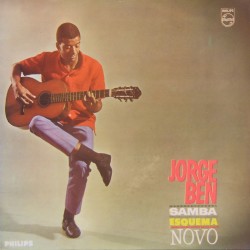



相似的专辑


同在 1976 年发行