乐单
曲目
- 1Return of the Grievous Angel4:19
- 2Hearts on Fire3:50
- 3I Can’t Dance2:20
- 4Brass Buttons3:27
- 5$1000 Wedding5:00
- 6Medley: Cash on the Barrelhead / Hickory Wind (live)6:27
- 7Love Hurts3:40
- 8Ooh Las Vegas3:29
- 9In My Hour of Darkness3:42
9 首 · 约 36 分钟 · 依据 1974-01 US 发行的版本,在 MusicBrainz 看这个版本。
介绍
这个词条没有中文维基百科条目,下面是英文维基百科的原文。
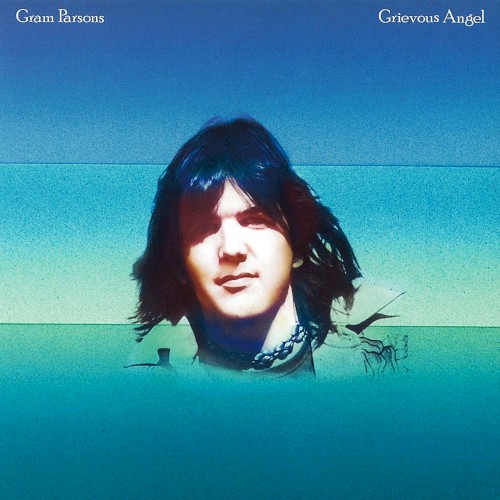
Grievous Angel is the second and final solo studio album by Gram Parsons, compiled from summer 1973 sessions and released four months after his death from a morphine and alcohol overdose in September 1973. Prominently featuring a young Emmylou Harris, Grievous Angel received great critical acclaim upon release but failed to find commercial success, a fate shared with Parsons’ previous efforts solo and with The Flying Burrito Brothers. Grievous Angel peaked at number 195 on the Billboard charts. Despite its modest sales, it is viewed as a successful example of the hybrid between country and rock and roll Parsons called "Cosmic American Music".
It was voted number 324 in the third edition of Colin Larkin's All Time Top 1000 Albums (2000). In 2012, the album was ranked number 425 on Rolling Stone magazine's list of the 500 greatest albums of all time.
Background
After a ramshackle tour in the spring and summer of 1973, Gram Parsons again convened with his singing partner Emmylou Harris, various members of Elvis Presley's "Taking Care of Business" band, including James Burton and Glen Hardin and the occasional guest (such as Bernie Leadon and Linda Ronstadt) to record his second solo album for Reprise Records. Unlike his previous album GP, Grievous Angel was a planned affair with several arrangements having been worked out on the road.
Recording and composition
The sessions for Grievous Angel took place at Wally Heider Studio 4 in Hollywood with Parsons producing. In a 2013 Uncut cover story about Parsons' solo work, acoustic guitarist Herb Pedersen recalls to David Cavanagh that when the singer showed up he was a mess: "He came in late. Emmy brought him to the studio. She was kind of minding him. We'd already tracked four or five tunes, and he was not in any kind of shape to record with us. He was generally out of it for the most part."
Parsons, who was battling heroin addiction and alcoholism, would rally, however, with bassist Emory Gordy recalling in David N. Meyers' 2007 Parsons biography Twenty Thousand Roads, "Gram played us each of the songs that he had ready...We took it from there. It was loose as far as formal arranging was concerned – we played what we thought was right for the song, and it all seemed to fall together...He was in good shape, Gram. There was a lot of energy going on in the studio for the whole of that album. Gram was bouncing all over the place and Emmy was bouncing around him. They were great, happy sessions."
In the 2004 documentary Fallen Angel, however, manager Phil Kaufman claims Parsons was still drinking like he had been during the recording of GP, "but not as bad. He was hiding what he was doing. In other words, before he was more blatant in his drinking and his drugs."
Lacking much-needed new material, Parsons quickly wrote two songs during the sessions ("Return of the Grievous Angel", with lyrics by Boston-based poet and Parsons fan Thomas Brown, and "In My Hour Of Darkness", arranged by Harris) and looked to songs rejected from previous albums and to standard country songs to fill out the LP. In regards to the original material, "Brass Buttons" dated from Parsons' brief stint as a Harvard-based folksinger in the mid-1960s; "Hickory Wind" had already been recorded with The Byrds; "$1000 Wedding", about Parsons' aborted plan to wed the mother of his daughter in ostentatious style, had been recorded with the Flying Burrito Brothers circa 1970; "Ooh Las Vegas" had been rejected from GP. "Medley Live from Northern Quebec" is a fake live recording featuring canned applause and ersatz concert ambiance which combines the Louvin Brothers's "Cash on the Barrelhead" with his own "Hickory Wind". Writing in Twenty Thousand Roads, David Meyers praises Harris' increased role on the album, noting that the duet "Love Hurts" contains "a lovely high whine, a mourning, keening reach for the suffering in the song. Neither overdoes it – they feel the pain, they show it to us, they make us feel every bit, but never go too far. Their sustain on the final 'love hurts' demonstrates how far they'd come together in emotion and technique."
In spite of the dearth of new material, the album expanded the format of "Cosmic American Music". After mixing the album at Capitol Studios in Hollywood, Parsons set off for Joshua Tree, California, where he would fatally overdose on September 19, 1973, officially declared deceased in nearby Yucca Valley.
正文摘自英文维基百科「Grievous Angel」,按 CC BY-SA 4.0 使用;删去了参考文献、外部链接、表格和图片;篇幅所限只节选了前面一部分,全文见原条目。
资料卡
- 作品性质
- 音乐专辑
- 表演者
- 格兰·帕森斯
- 发行日期
- 1974 年 1 月
- 流派
- 乡村摇滚
- 唱片公司
- 重复唱片
- 制作人
- 格兰·帕森斯
资料来自 Wikidata Q573404(CC0)。
制作名单
- 厂牌
- Reprise Records(目录号 MS-2171)
制作
- 工程师
- Hugh Davies(其中 8 首)
- 混音
- Hugh Davies(其中 8 首)
- 制作人
- 格兰·帕森斯(其中 8 首)
演奏与演唱
- 电吉他
- James Burton(其中 8 首)、Bernie Leadon(第 2 首)、Herb Pedersen(第 3 首)
- 钢琴
- Glen D. Hardin(其中 8 首)
- 原声吉他
- 格兰·帕森斯(其中 8 首)、Herb Pedersen、Bernie Leadon(第 1 首)
- 踏板钢棒吉他
- Al Perkins(其中 8 首)
- 演唱
- 爱美萝·哈里斯(其中 8 首)
- 主唱
- 格兰·帕森斯(其中 8 首)
- 鼓类乐器
- Ron Tutt(第 1、3 首)
- 贝斯
- Emory Gordy(其中 8 首)
- 鼓
- Ron Tutt(第 2、4、5、7、8、9 首)、N.D. Smart II(第 2、9 首)
- 小提琴(民间)
- Byron Berline(第 1、9 首)
- 颤音琴
- Steve Snyder(第 2 首)
- 曼陀林
- Byron Berline(第 6 首)
- 和声
- Kim Fowley(第 6 首)、Phil Kaufman(第 6 首)、Ed Tickner(第 6 首)、琳达·罗什塔(第 9 首)
- 吉他
- Herb Pedersen(第 7 首)
- 共鸣吉他
- Bernie Leadon(第 9 首)
词曲与编曲
- 作曲
- 格兰·帕森斯(第 1、4、5、6、8、9 首)、Tom S. Brown(第 1 首)、Walter Egan(第 2 首)、Tom Guidera(第 2 首)、汤姆·霍尔(第 3 首)、Bob Buchanan(第 6 首)、Boudleaux Bryant(第 7 首)、Ric Grech(第 8 首)、爱美萝·哈里斯(第 9 首)
- 作词
- 格兰·帕森斯(第 1、5 首)、Tom S. Brown(第 1 首)、汤姆·霍尔(第 3 首)、Boudleaux Bryant(第 7 首)
- 词曲
- Charlie Louvin(第 6 首)、Ira Louvin(第 6 首)
包装与设计
- 摄影
- Ginny Winn
名单来自 MusicBrainz(CC0)这一发行版本的关系数据,由志愿者录入,不一定齐全。
更多资料与乐评
在哪听
格兰·帕森斯 的其他专辑
艺人页 ›
相似的专辑
同在 1974 年发行