乐单
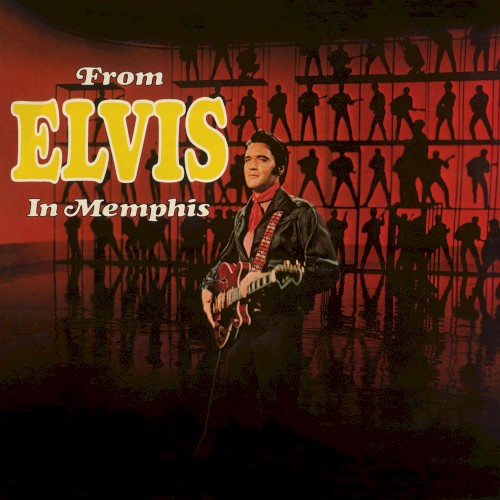
From Elvis in Memphis (1969)
滚石 500(2020) #322滚石 500(2003) #1901001 张专辑
- 艺人
- 埃尔维斯·普雷斯利
- 发行
- 1969-06-17
- 类型
- 专辑
- 唱片公司
- RCA Victor
- 版本
- MusicBrainz 上有 20 个发行版本
曲目
- 1Wearin’ That Loved on Look2:41
- 2Only the Strong Survive2:45
- 3I’ll Hold You in My Heart (Till I Can Hold You in My Arms)4:31
- 4Long Black Limousine3:41
- 5It Keeps Right On a-Hurtin’2:35
- 6I’m Movin’ On2:50
- 7Power of My Love2:35
- 8Gentle on My Mind3:20
- 9After Loving You3:05
- 10True Love Travels on a Gravel Road2:37
- 11Any Day Now2:55
- 12In the Ghetto2:44
12 首 · 约 36 分钟 · 依据 1969-06-17 US 发行的版本,在 MusicBrainz 看这个版本。
介绍
这个词条没有中文维基百科条目,下面是英文维基百科的原文。
From Elvis in Memphis is the tenth studio album by American singer Elvis Presley. It was released by RCA Records on June 2, 1969. It was recorded at American Sound Studio in Memphis in January and February 1969 under the direction of producer Chips Moman and backed by its house band, informally known as the Memphis Boys. Following the success of Presley's TV special Elvis and its soundtrack, the album marked Presley's return to non-soundtrack albums after the completion of his film contract with Metro-Goldwyn-Mayer (MGM).
Presley's entourage convinced him to leave the RCA studios and record this album at American Sound, a Memphis studio at the peak of a hit-producing streak. The reason was for the southern soul sound of the aforementioned group going by the name of Memphis Boys. The predominance of country songs among those recorded in these sessions gave them the feel of the "country soul" style. This impression was emphasized by the frequent use of the dobro in the arrangements.
From Elvis in Memphis was released in June 1969 to favorable reviews and attracted international attention. It reached number 13 on the Billboard 200, number two on the country charts and number one in the United Kingdom, and its single "In the Ghetto" reached number three on the Billboard Hot 100. It was certified gold by the Recording Industry Association of America (RIAA) in 1970. In later years, it garnered further favorable reviews, which included the release being ranked number 190 on Rolling Stone's 2003 list of the 500 greatest albums of all time.
Background
In 1960, after Presley returned from military service, his manager, Colonel Tom Parker, shifted the direction of his career from live performances and studio recordings to acting in motion pictures and recording their accompanying soundtracks. In March 1961, Presley performed his last live concert for eight years: a benefit for the construction of the USS Arizona Memorial at Bloch Arena in Pearl Harbor, Hawaii. During the first half of the 1960s, three of Presley's soundtrack albums reached number one on the pop charts and a number of his most popular songs were from his films, including "Can't Help Falling in Love" (1961) and "Return to Sender" (1962).
After 1964, Parker decided that Presley should only record soundtrack albums. He viewed the films and soundtracks as complementary, with each helping to promote the other. However, as the quality and commercial success of his films and soundtracks steadily diminished, Presley became increasingly disappointed and frustrated with the quality of his work. From 1964 to 1968, Presley had just one top-ten hit: "Crying in the Chapel" (1965), a gospel song recorded in 1960. During this period, only one album of new material by Presley was issued: the gospel collection How Great Thou Art (1967), which won Presley his first Grammy Award for Best Sacred Performance.
In 1968, Parker arranged a deal with NBC for a Christmas television special starring Presley in front of a live audience. Parker originally planned to have Presley sing Christmas carols only, but the producer, Steve Binder, convinced Presley to perform songs from his original repertoire. The high ratings received by the NBC special and its accompanying RCA Victor LP re-established Presley's popularity. During the making of the special, Presley said to Binder: "I'll never sing another song that I don't believe in, I'm never going to make another movie that I don't believe in." As part of his decision to concentrate on music rather than films, Presley decided to record a new album.
Recording
Presley left his usual musicians and studios (Radio Recorders in Hollywood, California and RCA Studio B in Nashville, Tennessee), recording new material in Memphis. After the special he approached Scotty Moore and D. J. Fontana, who had played with Presley during his early hit-making career, and who rejoined him on the television show. Presley asked Moore about using Music City Recorders in Nashville, but that suggestion never came to fruition.
During a January 1969 meeting at Graceland, Presley told RCA Victor producer, Felton Jarvis, that he did not want to record his next album at RCA Studios. Two of Presley's friends, DJ George Klein and Marty Lacker, suggested that he use American Sound Studio, an up-and-coming studio with which Lacker was involved. RCA contacted the studio's producer Chips Moman. Willing to work with Presley, Moman postponed a session with Neil Diamond after being asked to produce the sessions with Felton Jarvis as second producer. It was agreed that Presley's recordings would take ten days and cost $25,000. He would be backed by the studio's house band, the 827 Thomas Street Band (informally known as the Memphis Boys), which consisted of Reggie Young on guitar, Tommy Cogbill and Mike Leech on bass, Gene Chrisman on drums, Bobby Wood on piano, and Bobby Emmons on organ.
正文摘自英文维基百科「From Elvis in Memphis」,按 CC BY-SA 4.0 使用;删去了参考文献、外部链接、表格和图片;篇幅所限只节选了前面一部分,全文见原条目。
资料卡
- 作品性质
- 音乐专辑
- 表演者
- 埃尔维斯·普雷斯利
- 发行日期
- 1969 年 6 月 17 日
- 流派
- 摇滚
- 语言
- 英语
- 唱片公司
- RCA Victor
资料来自 Wikidata Q1004072(CC0)。
制作名单
- 厂牌
- RCA Victor(目录号 LSP-4155)
- 录音室
- 录音:American Sound Studio(Memphis)
制作
- 工程师
- Al Pachucki(第 3、12 首)
- 制作人
- Felton Jarvis(第 3、12 首)、Chips Moman(第 3、12 首)
演奏与演唱
- 圆号
- Tony Cason(第 6、12 首)、Joe D'Gerolamo(第 6、12 首)
- 鼓
- Gene Chrisman(第 6、12 首)
- 贝斯
- Tommy Cogbill(第 6、12 首)、Mike Leech(第 6、12 首)
- 风琴
- Bobby Emmons(第 6、12 首)
- 长号
- Jack Hale(第 6、12 首)、Ed Logan(第 6、12 首)、Gerald Richardson(第 6、12 首)
- 钢棒吉他
- John Hughey(第 6、12 首)
- 小号
- Wayne Jackson(第 6、12 首)、Dick Steff(第 6、12 首)、R.F. Taylor(第 6、12 首)
- 口琴
- Ed Kollis(第 6、12 首)
- 萨克斯
- J.P. Luper(第 6、12 首)、Glen Spreen(第 6、12 首)
- 吉他
- 埃尔维斯·普雷斯利(第 6、12 首)、Reggie Young(第 6、12 首)
- 钢琴
- Bobby Wood(第 6、12 首)、埃尔维斯·普雷斯利(第 3 首)
- 演唱
- Joe Babcock(第 6、12 首)、Dolores Edgin(第 6、12 首)、Donna Jean Godchaux(第 6、12 首)、Jeannie Greene(第 6、12 首)、Ginger Holladay(第 6、12 首)、Mary Holladay(第 6、12 首)、Millie Kirkham(第 6、12 首)、June Page(第 6、12 首)、Susan Pilkington(第 6、12 首)、Sandy Posey(第 6、12 首)、Hurshel Wiginton(第 6、12 首)
词曲与编曲
- 词曲
- Dallas Frazier(第 1、10 首)、Arthur Leo “Doodle” Owens(第 1、10 首)、Jerry Butler(第 2 首)、Kenneth Gamble(第 2 首)、Leon Huff(第 2 首)、Bobby George(第 4 首)、Vern Stovall(第 4 首)、Bernie Baum(第 7 首)、Bill Giant(第 7 首)、Florence Kaye(第 7 首)、Johnny Lantz(第 9 首)、Eddie Miller(第 9 首)
- 作曲
- Eddy Arnold(第 3 首)、Thomas C. Dilbeck(第 3 首)、Howard Horton(第 3 首)、约翰尼·蒂洛森(第 5 首)、Hank Snow(第 6 首)、John Hartford(第 8 首)、伯特·巴卡拉克(第 11 首)
- 作词
- Eddy Arnold(第 3 首)、Thomas C. Dilbeck(第 3 首)、Howard Horton(第 3 首)、约翰尼·蒂洛森(第 5 首)、Hank Snow(第 6 首)、John Hartford(第 8 首)、Bob Hilliard(第 11 首)
名单来自 MusicBrainz(CC0)这一发行版本的关系数据,由志愿者录入,不一定齐全,人数太多只列了前面一部分。
更多资料与乐评
在哪听
埃尔维斯·普雷斯利 的其他专辑
艺人页 ›

相似的专辑
同在 1969 年发行