乐单
曲目
- A1Walk On2:43
- A2See the Sky About to Rain5:02
- A3Revolution Blues4:04
- A4For the Turnstiles3:15
- A5Vampire Blues4:15
- B1On the Beach6:59
- B2Motion Pictures4:24
- B3Ambulance Blues8:56
8 首 · 约 40 分钟 · 依据 1974-07-19 US 发行的版本,在 MusicBrainz 看这个版本。
介绍
这个词条没有中文维基百科条目,下面是英文维基百科的原文。
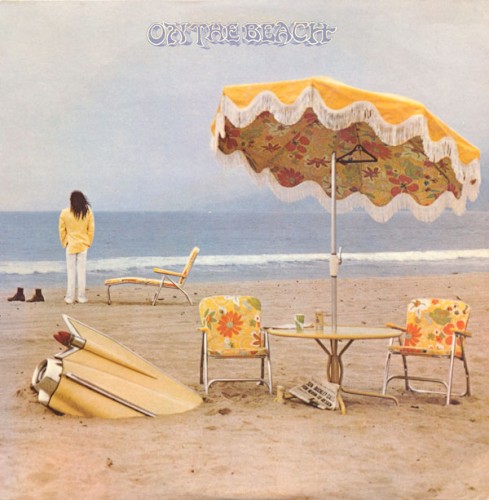
On the Beach is the fifth studio album by Canadian-American musician Neil Young, released by Reprise Records in July 1974. It is the second of the so-called "Ditch Trilogy" that Young recorded following the massive success of 1972's Harvest, and expresses feelings of over-exposure, alienation and melancholy.
Background
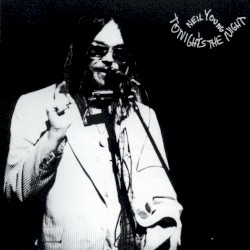
Looking back on the album for the liner notes to the Decade box set, Young wrote of "Heart of Gold": "This song put me in the middle of the road. Traveling there soon became a bore, so I headed for the ditch. A rougher ride but I saw more interesting people there." Recorded after (but released before) Tonight's the Night, On the Beach shares some of that album's bleakness and crude production — which came as a shock to fans and critics alike, as this was the long-awaited studio follow-up to the commercially and critically successful Harvest. It hinted towards a more subtle outlook, particularly on the opening track, "Walk On".
As happened with Tonight's the Night, On the Beach under-performed commercially but went on to attain high regard from fans and critics alike. Both albums were recorded in a haphazard manner, with a variety of session musicians often changing their instruments while Young offered basic arrangements for them to follow. He chose rough, monitor mixes of songs rather than a more polished sound, alienating his sound engineers in the process. Throughout the recording process, Young and his colleagues consumed a homemade concoction dubbed "honey slides", a goop of sauteed marijuana and honey that "felt like heroin", at the behest of session musician and de facto producer Rusty Kershaw. This may account for the mellow mood of the album, particularly on its second half.
While the original Rolling Stone review described On the Beach as "one of the most despairing albums of the decade", later critics, including Allmusic's William Ruhlmann, used the benefit of hindsight to conclude that Young was in fact "saying goodbye to despair, not being overwhelmed by it". Neil Young concluded: "Good album. One side of it particularly — the side with 'Ambulance Blues', 'Motion Pictures' and 'On the Beach'. It's out there. It's a great take."
Writing
On the Beach is a folk rock album exploring themes of anger, alienation, and cautious optimism. "Walk On", the album's opener, has Young combining his melancholy outlook with a wish to move on and keep living. In the liner notes to Decade, Young describes the song as: "My over defensive reaction to criticisms of Tonight's The Night and the seemingly endless flow of money coming from you people out there." The social commentary "See the Sky About to Rain" dates from Harvest. It had been covered by the Byrds a year earlier on their eponymous reunion album.
"Revolution Blues" was inspired by the criminal cult leader Charles Manson, whom Young had met when he lived in Topanga Canyon, about six months before the Tate–LaBianca murders. In a 1985 interview, Young said they had met through the musician Dennis Wilson, and that Manson had wanted him to introduce him to the record executive Mo Ostin to help him record music. Young said: "Musically I thought he was very unique. I thought he really had something crazy, something great. He was like a living poet... But I think he was very frustrated in not being able to get it, and he blamed somebody." Young's bandmates objected to playing "Revolution Blues" live. Young said: "It's just a fuckin' song. What's the big deal? It's about culture. It's about what's really happening."
"For the Turnstiles" is a country-folk hybrid featuring Young's banjo guitar and a harmony vocal from Ben Keith, who also played dobro. The lyrics critique the music industry, with Young later stating in the Decade liner notes: "If statues could speak and Casey was still at bat, some promoter somewhere would be making deals with Ticketron right now." The side closes with "Vampire Blues", a cynical attack on the oil industry, and side two opens with "On the Beach", a slow, bluesy meditation on the downsides of fame.
"Motion Pictures" is an elegy for Young's relationship with actress Carrie Snodgress, which was falling apart. Young remembers in Waging Heavy Peace: "We were all high on honey slides... A couple of spoonfuls of that and you would be laid-back into the middle of next week. The record was slow and dreamy, kind of underwater without bubbles." The song was written in a Los Angeles hotel room while watching TV. Kershaw described the song's genesis: "We didn't work every day, we only worked when we felt really inspired. Me and Ben and Neil were sittin' in Ben's room. Neil started hummin' somethin', and I started playin' along with the melody on the steel. Ben started playin' bass, it sounded so goddamn pretty. Neil picked up a pen and just wrote the words right then and put that motherfucker down while it was still smeared all over us."
正文摘自英文维基百科「On the Beach (Neil Young album)」,按 CC BY-SA 4.0 使用;删去了参考文献、外部链接、表格和图片;篇幅所限只节选了前面一部分,全文见原条目。
资料卡
- 作品性质
- 音乐专辑
- 表演者
- 尼尔·杨
- 发行日期
- 1974 年 7 月 16 日
- 时长
- 39 分 40 秒
- 流派
- 摇滚乐
- 语言
- 英语
- 唱片公司
- 重复唱片
- 制作人
- 尼尔·杨
- 上一部
- Time Fades Away
资料来自 Wikidata Q1073882(CC0)。
制作名单
- 厂牌
- Reprise Records(目录号 R 2180)
- 录音室
- 录音:Redwood Digital(Woodside);录音:Sunset Sound(Hollywood)
制作
- 制作人
- 尼尔·杨、Mark Harman(第 A2、A3、A5 首)、Al Schmitt(第 B1、B2、B3 首)、David Briggs(第 A1、A4 首)
演奏与演唱
- 演唱
- 尼尔·杨、Ben Keith(第 A1、A4、A5 首)、Ralph Molina(第 A1 首)
- 吉他
- 尼尔·杨(第 A1、A3、A5、B1、B2、B3 首)、大卫·克罗斯比(第 A3 首)、George Whitsell(第 A5 首)
- 鼓
- Ralph Molina(第 A1、A5、B1 首)、莱文·赫尔姆(第 A2、A3 首)
- 贝斯
- Tim Drummond(第 A2、A5、B1 首)、Ben Keith(第 B2、B3 首)、Billy Talbot(第 A1 首)、Rick Danko(第 A3 首)
- 打击乐
- Ben Keith(第 A5、B1 首)、Ralph Molina(第 B2、B3 首)、Tim Drummond(第 A5 首)
- 口琴
- 尼尔·杨(第 B2、B3 首)
- 滑棒吉他
- Ben Keith(第 A1 首)、Rusty Kershaw(第 B2 首)
- 钢棒吉他
- Ben Keith(第 A2 首)
- 竖琴
- Joe Yankee(第 A2 首)
- 沃利策电钢琴
- 尼尔·杨(第 A2 首)、Ben Keith(第 A3 首)、格雷厄姆·纳什(第 B1 首)
- 共鸣吉他
- Ben Keith(第 A4 首)
- 班卓琴
- 尼尔·杨(第 A4 首)
- 风琴
- Ben Keith(第 A5 首)
- 小提琴(民间)
- Rusty Kershaw(第 B3 首)
- 铃鼓
- Joe Yankee(第 B3 首)
词曲与编曲
- 作曲
- 尼尔·杨
- 作词
- 尼尔·杨
名单来自 MusicBrainz(CC0)这一发行版本的关系数据,由志愿者录入,不一定齐全。
更多资料与乐评
在哪听
尼尔·杨 的其他专辑
艺人页 ›
相似的专辑

同在 1974 年发行