 乐单
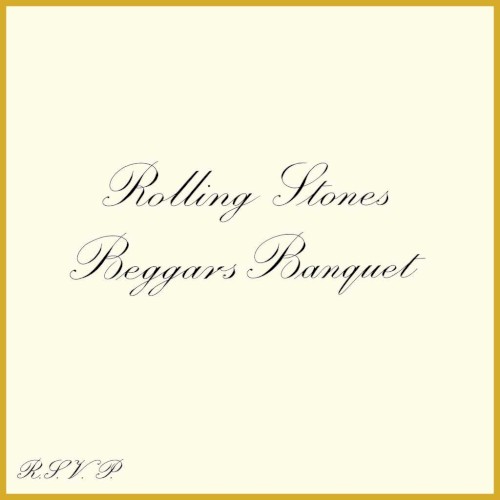
同情恶魔 (1968)
介绍
这个词条没有中文维基百科条目,下面是英文维基百科的原文。
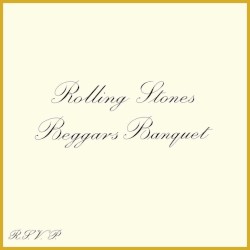
"Sympathy for the Devil" is a song by the English rock band the Rolling Stones. The song was written by Mick Jagger and credited to the Jagger–Richards partnership. It is the opening track on the band's 1968 album Beggars Banquet. The song has received critical acclaim and features on Rolling Stone magazine's "The 500 Greatest Songs of All Time" list, being ranked number 106 in the 2021 edition.
Inspiration
"Sympathy for the Devil" is credited to Jagger and Richards, though the song was largely a Jagger composition. The working title of the song was "The Devil Is My Name", having earlier been called "Fallen Angels". Jagger sings in first person narrative as the Devil, who boasts of his role in each of several historical atrocities and repeatedly asks the listener to "guess my name". The singer demands the listener's courtesy towards him, implicitly chastising the listeners for their collective culpability in the listed killings and crimes. In the 2012 documentary Crossfire Hurricane, Jagger stated that his influence for the song came from Baudelaire and from the Russian author Mikhail Bulgakov's novel The Master and Margarita (which had just appeared in English translation in 1967). The book was given to Jagger by Marianne Faithfull and she confirmed the inspiration in an interview with Sylvie Simmons for the magazine Mojo in 2005. The connection to Bulgakov's novel had appeared in print much earlier: in Uptight with the Stones, his 1973 account of the band's 1972 American tour, the novelist Richard Elman wrote that the song was "really just a borrowing from" The Master and Margarita.
Mick Jagger visited Salvador, Bahia, in 1968, where he encountered the traditions of Candomblé and found inspiration, along with Rio de Janeiro, for the song "Sympathy for the Devil". He also visited the hippie village of Arembepe in Bahia, where he was photographed playing a drum. His experiences in Bahia, with its folklore and local culture, were fundamental to the creation of the song, which he described as having a samba-like rhythm and rhythmic structure.
In a 1995 interview with Rolling Stone, Jagger said, "that was taken from an old idea of Baudelaire's, I think, but I could be wrong. Sometimes when I look at my Baudelaire books, I can't see it in there. But it was an idea I got from French writing. And I just took a couple of lines and expanded on it. I wrote it as sort of like a Bob Dylan song." It was Keith Richards who suggested changing the tempo and using additional percussion, turning the folk song into a samba.
Jagger stated in the Rolling Stone interview: "it's a very long historical figure – the figures of evil and figures of good – so it is a tremendously long trail he's made as personified in this piece." By the time Beggars Banquet was released, the Rolling Stones had already caused controversy for sexually forward lyrics such as "Let's Spend the Night Together" and their cover of the Willie Dixon's blues "I Just Want to Make Love to You". There were also claims they had dabbled in Satanism (their previous album, while containing no direct Satanic references in its music or lyrics, was titled Their Satanic Majesties Request). "Sympathy" brought these concerns to the fore, provoking media rumours and fears among some religious groups that the Stones were devil worshippers and a corrupting influence on youth.
The lyrics focus on atrocities in human history from Satan's point of view, including the trial and death of Jesus Christ, The Hundred Years' War, (though the line in question may also refer to European wars of religion) the violence of the Russian Revolution of 1917 and the 1918 execution of the Romanov family during World War I, and World War II. The song was originally written with a line asking who shot John F. Kennedy, but after Robert F. Kennedy's assassination on 5 June 1968, the line was changed to reference both assassinations.
The song may have been spared further controversy when the first single from the same album, "Street Fighting Man", became even more controversial in view of the race riots and student protests occurring in many cities in Europe and in the United States.
Recording
The recording of "Sympathy for the Devil" began at London's Olympic Sound Studios on 4 June 1968; overdubs were done on 8, 9 and 10 June. Personnel included on the recording include Nicky Hopkins on piano, Rocky Dijon on congas and Bill Wyman on shekere. Marianne Faithfull, Anita Pallenberg, Brian Jones, Charlie Watts, photographer Michael Cooper, Wyman, and Richards performed backup vocals. Richards plays bass on the original recording, and also electric guitar. Brian Jones plays a mostly mixed-out acoustic guitar, although in isolated tracks of the studio cut, it is audible playing along with the piano.
In the 2003 book According to the Rolling Stones, Watts commented:
正文摘自英文维基百科「Sympathy for the Devil」,按 CC BY-SA 4.0 使用;删去了参考文献、外部链接、表格和图片;篇幅所限只节选了前面一部分,全文见原条目。
资料卡
- 作品性质
- 音乐作品/乐曲
- 表演者
- 滚石乐队
- 发行日期
- 1968 年
- 收录于 / 属于
- Beggars Banquet
- 流派
- 摇滚乐
- 语言
- 英语
- 作曲
- 米克·贾格尔、基思·理查兹
- 作词
- 米克·贾格尔、基思·理查兹
资料来自 Wikidata Q605342(CC0)。
制作名单
- 录音室
- 录音:Olympic Studios(Barnes)
- ISRC
- USA171810010、USA176810010
制作
- 制作人
- Jimmy Miller
- 录音
- Glyn Johns
演奏与演唱
- 康加鼓
- Rocki Dzidzornu
- 牛铃
- Rocki Dzidzornu
- 钢琴
- 尼基·霍普金斯
- 沙锤
- 米克·贾格尔
- 原声吉他
- Brian Jones
- 电贝斯
- 基思·理查兹
- 电吉他
- 基思·理查兹
- 鼓
- Charlie Watts
- 葫芦沙铃
- 比尔·怀曼
- 和声
- 玛丽安娜·费思富尔、尼基·霍普金斯、Brian Jones、Anita Pallenberg、基思·理查兹、Charlie Watts、比尔·怀曼
- 主唱
- 米克·贾格尔
词曲与编曲
- 词曲
- 米克·贾格尔、基思·理查兹
名单来自 MusicBrainz(CC0)这条录音的关系数据,由志愿者录入,不一定齐全。
更多资料
在哪听
滚石乐队 的专辑
艺人页 ›

滚石乐队 的其他歌(本站收录)
- 给我庇护滚石乐队 · 1969
- (I Can't Get No) Satisfaction滚石乐队 · 1965
- Tumbling Dice滚石乐队 · 1972
- 东西战争滚石乐队 · 1968
- 野马滚石乐队 · 1971
- Paint It Black滚石乐队 · 1966
风格、年代相近的歌
- Dream On空中铁匠 · 1973
- 班尼和喷气机队艾尔顿·强 · 1973
- Personality Crisis纽约娃娃 · 1973
- 狂野之路卢·里德 · 1972
- School's Out艾力斯·库珀 · 1972
- Virginia Plain罗克西乐队 · 1972
- 通往天堂的阶梯齐柏林飞船 · 1971
- Life on Mars?大卫·鲍伊 · 1971
- Maggie May罗德·斯图尔特 · 1971
- Baba O'Riley谁人 · 1971
- 不会再被愚弄谁人 · 1971
- It's Too Late卡洛尔·金 · 1971