乐单
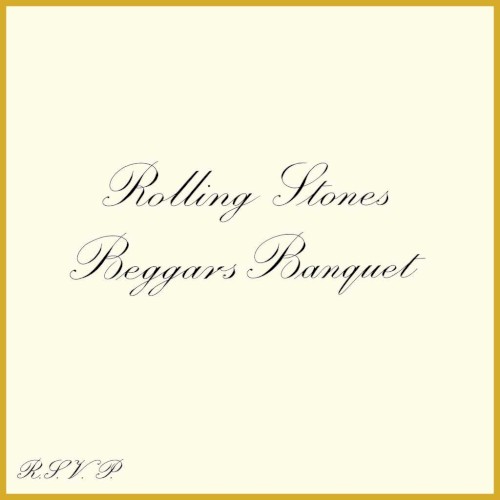
Beggars Banquet (1968)
滚石 500(2020) #185滚石 500(2003) #571001 张专辑
- 艺人
- 滚石乐队
- 发行
- 1968-12-06
- 类型
- 专辑
- 唱片公司
- 伦敦唱片、迪卡唱片公司
- 制作人
- 吉米·米勒
- 版本
- MusicBrainz 上有 34 个发行版本
曲目
- A1Sympathy for the Devil6:19
- A2No Expectations3:57
- A3Dear Doctor3:22
- A4Parachute Woman2:21
- A5Jig-Saw Puzzle6:06
- B1Street Fighting Man3:16
- B2Prodigal Son2:52
- B3Stray Cat Blues4:38
- B4Factory Girl2:09
- B5Salt of the Earth4:47
10 首 · 约 40 分钟 · 依据 1968-12-07 US 发行的版本,在 MusicBrainz 看这个版本。
介绍
这个词条没有中文维基百科条目,下面是英文维基百科的原文。
Beggars Banquet is the seventh studio album by the English rock band the Rolling Stones, released on 6 December 1968 by Decca Records in the United Kingdom and London Records in the United States. It was the first Rolling Stones album produced by Jimmy Miller, whose production work formed a key aspect of the Rolling Stones' sound throughout the late 1960s and early 1970s.
Brian Jones, the band's co-founder and early leader, had become increasingly unreliable in the studio due to his drug use, and it was the last Rolling Stones album to be released during his lifetime, though he also contributed to two songs on their next album Let It Bleed, which was released after his death (Jones also contributed to the group's hit song "Jumpin' Jack Flash", which was part of the same sessions, and released in May 1968). Nearly all rhythm and lead guitar parts were recorded by Keith Richards, the Rolling Stones' other guitarist and the primary songwriting partner of their lead singer Mick Jagger; together the two wrote all but one of the tracks on the album. Rounding out the instrumentation were bassist Bill Wyman and drummer Charlie Watts, though all members contributed on a variety of instruments. As with most albums of the period, frequent collaborator Nicky Hopkins played piano on many of the tracks.
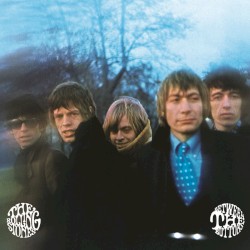
Beggars Banquet marked a change in direction for the band following the psychedelic pop of their previous two albums, Between the Buttons and Their Satanic Majesties Request. Styles such as roots rock and a return to the blues rock sound that had marked early Stones recordings dominate the record, and the album is among the most instrumentally experimental of the band's career, as they use Latin beats and instruments like the claves alongside South Asian sounds from the tanpura, tabla and shehnai, and African music-influenced conga rhythms.
Beggars Banquet was a top-ten album in many markets, including a number 5 position in the US—where it has been certified platinum—and a number 3 position in the band's native UK. It received a highly favourable response from music critics, who deemed it a return to form. While the album lacked a major hit single at the time of its release, songs such as "Sympathy for the Devil" and "Street Fighting Man" (US Billboard number 48) became rock radio staples for decades to come. The album has appeared on many lists of the greatest albums of all time, including by Rolling Stone, and it was inducted into the Grammy Hall of Fame in 1999.
Recording and production
Glyn Johns, the album's recording engineer and a longtime collaborator of the band, said that Beggars Banquet signalled "the Rolling Stones' coming of age. ... I think that the material was far better than anything they'd ever done before. The whole mood of the record was far stronger to me musically." Producer Jimmy Miller described guitarist Keith Richards as "a real workhorse" while recording the album, mostly due to the infrequent presence of Brian Jones. When he did show up at the sessions, Jones behaved erratically due to his drug use and emotional problems. Miller said that Jones would "show up occasionally when he was in the mood to play, and he could never really be relied on:
When he would show up at a session—let's say he had just bought a sitar that day, he'd feel like playing it, so he'd look in his calendar to see if the Stones were in. Now he may have missed the previous four sessions. We'd be doing let's say, a blues thing. He'd walk in with a sitar, which was totally irrelevant to what we were doing, and want to play it. I used to try to accommodate him. I would isolate him, put him in a booth and not record him onto any track that we really needed. And the others, particularly Mick and Keith, would often say to me, 'Just tell him to piss off and get the hell out of here'.
Nevertheless, Jones contributed to eight tracks on the album, playing sitar and tanpura on "Street Fighting Man", acoustic slide guitar on "No Expectations", harmonica on "Parachute Woman", "Dear Doctor" and "Prodigal Son", acoustic guitar and backing vocals on "Sympathy for the Devil", and Mellotron on "Jigsaw Puzzle" and "Stray Cat Blues". In a television interview, Mick Jagger recalled that Jones' slide guitar performance on "No Expectations" was the last time he contributed something "of significance" to the band. Other than Jones, the principal band members appeared extensively, with Richards providing nearly all of the lead and rhythm guitar work, as well as playing bass on three others, in the place of Bill Wyman, who appears on the rest. Drummer Charlie Watts plays the drum kit on all but two tracks, as well as other percussion on the tracks that do not feature a full drum kit. Additional parts were played by keyboardist and frequent Rolling Stones collaborator Nicky Hopkins and percussionist Rocky Dijon, among others.
正文摘自英文维基百科「Beggars Banquet」,按 CC BY-SA 4.0 使用;删去了参考文献、外部链接、表格和图片;篇幅所限只节选了前面一部分,全文见原条目。
资料卡
- 作品性质
- 音乐专辑
- 表演者
- 滚石乐队
- 发行日期
- 1968 年 12 月 6 日
- 录音地点
- 奥林匹克录音室
- 时长
- 39 分 47 秒
- 流派
- 根源摇滚、乡村蓝调
- 语言
- 英语
- 唱片公司
- 伦敦唱片、迪卡唱片公司
- 制作人
- 吉米·米勒
资料来自 Wikidata Q339065(CC0)。
制作名单
- 厂牌
- London Records(目录号 PS 539)
- 录音室
- 录音:Olympic Studios(Barnes);录音:Sunset Sound(Hollywood)
制作
- 制作人
- Jimmy Miller
- 录音
- Glyn Johns
- 工程师
- Eddie Kramer(第 B1 首)
演奏与演唱
- 主唱
- 米克·贾格尔、基思·理查兹(第 B5 首)
- 鼓
- Charlie Watts(其中 8 首)
- 原声吉他
- 基思·理查兹(其中 8 首)、Brian Jones(第 A1 首)
- 钢琴
- 尼基·霍普金斯(其中 7 首)
- 电贝斯
- 比尔·怀曼(第 A2、A4、A5、B3、B5 首)、基思·理查兹(第 A1、B1 首)
- 康加鼓
- Rocki Dzidzornu(第 A1、B3、B4 首)
- 沙锤
- 米克·贾格尔(第 A1、B1、B3 首)
- 电吉他
- 基思·理查兹(第 A1、A4、B3 首)
- 和声
- 基思·理查兹(第 A1、A3、B5 首)、米克·贾格尔(第 A3、B1、B5 首)、玛丽安娜·费思富尔(第 A1 首)、尼基·霍普金斯(第 A1 首)、Brian Jones(第 A1 首)、Anita Pallenberg(第 A1 首)、Charlie Watts(第 A1 首)、比尔·怀曼(第 A1 首)、Watts Street Gospel Choir(第 B5 首)
- 口琴
- 米克·贾格尔(第 A3、A4 首)、Brian Jones(第 B2 首)
- 低音提琴
- 比尔·怀曼(第 A3、B4 首)
- 美乐特朗
- Brian Jones(第 A5、B3 首)
- 牛铃
- Rocki Dzidzornu(第 A1 首)
- 葫芦沙铃
- 比尔·怀曼(第 A1 首)
- 钢棒吉他
- Brian Jones(第 A2 首)、基思·理查兹(第 A5 首)
- 响棒
- Charlie Watts(第 A2 首)
- 铃鼓
- Charlie Watts(第 A3 首)
- 坦布拉
- Brian Jones(第 B1 首)
- 西塔琴
- Brian Jones(第 B1 首)
- shehnai
- 戴夫·梅森(第 B1 首)
- 大鼓
- 戴夫·梅森(第 B1 首)
- 小提琴
- Ric Grech(第 B4 首)
- 曼陀林
- 戴夫·梅森(第 B4 首)
- 塔布拉鼓
- Charlie Watts(第 B4 首)
- 滑棒吉他
- 基思·理查兹(第 B5 首)
词曲与编曲
- 词曲
- 米克·贾格尔(其中 9 首)、基思·理查兹(其中 9 首)
- 作曲
- Robert Wilkins(第 B2 首)
- 作词
- Robert Wilkins(第 B2 首)
名单来自 MusicBrainz(CC0)这一发行版本的关系数据,由志愿者录入,不一定齐全。
更多资料与乐评
在哪听
滚石乐队 的其他专辑
艺人页 ›

相似的专辑

同在 1968 年发行