 乐单
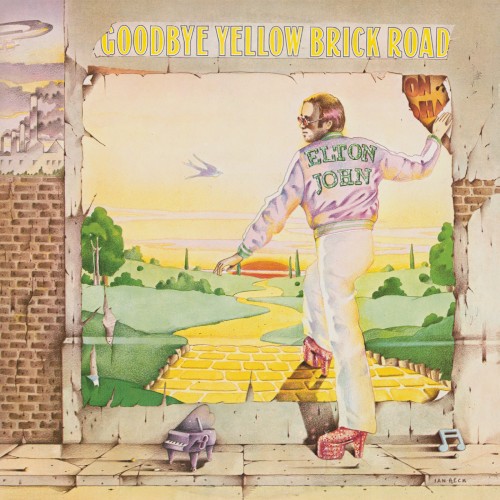
班尼和喷气机队 (1973)
介绍
这个词条没有中文维基百科条目,下面是英文维基百科的原文。
"Bennie and the Jets" (also titled "Benny & the Jets") is a song written by British musician Elton John and lyricist Bernie Taupin, and performed by John. The song first appeared on the Goodbye Yellow Brick Road album in 1973. "Bennie and the Jets" has been one of John's most popular songs and was performed during his appearance at Live Aid.
The track was a massive hit in the United States and Canada, released in 1974 as an A-side using the spelling "Bennie". In most territories the track was released as the B-side of "Candle in the Wind", using the spelling "Benny". Album artwork (back-cover track listing and center-panel design) consistently lists the song as "Bennie" while either "Bennie" or "Benny" appears on the vinyl album depending on territory. The track was released as an A-side in the UK in 1976, as "Benny and the Jets".
It is ranked number 371 on Rolling Stone's list of The 500 Greatest Songs of All Time.
Song composition
The song tells of "Bennie and the Jets", a fictional band of whom the song's narrator is a fan. In a 2014 Rolling Stone interview, Taupin said, "I saw Bennie and the Jets as a sort of proto-sci-fi punk band, fronted by an androgynous woman, who looks like something out of a Helmut Newton photograph."
Produced by Gus Dudgeon, the song was recorded during the Goodbye Yellow Brick Road sessions in France at Château d'Hérouville's Strawberry Studios, where John and Taupin had recorded their previous two albums Honky Château and Don't Shoot Me I'm Only the Piano Player.
When performing the song live, John rarely plays the studio arrangement, and often makes subtle or even drastic changes, sometimes including phrases from Glenn Miller's "In the Mood" and closing with the five-note combination from John Williams's score for Close Encounters of the Third Kind. During his live performances, the piano solo has been played in all sorts of variations, from very close to the original to wildly improvised and extended versions, such as the elaborate version during his Central Park concert in 1980, the version from his 30 June 1984 Wembley Stadium performance and another take on it during the "Elton and his band" part of the show recorded in Sydney, Australia, on 14 December 1986, his last show before his throat surgery in January 1987.
Production
Despite sounding like a live recording, the song was recorded in studio with live sound effects added later. Producer Gus Dudgeon explained:
For some weird reason, Elton happened to have hit the opening piano chord of the song exactly one bar before the song actually started. So I was doing the mix and this chord kept coming on which you normally wouldn't expect to hear. I turned to engineer [David Hentschel] and I said, 'What does that remind you of? ... It's the sort of thing that people do on stage just before they're going to start a song.' Just to kind of get everybody, 'Okay, here we go, ready?' For some reason that chord being there made me think, 'Maybe we should fake-live this.'
Dudgeon mixed in sounds from a 1972 concert by John at the Royal Festival Hall and a Jimi Hendrix performance at the Isle of Wight Festival 1970. He included a series of whistles from a live concert in Vancouver, and added hand claps and various shouts.
North American single release
The song was the closing track on side one of the double album Goodbye Yellow Brick Road, and John was set against releasing it as a single, believing it would fail. CKLW in Windsor, Ontario, began heavy airplay of the song and it became the No. 1 song in the Detroit market. This attention caused other American and Canadian Top 40 stations to add it to their playlists as well. As a result, the song peaked at No. 1 on the US singles chart in 1974. In the US, it was certified Gold on 8 April 1974 and Platinum on 13 September 1995 by the RIAA, and had sold 2.8 million copies by August 1976.
Cash Box said that "the song is a strong one and worth every second of its 5:10." Record World said that "With Elton showcasing his remarkable voice range, it can't miss grabbing the top spot."
"Bennie and the Jets" was John's first Top 40 hit on what at the time was called the Billboard Hot Soul Singles chart, where it peaked at No. 15, the highest position out of the three of his singles which reached that chart. The acceptance of "Bennie" on R&B radio helped land John, a huge soul music fan, a guest appearance on the 17 May 1975 edition of Soul Train, where he played "Bennie and the Jets" and "Philadelphia Freedom". In Canada, it held the No. 1 spot on the RPM national singles chart for two weeks (13–20 April), becoming his first No. 1 single of 1974 and his fourth overall.
Personnel
- Elton John – piano, Farfisa organ, vocals
- Davey Johnstone – acoustic guitar
- Dee Murray – bass
- Nigel Olsson – drums
正文摘自英文维基百科「Bennie and the Jets」,按 CC BY-SA 4.0 使用;删去了参考文献、外部链接、表格和图片;篇幅所限只节选了前面一部分,全文见原条目。
资料卡
- 作品性质
- 音乐作品/乐曲
- 表演者
- 艾尔顿·强
- 发行日期
- 1973 年
- 收录于 / 属于
- 再见黄砖路
- 流派
- 华丽摇滚
- 语言
- 英语
- 作曲
- 艾尔顿·强
- 作词
- 伯尼·陶平
资料来自 Wikidata Q2560178(CC0)。
制作名单
- 录音室
- 录音:Château d'Hérouville(Hérouville)
- ISRC
- GBAMB9500057、GBF080300775、GBUM71304955
制作
- 工程师
- David Hentschel
- 制作人
- Gus Dudgeon
演奏与演唱
- 风琴
- 艾尔顿·强
- 钢琴
- 艾尔顿·强
- 原声吉他
- Davey Johnstone
- 电吉他
- Davey Johnstone
- 贝斯
- Dee Murray
- 鼓
- Nigel Olsson
- 主唱
- 艾尔顿·强
词曲与编曲
- 作曲
- 艾尔顿·强
- 作词
- Bernie Taupin
名单来自 MusicBrainz(CC0)这条录音的关系数据,由志愿者录入,不一定齐全。
更多资料
在哪听
艾尔顿·强 的专辑
艺人页 ›
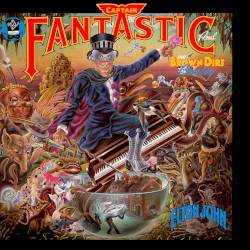
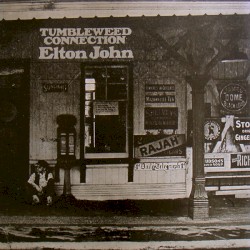
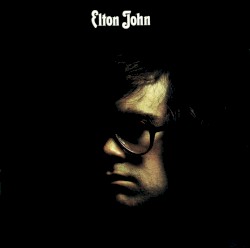
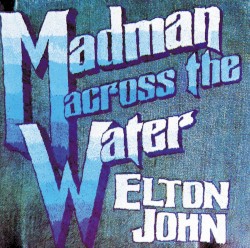
艾尔顿·强 的其他歌(本站收录)
- Tiny Dancer艾尔顿·强 · 1972
- 《火箭人》艾尔顿·强 · 1972
- 你的歌艾尔顿·强 · 1970
风格、年代相近的歌
- 玻璃心金发美女 · 1978
- 摇滚龙虾轰炸机合唱团 · 1978
- (White Man) In Hammersmith Palais冲撞乐队 · 1978
- Surrender廉价把戏乐队 · 1978
- Because the Night帕蒂·史密斯 · 1978
- 正是我所需要的小汽车 · 1978
- Dreams佛利伍麦克 · 1977
- 英雄大卫·鲍伊 · 1977
- 加州旅店老鹰乐队 · 1977
- Lust for Life伊基·波普 · 1977
- 天佑女王性手枪 · 1977
- Solsbury Hill彼得·盖布瑞尔 · 1977