 乐单
介绍
这个词条没有中文维基百科条目,下面是英文维基百科的原文。
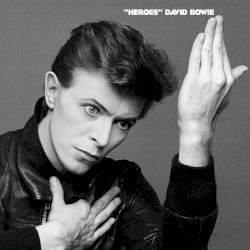
"'Heroes'" is a song by the English musician David Bowie from his 12th studio album of the same name. Co-written by Bowie and Brian Eno and co-produced by Bowie and Tony Visconti, the song was recorded in mid-1977 at Hansa Studio 2 in West Berlin. The backing track was recorded fully before the lyrics were written; Bowie and Eno added synthesiser overdubs while Robert Fripp contributed guitar. To record the vocals, Visconti devised a "multi-latch" system, in which three microphones were placed at different distances from Bowie and would open when he sang loudly enough. As with other album tracks, he improvised lyrics while standing at the microphone.
An art rock song that builds throughout its run time, "'Heroes'" concerns two lovers, one each from East and West Berlin. Under constant fear of death, they dream they are free, swimming with dolphins. Bowie placed the title in quotation marks as an expression of irony on the otherwise romantic and triumphant words and music. Bowie's lyrics were primarily inspired by seeing Visconti and singer Antonia Maass kiss beside the Berlin Wall; other inspirations included a painting by Otto Mueller and a short story by Alberto Denti di Pirajno. Scholars have associated the song with Cold War-era Berlin, interpreting the divided city as a metaphor for personal struggles and Bowie's recovery from addiction.
On 23 September 1977, the song was released as a single, shortened by two minutes and starting with the third verse. It initially received mostly positive reviews, with some welcoming it as a classic addition to the artist's catalogue. Bowie promoted it with a music video and sang it on numerous television programmes, including Marc Bolan's Marc and Bing Crosby's Merrie Olde Christmas special. Bowie also released German- and French-language versions of "'Heroes'", titled "'Helden'" and "'Héros'", respectively. Despite its heavy promotion, the single only peaked at number 24 on the UK Singles Chart and failed to chart at all on the US Billboard Hot 100 or the Canadian Top 100; however, it reached the top 10 and the top 20 in multiple European countries and Australia.
Over time, the song's reputation has grown substantially, and it is now widely considered one of Bowie's finest songs and one of the greatest songs of all time. His biographers pan the song's single edit for diminishing its power. Following Bowie's death in 2016, it reached a new chart peak of number 12 in the UK.The song remained a staple throughout his concert tours and live performances, and is Bowie's second-most-covered song after "Rebel Rebel" (1974). A version of "'Heroes'" by the Wallflowers was positively received and charted in the US and Canada in 1998. Another version by the series 7 finalists of The X Factor was a UK number one in 2010. The song has also been widely used in advertising over the years and has appeared in several television series and films.
Writing and recording
Backing track
After completing his work co-producing Iggy Pop's Lust for Life (1977) and various promotional events, David Bowie spent a few weeks devising ideas and concepts with multi-instrumentalist Brian Eno for his next studio album. One idea was using the same D–G chord sequence he had used for Pop's "Success". Eno wanted to call it "Heroes", as the sequence "sounded grand and heroic", and "I had that very word – heroes – in my mind". According to the biographer Chris O'Leary, the word also paid reference to the German krautrock band Neu!'s "Hero" (1975). Recording for the album took place entirely in West Berlin between July and August 1977 at Hansa Studio 2, a former concert hall converted into a recording studio that had been used by Gestapo officers as a ballroom during World War II and was about 500 yards from the Berlin Wall. The song was co-produced by Bowie and Tony Visconti, with contributions from Eno.
The backing track began with Bowie on piano and the core band of Carlos Alomar on rhythm guitar, George Murray on bass and Dennis Davis on drums. The band used the initial chord progression, creating a groove that built into a crescendo, lasting eight minutes. Alomar devised the underlying riff while Murray and Davis provided the "hypnotic pulse". Although he had fed Davis's drums through his Eventide H910 Harmonizer on Low (1977), Visconti used it sparingly on the album "Heroes", only during the mixing stage; as such, the drum sound was unaltered. He ran Murray's bass through a flanger.
According to Visconti, the recording sat for a week before overdubs commenced. Eno brought in his EMS Synthi AKS, a synthesiser built in a briefcase, using its joystick, oscillator knobs and noise filter to create a "shuddering, chattering effect" that slowly builds through the song. Bowie also added parts on a Chamberlin keyboard and high-pitched lines on his ARP String Ensemble synthesiser.
正文摘自英文维基百科「"Heroes" (David Bowie song)」,按 CC BY-SA 4.0 使用;删去了参考文献、外部链接、表格和图片;篇幅所限只节选了前面一部分,全文见原条目。
资料卡
- 作品性质
- 音乐作品/乐曲
- 表演者
- 大卫·鲍伊
- 发行日期
- 1977 年
- 流派
- 摇滚乐
- 语言
- 英语
- 作曲
- 布莱恩·伊诺、大卫·鲍伊
- 作词
- 大卫·鲍伊
资料来自 Wikidata Q701655(CC0)。
更多资料
在哪听
大卫·鲍伊 的专辑
艺人页 ›
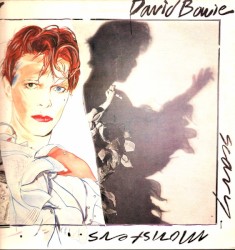
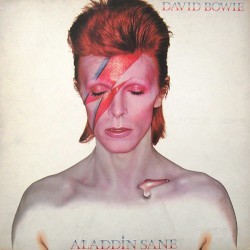
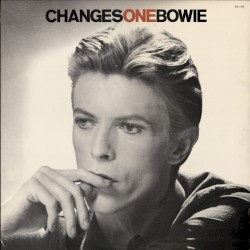
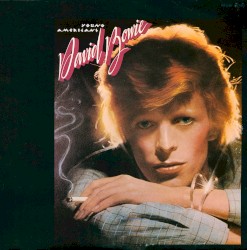
大卫·鲍伊 的其他歌(本站收录)
- Life on Mars?大卫·鲍伊 · 1971
- 太空怪谈大卫·鲍伊 · 1969
- Changes大卫·鲍伊 · 1972
- Young Americans大卫·鲍伊 · 1975
- Station to Station大卫·鲍伊 · 1976
风格、年代相近的歌
- Edge of Seventeen史蒂薇·妮克丝 · 1982
- 我行我素琼·杰特 · 1981
- 今晚又来了菲尔·柯林斯 · 1981
- 压力下的你我皇后乐团 · 1981
- Love Will Tear Us Apart欢乐分队 · 1980
- London Calling冲撞乐队 · 1979
- Comfortably Numb平克·弗洛伊德 · 1979
- What a Fool Believes杜比兄弟合唱团 · 1979
- 玻璃心金发美女 · 1978
- 摇滚龙虾轰炸机合唱团 · 1978
- (White Man) In Hammersmith Palais冲撞乐队 · 1978
- Surrender廉价把戏乐队 · 1978