 乐单
介绍
这个词条没有中文维基百科条目,下面是英文维基百科的原文。
After the Gold Rush is the third studio album by the Canadian-American musician Neil Young, released in September 1970 on Reprise Records. It is one of four high-profile solo albums released by the members of folk rock group Crosby, Stills, Nash & Young in the wake of their chart-topping 1970 album Déjà Vu. Young's album consists mainly of country folk music along with several rock tracks, including "Southern Man". The material was inspired by the unproduced Dean Stockwell and Herb Bermann screenplay After the Gold Rush.
After the Gold Rush entered Billboard Top Pop Albums chart on September 19, and peaked at number eight in October. Two of the three singles taken from the album, "Only Love Can Break Your Heart" and "When You Dance I Can Really Love", made it to number 33 and number 93 respectively on the Billboard Hot 100. Despite a mixed initial reaction, the album has since appeared on a number of greatest albums of all time lists.
In 2014, the album was inducted into the Grammy Hall of Fame.
Background
Young recorded the album while living in Topanga Canyon, an artistic community in Southern California. It was largely recorded in his home studio there. Songs on the album were influenced by people he met while living there, including producer David Briggs, Young's then wife, Susan Acevedo, and actor Dean Stockwell, whom he met through Susan. The album was recorded with members of both of his associated groups at the time, Crazy Horse and Crosby, Stills, Nash & Young, as well as the first appearance by long-time collaborator Nils Lofgren. By the time the album was released, however, Young had split with Susan and had moved to his Broken Arrow Ranch in Northern California, where he would record many of his subsequent albums.
Writing
Songs on the album were inspired by a screenplay written by Dean Stockwell and Herb Bermann also titled After the Gold Rush. The screenplay's plot involves an apocalyptic ecological disaster that washes away the Topanga Canyon hippie community. Stockwell, a lifelong friend of Young, was also part of the Topanga Canyon artist culture of the time. Mutual friend Dennis Hopper encouraged Stockwell to write his own screenplay in wake of Hopper's success with Easy Rider. Stockwell recalls writing the script: Dennis very strongly urged me to write a screenplay, and he would get it produced. I came back home to Topanga Canyon and wrote After The Gold Rush. Neil was living in Topanga then too, and a copy of it somehow got to him. He had had writer's block for months, and his record company was after him. And after he read this screenplay, he wrote the After the Gold Rush album in three weeks. Young recalls coming in contact with the script in his 2012 memoir Waging Heavy Peace: When I returned to Topanga, Dean Stockwell came by the house with a screenplay called After the Gold Rush. He had cowritten it with Herb Bermann and wanted to know if I could do the music for it. I read the screenplay and kept it around for a while. I was writing a lot of songs at the time, and some of them seemed like they would fit right in with this story. The song "After the Gold Rush" was written to go along with the story’s main character as he carried the tree of life through Topanga Canyon to the ocean. One day Dean brought an executive from Universal Studios to my house to meet me. It looked like the project was going to happen, and I thought it would really be a good movie. It was a little off-the-wall and not a normal type of Hollywood story. I was really into it. Apparently the studio wasn't, because nothing more ever happened.
In Young's biography Shakey, the script, now lost, is described as an end of the world movie which culminates in a tidal wave crashing into local music venue and hangout The Topanga Corral. Stockwell explains, "I was gonna write a movie that was personal, a Jungian self-discovery of the gnosis. It involved the Kabala; it involved a lot of arcane stuff." In a December 1995 interview with Nick Kent for Mojo, Young recalled: It was all about the day of the great earthquake in Topanga Canyon when a great wave of water flooded the place. It was a pretty 'off-the-wall' concept, they tried to get some money from Universal Pictures. But that fell through because it was too much of an 'art' project. I think, had it been made, it would stand as a contemporary to Easy Rider and it would have had a similar effect. The script itself was full of imagery, 'change'. It was very unique actually. I really wish that movie had been made, because it could have really defined an important moment in the culture.
Ultimately, only two songs on the album were directly influenced by or had been intended for use in the film: "After the Gold Rush" and "Cripple Creek Ferry". The lyrics to "After the Gold Rush" were inspired by a dream and consider a future when mankind uses space travel to perpetuate the species in wake of environmental destruction.
正文摘自英文维基百科「After the Gold Rush」,按 CC BY-SA 4.0 使用;删去了参考文献、外部链接、表格和图片;篇幅所限只节选了前面一部分,全文见原条目。
资料卡
- 作品性质
- 音乐专辑
- 表演者
- 尼尔·杨
- 发行日期
- 1970 年 8 月 31 日
- 收录于 / 属于
- Neil Young studio albums discography、The Top 100 Canadian Albums
- 录音地点
- 日落之声录音室、声音之城录音室
- 时长
- 35 分 10 秒
- 流派
- 摇滚乐、民谣摇滚、乡村摇滚
- 语言
- 英语
- 唱片公司
- 重复唱片
- 制作人
- 尼尔·杨
资料来自 Wikidata Q264397(CC0)。
更多资料
在哪听
尼尔·杨 的专辑
艺人页 ›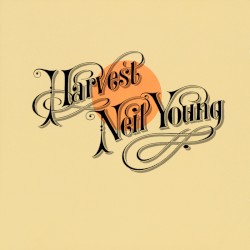
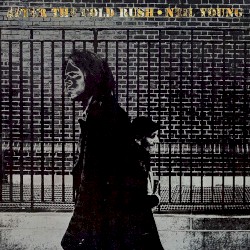
尼尔·杨 的其他歌(本站收录)
- Heart of Gold尼尔·杨 · 1971
风格、年代相近的歌
- Tangled Up in Blue鲍勃·迪伦 · 1975
- 愿你在此平克·弗洛伊德 · 1975
- 通往天堂的阶梯齐柏林飞船 · 1971
- Father and Son凯特·史蒂文斯 · 1970
- 太空怪谈大卫·鲍伊 · 1969
- 一体两面琼尼·米歇尔 · 1969
- Like a Rolling Stone鲍勃·迪伦 · 1965
- Desolation Row鲍勃·迪伦 · 1965
- Mr. Tambourine Man鲍勃·迪伦 · 1965
- 地下乡愁蓝调鲍勃·迪伦 · 1965
- California Dreamin'妈妈与爸爸合唱团 · 1965
- Pink Moon尼克·德雷克 · 1972