 乐单
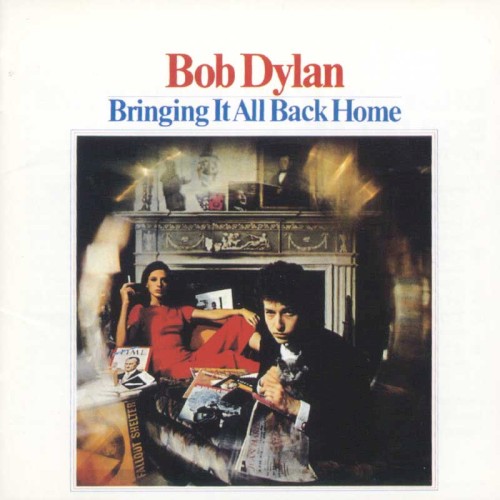
Mr. Tambourine Man (1965)
介绍
这个词条没有中文维基百科条目,下面是英文维基百科的原文。
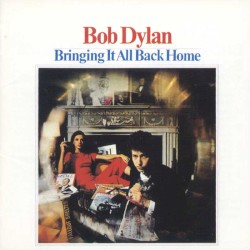
"Mr. Tambourine Man" is a song written by Bob Dylan, released as the first track of the acoustic side of his March 1965 album Bringing It All Back Home. The song's popularity led to Dylan recording it live many times, and it has been included in multiple compilation albums. It has been translated into other languages and has been used or referenced in television shows, films, and books.
The song has been performed and recorded by many artists, including the Byrds, Judy Collins, Melanie, Odetta, Alvin and the Chipmunks, and Stevie Wonder among others. The Byrds' version was released in April 1965 as their first single on Columbia Records, reaching number 1 on both the Billboard Hot 100 chart and the UK Singles Chart, as well as being the title track of their debut album, Mr. Tambourine Man. The Byrds' recording of the song was influential in popularizing the musical subgenres of folk rock and jangle pop, leading many contemporary bands to mimic its fusion of jangly guitars and intellectual lyrics in the wake of the single's success. Dylan himself was partly influenced to record with electric instrumentation after hearing the Byrds' reworking of his song during one of their rehearsals at World Pacific Studios in late 1964.
Dylan's song has four verses, of which the Byrds only used the second for their recording. Dylan's and the Byrds' versions have appeared on various lists ranking the greatest songs of all time, including an appearance by both on Rolling Stone's 2004 list of the 500 best songs ever. Both versions received Grammy Hall of Fame Awards.
The song has a bright, expansive melody and has become famous for its surrealistic imagery, influenced by artists as diverse as French poet Arthur Rimbaud and Italian filmmaker Federico Fellini. The lyrics call on the title character to play a song and the narrator will follow. Interpretations of the lyrics have included a paean to drugs such as LSD, a call to the singer's muse, a reflection of the audience's demands on the singer, and religious interpretations.
Composition
"Mr. Tambourine Man" was written and composed in early 1964, at the same approximate time as "Chimes of Freedom", which Dylan recorded later that spring for his album Another Side of Bob Dylan. Dylan began writing and composing "Mr. Tambourine Man" in February 1964, after attending Mardi Gras in New Orleans during a cross-country road trip with several friends, and completed it sometime between the middle of March and late April of that year after he had returned to New York. Nigel Williamson has suggested in The Rough Guide to Bob Dylan that the influence of Mardi Gras can be heard in the swirling and fanciful imagery of the song's lyrics. Journalist Al Aronowitz has stated that Dylan completed the song at his home, but folk singer Judy Collins, who later recorded the song, has stated that Dylan completed the song at her home. Dylan premiered the song the following month at a May 17 concert at London's Royal Festival Hall.
Recording
During the sessions for Another Side of Bob Dylan, in June 1964, with Tom Wilson producing, Dylan recorded "Mr. Tambourine Man" with Ramblin' Jack Elliott singing harmony. As Elliott was slightly off key, that recording was not used. Later that month he recorded a publisher demo of the song at Witmark Music. More than six months passed before Dylan re-recorded the song, again with Wilson in the producer's chair, during the final Bringing It All Back Home session on January 15, 1965, the same day that "Gates of Eden", "It's Alright, Ma (I'm Only Bleeding)", and "It's All Over Now, Baby Blue" were recorded. It was long thought that the four songs were each recorded in one long take. However, in the biography Bob Dylan: Behind the Shades, Clinton Heylin relates that the song required six attempts, possibly because of difficulties in working out the playoffs between Dylan's acoustic guitar and Bruce Langhorne's electric lead. Alternate takes released on Dylan's Cutting Edge collection also reveal that early takes include drummer Bobby Gregg playing a tambourine-heavy 24 rhythm, but Dylan found this too distracting and opted to continue recording with Langhorne alone. The final take was selected for the album, which was released on March 22, 1965.
In his book Keys to the Rain: The Definitive Bob Dylan Encyclopedia, Oliver Trager describes "Mr. Tambourine Man" as having a bright, expansive melody, with Langhorne's electric guitar accompaniment, which provides a countermelody to the vocals, being the only instrumentation besides Dylan's acoustic guitar and harmonica. Author Wilfrid Mellers has written that although the song is in the key of D major, it is harmonized as if it were in a Lydian G major, giving the song a tonal ambiguity that enhances the dreamy quality of the melody. Unusually, rather than beginning with the first verse, the song begins with an iteration of the chorus:
Hey! Mr. Tambourine Man, play a song for me,
I'm not sleepy and there is no place I'm going to.
正文摘自英文维基百科「Mr. Tambourine Man」,按 CC BY-SA 4.0 使用;删去了参考文献、外部链接、表格和图片;篇幅所限只节选了前面一部分,全文见原条目。
资料卡
- 作品性质
- 音乐作品/乐曲
- 表演者
- 鲍勃·迪伦
- 发行日期
- 1965 年
- 收录于 / 属于
- Bringing It All Back Home
- 流派
- 民谣摇滚
- 语言
- 英语
- 作曲
- 鲍勃·迪伦
- 作词
- 鲍勃·迪伦
资料来自 Wikidata Q1941299(CC0)。
制作名单
- ISRC
- USSM16400192、USSM16500148、USSM16501138
制作
- 制作人
- Tom Wilson
词曲与编曲
- 作曲
- 鲍勃·迪伦
- 作词
- 鲍勃·迪伦
名单来自 MusicBrainz(CC0)这条录音的关系数据,由志愿者录入,不一定齐全。
更多资料
在哪听
鲍勃·迪伦 的专辑
艺人页 ›
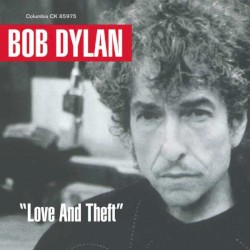
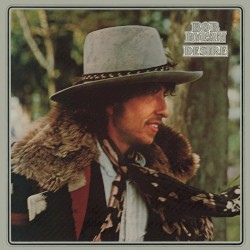
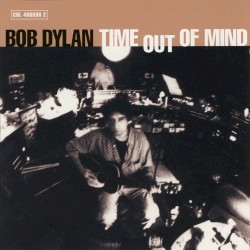
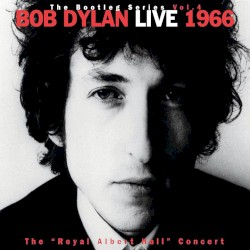
鲍勃·迪伦 的其他歌(本站收录)
- Like a Rolling Stone鲍勃·迪伦 · 1965
- All Along the Watchtower吉米·亨德里克斯体验乐队 · 1968
- Tangled Up in Blue鲍勃·迪伦 · 1975
- Desolation Row鲍勃·迪伦 · 1965
- 答案在风中飘荡鲍勃·迪伦 · 1962
- 地下乡愁蓝调鲍勃·迪伦 · 1965
- Visions of Johanna鲍勃·迪伦 · 1966
风格、年代相近的歌
- After the Gold Rush尼尔·杨 · 1970
- Father and Son凯特·史蒂文斯 · 1970
- 太空怪谈大卫·鲍伊 · 1969
- 一体两面琼尼·米歇尔 · 1969
- California Dreamin'妈妈与爸爸合唱团 · 1965
- Suzanne里奥纳德·科恩 · 1967
- Losing My ReligionR.E.M. · 1991
- 愿你在此平克·弗洛伊德 · 1975
- 通往天堂的阶梯齐柏林飞船 · 1971
- Mrs. Robinson西蒙和加芬克尔 · 1968
- 日升之屋动物乐队
- Pink Moon尼克·德雷克 · 1972