 乐单
介绍
这个词条没有中文维基百科条目,下面是英文维基百科的原文。
"Lola" is a song by the English rock band the Kinks, written by frontman Ray Davies for their 1970 album Lola Versus Powerman and the Moneygoround, Part One. The song details a romantic encounter in a Soho bar between a young man and Lola, who is possibly a trans woman or cross-dresser. In the song, the narrator describes his confusion towards Lola, who "walked like a woman but talked like a man", yet he remains infatuated with her.
The song was released as a single in the United Kingdom on 12 June 1970, while in the United States it was released on 28 June 1970. Commercially, "Lola" reached number two on the UK Singles Chart and number nine on the Billboard Hot 100. The track has since become one of the Kinks' most popular songs and appears on Rolling Stone and NME's lists of the 500 greatest songs of all time.
Since its release, "Lola" has appeared on multiple compilation and live albums. In 1980, a live version of the song from the album One for the Road was released as a single in the US and some European countries, becoming a minor hit. In the Netherlands, it reached number 1, just as it did in 1970 with the studio version. Other versions include an instrumental on the band's 1971 movie soundtrack album Percy and live renditions from 1972's Everybody's in Show-Biz and 1996's To the Bone. The Lola character also appears in the lyrics of the band's 1981 song "Destroyer".
Origin and inspiration
Ray Davies has claimed that he was inspired to write "Lola" after Kinks manager Robert Wace spent a night in Paris dancing with a cross-dresser. Davies said of the incident, "In his apartment, Robert had been dancing with this black woman, and he said, 'I'm really onto a thing here.' And it was okay until we left at six in the morning and then I said, 'Have you seen the stubble?' He said 'Yeah', but he was too pissed [intoxicated] to care, I think".
Drummer Mick Avory has offered an alternative explanation for the song's lyrics, claiming that "Lola" was partially inspired by Avory's frequenting of certain bars in West London. Avory said: We used to know this character called Michael McGrath. He used to hound the group a bit, because being called The Kinks did attract these sorts of people. He used to come down to Top of the Pops, and he was publicist for John Stephen's shop in Carnaby Street. He used to have this place in Earl's Court, and he used to invite me to all these drag queen acts and transsexual pubs. They were like secret clubs. And that's where Ray [Davies] got the idea for 'Lola'. When he was invited too, he wrote it while I was getting drunk.
Ray Davies claimed to have done "a bit of research with drag queens" for the song's lyrics. He has denied claims that the song was written about a date between himself and Candy Darling – Davies contends the two only went out to dinner together and that he had known the whole time that Darling was transgender.
In his autobiography, Dave Davies said that he came up with the music for what would become "Lola", noting that his brother Ray added the lyrics after hearing it. In a 1990 interview, Dave Davies stated that "Lola" was written similarly to "You Really Got Me" in that the two worked on Ray's basic skeleton of the song, saying that the song was more of a collaborative effort than many believed.
Writing and recording
Written in April 1970, "Lola" was cited by Ray Davies as the first song he wrote following a break he took to act in the 1970 Play for Today film The Long Distance Piano Player. Davies said that he had initially struggled with writing an opening that would sell the song, but the rest of the song "came naturally". He noted that he knew the song would be successful when he heard his one-year-old daughter singing the chorus, stating, "She was crawling around singing 'la la, la la Lola.' I thought, 'If she can join in and sing, Kinks fans can do it.'"
Initial recordings of the song began in April 1970, but, as the band's bassist John Dalton remembered, recording for "Lola" took particularly long, stretching into the next month. During April, four to five versions were attempted, utilizing different keys as well as varying beginnings and styles. In May, new piano parts were added to the backing track by John Gosling, the band's new piano player who had just been auditioned. Vocals were also added at this time. The song was then mixed during that month. Mick Avory remembered the recording sessions for the song positively, saying that it "was fun, as it was the Baptist's [John Gosling's] first recording with us".
The guitar opening on the song was produced as a result of combining the sound of a Martin guitar and a vintage Dobro resonator guitar. Ray Davies cited this blend of guitar sounds for the song's unique guitar sound.
正文摘自英文维基百科「Lola (song)」,按 CC BY-SA 4.0 使用;删去了参考文献、外部链接、表格和图片;篇幅所限只节选了前面一部分,全文见原条目。
资料卡
- 作品性质
- 单曲
- 表演者
- 奇想乐团
- 发行日期
- 1970 年 6 月 12 日
- 录音地点
- 摩根录音室
- 流派
- 流行摇滚
- 语言
- 英语
- 唱片公司
- 徒步录音室、重复唱片
- 作词
- 雷·戴维斯
- 制作人
- 雷·戴维斯
- 上一部
- Victoria
- 下一部
- Apeman、Rats
资料来自 Wikidata Q2706015(CC0)。
更多资料
在哪听
奇想乐团 的专辑
艺人页 ›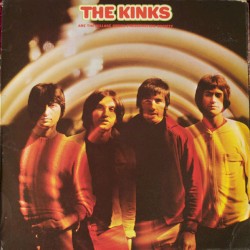
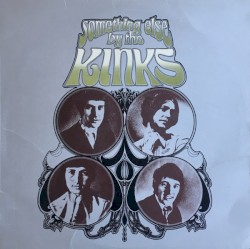
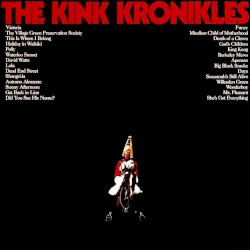
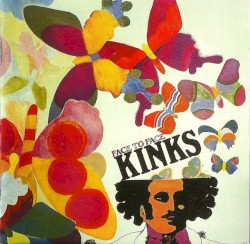
奇想乐团 的其他歌(本站收录)
风格、年代相近的歌
- 波希米亚狂想曲皇后乐团 · 1975
- Born to Run布鲁斯·斯普林斯廷 · 1975
- Tangled Up in Blue鲍勃·迪伦 · 1975
- Gloria帕蒂·史密斯 · 1975
- Kashmir齐柏林飞船 · 1975
- Young Americans大卫·鲍伊 · 1975
- 愿你在此平克·弗洛伊德 · 1975
- 彻夜摇滚Kiss合唱团 · 1975
- 自由如鸟林纳·史金纳 · 1974
- Dream On空中铁匠 · 1973
- 班尼和喷气机队艾尔顿·强 · 1973
- Personality Crisis纽约娃娃 · 1973