乐单
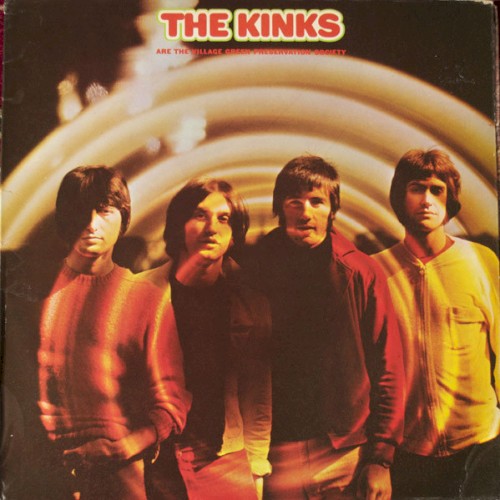
The Kinks Are the Village Green Preservation Society (1968)
滚石 500(2020) #384滚石 500(2003) #2551001 张专辑
- 艺人
- 奇想乐团
- 发行
- 1968-11-22
- 类型
- 专辑
- 唱片公司
- 徒步录音室、重复唱片
- 制作人
- 雷·戴维斯
- 版本
- MusicBrainz 上有 27 个发行版本
曲目
- 1The Village Green Preservation Society2:50
- 2Do You Remember Walter?2:28
- 3Picture Book2:40
- 4Johnny Thunder2:33
- 5Last of the Steam‐Powered Trains4:14
- 6Big Sky2:53
- 7Sitting by the Riverside2:24
- 8Animal Farm3:02
- 9Village Green2:12
- 10Starstruck2:23
- 11Phenomenal Cat2:39
- 12All of My Friends Were There2:26
- 13Wicked Annabella2:45
- 14Monica2:18
- 15People Take Pictures of Each Other2:11
15 首 · 约 40 分钟 · 依据 1968-11-22 GB 发行的版本,在 MusicBrainz 看这个版本。
介绍
这个词条没有中文维基百科条目,下面是英文维基百科的原文。
The Kinks Are the Village Green Preservation Society is the sixth studio album by the English rock band the Kinks. Released on 22 November 1968, Village Green was a modest seller, but it was lauded by contemporary critics for its songwriting and has subsequently been regarded by commentators as an early concept album. The album was the band's first which failed to chart in either the United Kingdom or United States, and its embrace by America's new underground rock press completed the Kinks' transformation from mid-1960s pop hitmakers to critically favoured cult band.
Ray Davies, the Kinks' frontman, loosely conceptualised the album as a collection of character studies, an idea he based on Dylan Thomas's 1954 radio drama Under Milk Wood. Centring on themes of nostalgia, memory and preservation, the album reflects Davies's concerns about the increasing modernisation and encroaching influence of America and Europe on English society. Musically an example of pop or rock music, the album incorporates a range of stylistic influences, including music hall, folk, blues, psychedelia and calypso. It was the first album which Davies produced on his own and was the last to feature the original Kinks line-up, as bassist Pete Quaife departed the band in March 1969. It also marked the final collaboration between the Kinks and Nicky Hopkins, a session musician whose playing features heavily on piano, harpsichord and Mellotron.
Other than "Village Green", which was recorded in November 1966 and re-recorded in February 1967, the album's sessions ran at London's Pye Studios from roughly March to October 1968. In addition to the non-album singles "Wonderboy" and "Days", the sessions resulted in numerous tracks, some of which went unreleased for years. The album's planned September 1968 release was delayed by two months in the UK after Davies's last-minute decision to rearrange and augment the track listing, but release of the earlier twelve-track edition went ahead in several European countries. The album had no accompanying lead single in the UK, but "Starstruck" was issued in the US and Europe.
Despite its initial commercial shortcomings, Village Green has influenced numerous musical acts, especially American indie artists from the late 1980s and 1990s and Britpop groups including Blur and Oasis. Driven in part by this influence, the album experienced a critical and commercial resurgence in the 1990s, and it has been reissued several times, including an expanded edition in 2018. The album has since become the Kinks' best-selling album in the UK, where the British Phonographic Industry (BPI) certified it silver in 2008 and gold in 2018. It has been included in several critics' and listeners' polls for the best albums of all time, including those published by Rolling Stone magazine and in the book All Time Top 1000 Albums.
Background
In July 1965, the Kinks were informally blacklisted from performing in the United States by the American Federation of Musicians. The circumstances that led to the ban are unclear but likely stemmed from several incidents during the band's first US tour; Ray Davies later attributed it to a combination of "bad luck, bad management, [and] bad behaviour". Despite the Kinks' recent commercial successes, the band's extensive touring and promotional appearances led Ray to a nervous breakdown in March 1966.
Following Ray's breakdown, the band reduced their touring commitments and spent more time recording in the studio, a change which allowed Ray to develop as a songwriter while leaving him increasingly separated from the emerging youth and drug cultures. Author Ian MacDonald further suggests that the band's US touring ban left the group comparatively isolated from American influence, guiding them away from their earlier blues-based riffing towards a distinctly English style. In the year that followed, Ray grew obsessed with aspects of English aristocracy and the country's dying traditions. He expressed his pride of Britain in an April 1966 interview with Melody Maker magazine, wishing its culture could remain distinct from that of America and Europe. He further indicated his desire to keep writing "very English songs" and hoped to convey his feelings in a new composition.
According to author Johnny Rogan, The Kinks Are the Village Green Preservation Society (often shortened as Village Green) reflects a progression in the thematic linking apparent on the Kinks' albums. Originally known as a singles act, the band assembled their earliest LPs without thought towards making a larger artistic statement. Their 1964 hit singles "You Really Got Me" and "All Day and All of the Night" focused on simple boy-girl relationships, a format Ray derided on his May 1965 B-side "I Need You". Over the next year, Ray shifted his songwriting approach towards social commentary about contemporary British society, exemplified in the September 1965 song "A Well Respected Man" and February 1966 single "Dedicated Follower of Fashion".
正文摘自英文维基百科「The Kinks Are the Village Green Preservation Society」,按 CC BY-SA 4.0 使用;删去了参考文献、外部链接、表格和图片;篇幅所限只节选了前面一部分,全文见原条目。
资料卡
- 作品性质
- 音乐专辑
- 表演者
- 奇想乐团
- 发行日期
- 1968 年 11 月 22 日
- 时长
- 38 分 47 秒
- 流派
- 流行摇滚
- 语言
- 英语
- 唱片公司
- 徒步录音室、重复唱片
- 制作人
- 雷·戴维斯
资料来自 Wikidata Q254078(CC0)。
制作名单
- 厂牌
- Pye Records(目录号 NSPL 18233)
- 录音室
- 录音:Pye Studios, Studio 2(London);录音:Pye Studios, Studio 1(London)
制作
- 制作人
- 雷·戴维斯
演奏与演唱
- 鼓
- Mick Avory
- 吉他
- Dave Davies
- 贝斯
- Pete Quaife
- 主唱
- 雷·戴维斯(其中 14 首)、Dave Davies(第 13 首)
词曲与编曲
- 编曲
- 奇想乐团
- 作曲
- 雷·戴维斯
- 作词
- 雷·戴维斯
名单来自 MusicBrainz(CC0)这一发行版本的关系数据,由志愿者录入,不一定齐全。
更多资料与乐评
在哪听
奇想乐团 的其他专辑
艺人页 ›
相似的专辑
同在 1968 年发行