 乐单
介绍
这个词条没有中文维基百科条目,下面是英文维基百科的原文。
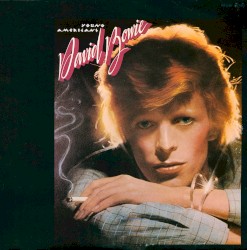
"Young Americans" is a song by the English singer-songwriter David Bowie from his ninth studio album of the same name. It was mostly recorded in August 1974 at Sigma Sound Studios in Philadelphia and was debuted on the Soul tour the following month. The song featured contributions from then-unknown singer Luther Vandross, who conceived the backing vocal arrangement. An embrace of R&B and Philadelphia soul, the song presents an Englishman's impressionist portrait of America at the time, featuring various characters and allusions to American totems and events.
Released by RCA Records as the lead single on 21 February 1975, the song reached number 18 on the UK Singles Chart but was a breakthrough in the United States, at the time becoming Bowie's second highest-charting single on the Billboard Hot 100 at number 28. He promoted it with an appearance on The Dick Cavett Show in November 1974 and on The Cher Show the following year. Bowie performed the song on his concert tours throughout the 1980s, before retiring it after the Sound+Vision Tour in 1990. Ranked among Bowie's best songs by numerous publications, critics praise "Young Americans" as a successful transition to soul music following the artist's glam rock releases. It has since appeared on several compilation albums and was remastered in 2016 for the Who Can I Be Now? (1974–1976) box set.
Overview
Music and lyrics
"Young Americans" was a major musical departure for David Bowie. Following years of glam rock and hard rock releases, the song represented a full embrace of the R&B and Philadelphia soul sound of the mid-1970s. Bowie himself referred to the sound as "plastic soul". Discussing the stylistic departure in his book Starman: The Definitive Biography, author Paul Trynka describes the song as a "statement of intent", wherein Bowie was "repositioning the brand".
"Young Americans" compositionally stands out from Bowie's prior recordings. With an improvisational song structure containing three verses and refrains, a saxophone solo, a bridge, a breakdown and two additional extended verses and refrains, author James E. Perone says the use of four-measure phrases flow together through the usage of dominant chords "in a completely natural way". The song is primarily in the key of C major; the verses end on G major, extending into the refrains with F major before reverting to C on the title phrases. The bridge deviates into A minor before the guitar closes it with A major, while the fourth verse is in D major.
According to biographer Nicholas Pegg, "Young Americans" presents a rapid lyric "sketching an Englishman's impressionist portrait of 20th century America". Production team the Matrix noted "America" as "a bit like a teenager: brimming with energy and imagination, occasionally overstepping the mark, but always with a great sense of possibility". The title itself does not appear in the song, only "the young American", who runs through various myths to the point that by the end, he does not know which ones to believe or follow. Author Peter Doggett interprets the song, in one way, as "the portrait of a fantasy: the global dream of how it would feel to have life laid out before you in the land of plenty". The opening verse describes a frigid sexual encounter, which "took him minutes, took her nowhere". Perone says the story informs listeners that issues related to sex and "emotional impotence" exist both outside and in mainstream society, while additional verses reveal the discriminations between race and social classes that exist in American society.
Unlike the fractured imagery of Bowie's previous album Diamond Dogs (1974), "Young Americans" is observational and lyrically influenced by the works of Bruce Springsteen; biographer Chris O'Leary compares the song's clutter of characters to Springsteen's The Wild, the Innocent & the E Street Shuffle (1973). Throughout the song, allusions are made to the Watergate scandal – US President Richard Nixon having resigned only three days prior to its recording – the McCarthy witch hunts ("now you have been the un-American") and civil rights struggles ("sit on your hands on a bus of survivors"). Additional references are made to charms of American society, including "Afro-sheen" – a hair-care product regularly advertised on Soul Train – "Ford Mustang", "Barbie doll", "Cadi" and "Chrysler", and lyrics that provoke images of violence and anguish ("would you carry a razor in case, just in case of depression?" and "ain't there a woman I can sock on the jaw?") Pegg argues the lyrics "cut as deep as 'I'm Afraid of Americans' twenty years later".
正文摘自英文维基百科「Young Americans (song)」,按 CC BY-SA 4.0 使用;删去了参考文献、外部链接、表格和图片;篇幅所限只节选了前面一部分,全文见原条目。
资料卡
- 作品性质
- 单曲
- 表演者
- 大卫·鲍伊
- 发行日期
- 1975 年 2 月 21 日
- 流派
- 蓝眼灵魂乐、流行摇滚
- 唱片公司
- RCA唱片
- 作词
- 大卫·鲍伊
- 制作人
- 托尼·维斯康蒂
- 上一部
- Rock 'n' Roll with Me
- 下一部
- Fame
资料来自 Wikidata Q2706376(CC0)。
更多资料
在哪听
大卫·鲍伊 的专辑
艺人页 ›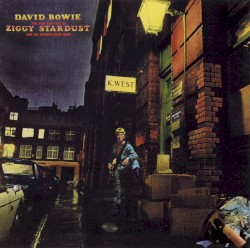
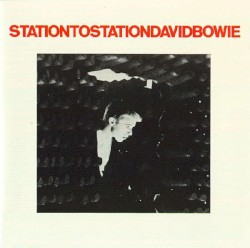

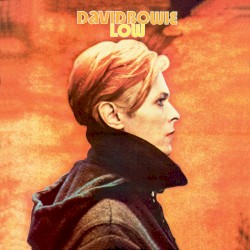
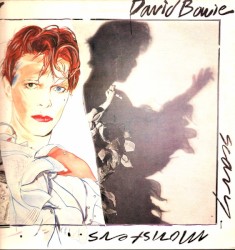
大卫·鲍伊 的其他歌(本站收录)
- 英雄大卫·鲍伊 · 1977
- Life on Mars?大卫·鲍伊 · 1971
- 太空怪谈大卫·鲍伊 · 1969
- Changes大卫·鲍伊 · 1972
- Station to Station大卫·鲍伊 · 1976
风格、年代相近的歌
- I'm Coming Out戴安娜·罗斯 · 1980
- Lovely Day比尔·威瑟斯 · 1977
- You Are the Sunshine of My Life史提夫·汪达 · 1973
- I Can't Stand the RainAnn Peebles · 1973
- Let's Get It On马文·盖伊 · 1973
- Midnight Train to Georgia格拉迪丝·奈特 · 1973
- Superstition史提夫·汪达 · 1972
- I'll Take You There史黛波歌手家族 · 1972
- Lean on Me比尔·威瑟斯 · 1972
- Love and Happiness阿尔·格林 · 1972
- Sail Away兰迪·纽曼 · 1972
- What's Going On马文·盖伊 · 1971