 乐单
介绍
这个词条没有中文维基百科条目,下面是英文维基百科的原文。
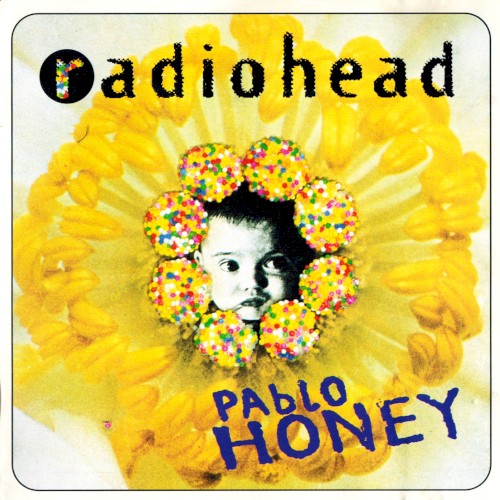
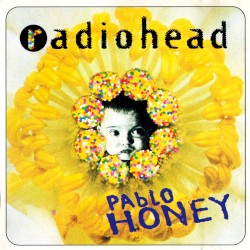
"Creep" is the debut single by the English rock band Radiohead, released on 21 September 1992 by EMI. It was included on Radiohead's debut album, Pablo Honey (1993). It features "blasts" of guitar noise and lyrics describing an obsessive unrequited attraction.
Radiohead had not planned to release "Creep", and recorded it at the suggestion of the producers, Sean Slade and Paul Q. Kolderie, while they were working on other songs. They took elements from the 1972 song "The Air That I Breathe" by Albert Hammond and Mike Hazlewood, which was later covered by the Hollies. Following legal action, Hammond and Hazlewood were credited as co-writers.
Kolderie convinced EMI to release "Creep" as a single. It was initially unsuccessful, but achieved radio play in Israel and became popular on American alternative rock radio. It was reissued in 1993 and became an international hit, likened to "slacker anthems" such as "Smells Like Teen Spirit" by Nirvana and "Loser" by Beck. Reviews were mostly positive. Rolling Stone later named "Creep" one of the greatest debut singles and included it in the 2021 and 2024 editions of its "500 Greatest Songs of All Time".
The success gave Radiohead freedom on their second album, The Bends (1995). EMI pressured Radiohead to match the success, which created tension. Radiohead departed from the style of "Creep" and grew weary of it, feeling it set narrow expectations of their music, and did not perform it for several years. Though they achieved greater commercial and critical success with later albums, "Creep" remains Radiohead's most successful single. It has been covered by numerous artists. In 2021, the Radiohead singer, Thom Yorke, released a remix with synthesisers and time-stretched acoustic guitar.
Recording
Radiohead formed in Oxfordshire in 1985 and signed a record contract with EMI in 1991. Their 1992 debut, the Drill EP, drew little attention. For their debut single, Radiohead hired the producers Sean Slade and Paul Q. Kolderie and recorded at Chipping Norton Recording Studios in Chipping Norton, Oxfordshire. They worked on the songs "Inside My Head" and "Lurgee", but without results.
Between rehearsals, Radiohead spontaneously performed another song, "Creep", which the singer, Thom Yorke, had written at the University of Exeter in the late 1980s. Yorke jokingly described it as their "Scott Walker song", which the producers misinterpreted. As they left the studio that night, Slade told Kolderie, "Too bad their best song's a cover."
After further recording sessions failed to produce results, Kolderie suggested Radiohead perform "Creep". After the first take, everyone in the studio burst into applause. Radiohead did not know they were being recorded; according to the drummer, Philip Selway, "The reason it sounds so powerful is because it's completely unselfconscious."
After Radiohead assured Kolderie that "Creep" was an original song, he called EMI and convinced them to release it as the single. According to Kolderie, "Everyone [at EMI] who heard 'Creep' just started going insane." Slade and Kolderie suggested that the lead guitarist, Jonny Greenwood, record a piano part. While mixing the song, Kolderie forgot to add the piano until the outro, but the band approved of the result.
Lyrics
According to the critic Alex Ross, "Creep" has "obsessive" lyrics that depict the "self-lacerating rage" of an unrequited attraction. Greenwood said the lyrics were inspired by a woman who Yorke had "followed for a couple of days", and who unexpectedly attended a Radiohead performance. John Harris, then the Oxford correspondent for Melody Maker, said "Creep" was about a girl who frequented the upmarket Little Clarendon Street in Oxford. According to Harris, Yorke preferred the more bohemian Jericho, and expressed his discomfort using the lines "What the hell am I doing here / I don't belong here".
Asked if the lyrics were inspired by a real person who made him feel like a "creep", Yorke said: "Yeah. It was a pretty strange period in my life. When I was at college and stuff and I was really fucked up and wanted to leave and do proper things with my life like be in a rock band." Yorke said he was not happy with the lyrics, and thought they were "pretty crap". Asked about "Creep" in 1993, Yorke said: "I have a real problem being a man in the '90s... Any man with any sensitivity or conscience toward the opposite sex would have a problem. To actually assert yourself in a masculine way without looking like you're in a hard-rock band is a very difficult thing to do... It comes back to the music we write, which is not effeminate, but it's not brutal in its arrogance. It is one of the things I'm always trying: to assert a sexual persona and on the other hand trying desperately to negate it." Greenwood said "Creep" was in fact a happy song about "recognising what you are".
正文摘自英文维基百科「Creep (Radiohead song)」,按 CC BY-SA 4.0 使用;删去了参考文献、外部链接、表格和图片;篇幅所限只节选了前面一部分,全文见原条目。
资料卡
- 作品性质
- 单曲
- 表演者
- 电台司令
- 发行日期
- 1992 年 9 月
- 收录于 / 属于
- 亲爱的派伯诺
- 流派
- 另类摇滚
- 语言
- 英语
- 唱片公司
- Parlophone
- 作词
- 汤姆·约克
- 改编自
- The Air That I Breathe
- 下一部
- Anyone Can Play Guitar
资料来自 Wikidata Q863433(CC0)。
制作名单
- 录音室
- 混音:Fort Apache(Cambridge);录音:Chipping Norton Recording Studios(Chipping Norton)
- ISRC
- GBAYE9200070
制作
- 工程师
- Paul Q. Kolderie、Sean Slade
- 混音
- Paul Q. Kolderie、Sean Slade
- 制作人
- Paul Q. Kolderie、Sean Slade
演奏与演唱
- 贝斯
- Colin Greenwood
- 吉他
- 庄尼·格连活、艾德·欧布瑞、汤姆·约克
- 风琴
- 庄尼·格连活
- 钢琴
- 庄尼·格连活
- 鼓
- 菲尔·塞尔韦
- 演唱
- 艾德·欧布瑞、汤姆·约克
词曲与编曲
- 作曲
- Colin Greenwood、庄尼·格连活、艾伯特·哈蒙德、Mike Hazlewood、艾德·欧布瑞、菲尔·塞尔韦、汤姆·约克
- 作词
- 汤姆·约克
名单来自 MusicBrainz(CC0)这条录音的关系数据,由志愿者录入,不一定齐全。
更多资料
在哪听
电台司令 的专辑
艺人页 ›
电台司令 的其他歌(本站收录)
- Idioteque电台司令 · 2000
- Karma Police电台司令 · 1997
风格、年代相近的歌
- Everlong喷火战机乐队 · 1997
- Common People果浆乐团 · 1995
- 奇迹之墙绿洲乐队 · 1995
- You Oughta Know艾拉妮丝·莫莉塞特 · 1995
- 神经衰弱年轻岁月 · 1994
- Closer九吋钉乐团 · 1994
- Black Hole Sun声音花园 · 1994
- Loser贝克 · 1994
- Fade into You迷星 · 1994
- Buddy Holly威瑟乐团 · 1994
- Rid of MePJ哈维 · 1993
- CannonballThe Breeders · 1993