乐单
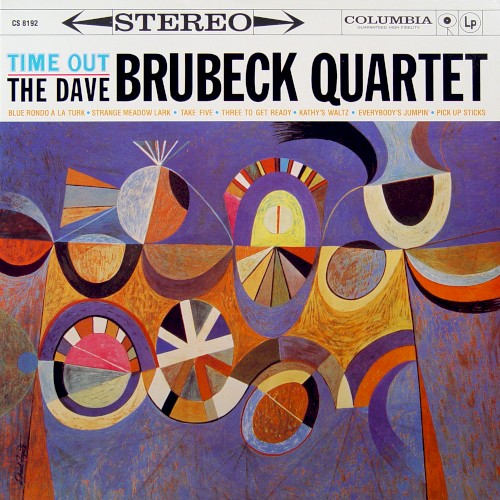
Time Out (1959)
曲目
- A1Blue Rondo à la Turk6:49
- A2Strange Meadow Lark7:28
- A3Take Five5:30
- B1Three to Get Ready5:29
- B2Kathy’s Waltz4:55
- B3Everybody’s Jumpin’4:29
- B4Pick Up Sticks4:21
7 首 · 约 39 分钟 · 依据 1959 US 发行的版本,在 MusicBrainz 看这个版本。
介绍
这个词条没有中文维基百科条目,下面是英文维基百科的原文。
Time Out is a studio album by the American jazz group the Dave Brubeck Quartet, released in 1959 by Columbia Records. Recorded at Columbia’s 30th Street Studio in New York City, the album is noted for its pioneering use of unconventional time signatures for jazz, including 98, 64, and 54. Musically, it represents a subtle fusion of cool and West Coast influences.
Time Out peaked at number two on the Billboard albums chart and became the first jazz album to sell one million copies. Its standout single, "Take Five", was also the first jazz single to sell over one million copies. By 1963, the album had sold more than 500,000 units, and in 2011, it was certified double platinum by the Recording Industry Association of America, recognizing sales of over two million copies.
The album was inducted into the Grammy Hall of Fame in 2009, and in 2005, it was selected for preservation in the United States National Recording Registry by the Library of Congress as being "culturally, historically, or aesthetically significant".
Background
The album was intended as an experiment using musical styles Brubeck discovered abroad while on a United States Department of State-sponsored tour of Eurasia, such as when he observed in Turkey a group of street musicians performing a traditional Turkish folk song that was played in 98 time with subdivisions of 2+2+2+3, a rare meter for Western music.
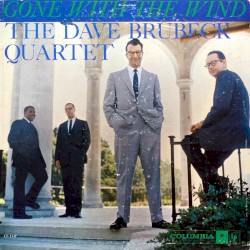
On the condition that Brubeck's group first record Gone with the Wind (a conventional album of traditional songs of the American South that received negative reviews upon its release), Columbia president Goddard Lieberson took a chance to underwrite and release Time Out. The album produced a Top 40 hit single in "Take Five", composed by Paul Desmond (the only album track not written by Dave Brubeck).
Music
The theme of Time Out is uncommon time signatures.
"Blue Rondo à la Turk" starts in 98, with a typically Balkan 2+2+2+3 subdivision into short and long beats (the rhythm of the Turkish zeybek, equivalent of the Greek zeibekiko) as opposed to the more typical way of subdividing 98 as 3+3+3, but the saxophone and piano solos are in 44. The title plays on Mozart's "Rondo alla Turca" from his Piano Sonata No. 11 and that the band heard the rhythm while traveling in Turkey.
"Strange Meadow Lark" begins with a piano solo that exhibits no clear time signature, but then settles into a fairly ordinary 44 swing once the rest of the group joins. "Take Five" is in 54 throughout. According to Desmond, "It was never supposed to be a hit. It was supposed to be a Joe Morello drum solo." "Three to Get Ready" begins in waltz-time, after which it begins to alternate between two measures of 34 and two of 44. "Kathy's Waltz", named after Brubeck's daughter Cathy but misspelled, starts in 44, switches to double-waltz time, and finally merges the two. "Everybody's Jumpin'" is mainly in a very flexible 64, while "Pick Up Sticks" offers a clear and steady 64.
In an article for The Independent, Spencer Leigh speculated that "Kathy's Waltz" inspired the Beatles song "All My Loving" (written by Paul McCartney, credited to Lennon/McCartney). The two songs share similar rhythmic endings to the last phrases of their melodies.
Legacy
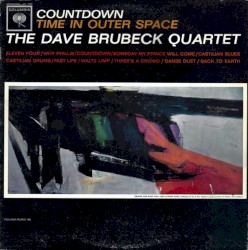
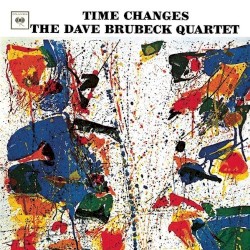
The Dave Brubeck Quartet followed Time Out with three similarly named albums that also made use of uncommon time signatures: Time Further Out (1961), Countdown—Time in Outer Space (1962), and Time Changes (1964). Time In (1966), which featured the quartet but was credited only to Brubeck, used more conventional time signatures.
Time Out was one of 50 recordings chosen by the Library of Congress to be added to the National Recording Registry in 2005. It was also listed that year in the book 1001 Albums You Must Hear Before You Die. In 2009, the album was inducted into the Grammy Hall of Fame.
Reissues
In 1997, the album was remastered for compact disc by Legacy Recordings.
In 2009, Legacy Recordings released a special three-disc 50th Anniversary Edition of Time Out. This edition offers a much higher dynamic range than the 1997 remaster. In addition to the complete album, the Legacy Edition includes a bonus disc featuring previously unreleased concert recordings of the same Brubeck Quartet from the 1961, 1963, and 1964 gatherings of Newport Jazz Festival. The Legacy Edition's third disc is a DVD featuring a 30-minute interview with Brubeck in 2003, and an interactive "piano lesson" where the viewer can toggle through four camera angles of Brubeck performing a solo version of "Three to Get Ready".
正文摘自英文维基百科「Time Out (Dave Brubeck Quartet album)」,按 CC BY-SA 4.0 使用;删去了参考文献、外部链接、表格和图片;篇幅所限只节选了前面一部分,全文见原条目。
资料卡
- 作品性质
- 音乐专辑
- 表演者
- 戴夫·布鲁贝克四人乐队
- 发行日期
- 1959 年 12 月 14 日
- 录音地点
- CBS30街录音室
- 时长
- 38 分 21 秒
- 流派
- 冷爵士乐
- 语言
- 没有该语言的内容
- 唱片公司
- 哥伦比亚唱片
- 制作人
- 蒂奥·马塞洛
- 封面设计
- S. Neil Fujita
资料来自 Wikidata Q498089(CC0)。
制作名单
- 厂牌
- Columbia(目录号 CL 1397)
制作
- 制作人
- Teo Macero
演奏与演唱
- 钢琴
- 戴夫·布鲁贝克
- 中音萨克斯
- 保罗‧戴斯蒙
- 鼓
- Joe Morello
- 贝斯
- Eugene Wright
词曲与编曲
- 作曲
- 戴夫·布鲁贝克(第 A1、A2、B1、B2、B3、B4 首)、Iola Brubeck(第 A2 首)、保罗‧戴斯蒙(第 A3 首)
名单来自 MusicBrainz(CC0)这一发行版本的关系数据,由志愿者录入,不一定齐全。
更多资料与乐评
在哪听
戴夫·布鲁贝克四人乐队 的其他专辑
艺人页 ›



相似的专辑