乐单
曲目
- 1Dance Me to the End of Love4:40
- 2Coming Back to You3:36
- 3The Law4:29
- 4Night Comes On4:42
- 5Hallelujah4:40
- 6The Captain4:10
- 7Hunter’s Lullaby2:27
- 8Heart With No Companion3:04
- 9If It Be Your Will3:43
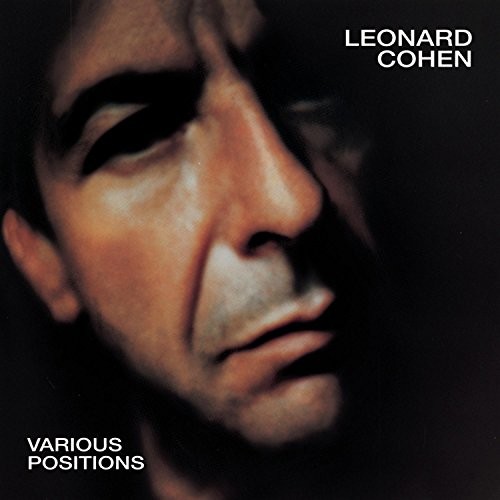
9 首 · 约 36 分钟 · 依据 1984 US 发行的版本,在 MusicBrainz 看这个版本。
介绍
这个词条没有中文维基百科条目,下面是英文维基百科的原文。
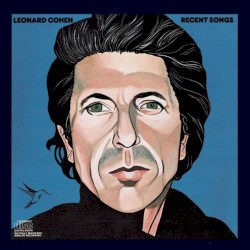
Various Positions is the seventh studio album by Leonard Cohen, released in December 1984 (and February 1985). It marked not only his turn to a modern sound and use of synthesizers (particularly on the opening track), but also, after the harmonies and backing vocals from Jennifer Warnes on the previous Recent Songs (1979), an even greater contribution from Warnes, who is credited with Cohen as vocalist on all of the tracks.
Background
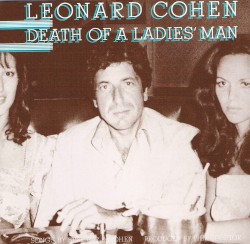
After recording Recent Songs, Cohen did not record again for five years and published no new writing until Book of Mercy in 1984. Asked in 2001 by Mojo's Sylvie Simmons about this period of inactivity, the singer replied, "My children were living in the South of France and I spent a lot of time visiting them. The pieces in Book of Mercy were coming and I was, slowly, writing the album that ended up as Various Positions." Cohen did write and star in the 1983 made-for-TV musical I Am a Hotel, which featured several of his songs in the narration. Various Positions was produced by John Lissauer, who had been at the helm of Cohen's 1974 album New Skin for the Old Ceremony. The pair had not worked together or even spoken since a project called Songs For Rebecca had been scuttled by Cohen's manager Marty Machat to clear the way for the singer to work with Phil Spector on 1977's Death of a Ladies' Man. In the interim, Lissauer had worked with Barbra Streisand, Manhattan Transfer, and had scored films. According to Anthony Reynolds 2010 memoir Leonard Cohen: A Remarkable Life, the pair met at the Royalton on 44th Street in New York City so Cohen could play Lissauer his songs, and the producer was surprised: ... instead of presenting me with the new songs exclusively on a Spanish guitar as usual, he had this dinky little Casio keyboard with him ... The Casio was a great discovery for Leonard because these machines allows you to put one finger down and have a whole band come back at you ... and this is how he came up with "Dance Me to the End of Love". Another alteration that Lissauer noticed was the remarkable change in Cohen's singing, with his voice having dropped about a minor third. Cohen later remarked to author Paul Zollo in the book Songwriters on Songwriting: My voice has gotten very very deep over the years and seems even to be deepening. I thought it was because of 50,000 cigarettes and several swimming pools of whiskey that my voice has gotten low. But I gave up smoking a couple of years ago and it’s still getting deeper ... My voice really started to change around 1982. It started to deepen and I started to cop to the fact that it was deepening. The use of synthesisers and Cohen's "new voice" would mark the beginning of a new era in Cohen's composing style and sound.
Recording
The album was recorded at Quadrasonic Sound in New York in the summer of 1983 with Leanne Ungar engineering. A small core of musicians from a group called Slow Train backed Cohen on the album. Speaking with Judith Fitzgerald of The Globe and Mail in 2000, Cohen cited Various Positions as a breakthrough of sorts:
It was the first time I could really see and intuitively feel what it was I was doing, making or creating in that enterprise. After a long period of barrenness, it all just seemed to click. Suddenly, I knew these weren't discrete songs I was writing ... I could see – I could sense a unity. Various Positions had its own life, its own narrative. It was all laid out and all of a sudden it all made sense. It was almost painfully joyful, if that makes some sense. The pulling and the putting of the pieces together coherently, the being inside of that process and knowing, once I'd done that, it would be finished and I would have to leave it and go back to the world.
The album contains two songs that would become live standards for Cohen: "Dance Me to the End of Love" and "Hallelujah". In 2010, producer John Lissauer revealed to Cohen biographer Anthony Reynolds that the drum track on the former is actually from the Casio keyboard the song had been composed on: "It didn't even have audio output so we had to mike it up. We tried to do that song with real drums and percussion but he liked the simplicity of the Casio and had become accustomed to it." This explains the slight strain in Cohen's singing on the track; changing the key on the Casio would have meant altering the drum pattern that Cohen wanted to use (The song, which would become Cohen's perennial show opener, is performed in a lower key live). Although structured as a love song, "Dance Me to the End of Love" was in fact inspired by the Holocaust. In an interview, Cohen said of the song:
正文摘自英文维基百科「Various Positions」,按 CC BY-SA 4.0 使用;删去了参考文献、外部链接、表格和图片;篇幅所限只节选了前面一部分,全文见原条目。
资料卡
- 作品性质
- 音乐专辑
- 表演者
- 里奥纳德·科恩
- 发行日期
- 1984 年 12 月 11 日
- 时长
- 35 分 29 秒
- 流派
- 民谣摇滚、软式摇滚
- 语言
- 英语
- 唱片公司
- 哥伦比亚唱片
- 制作人
- John Lissauer
- 作曲
- 里奥纳德·科恩
资料来自 Wikidata Q331903(CC0)。
制作名单
- 厂牌
- Columbia(目录号 CK 66950)
- 录音室
- 录音:Quadrasonic Sound(New York)
制作
- 助理工程师
- Lee Friedman
- 混音
- Leanne Ungar
- 制作人
- John Lissauer
- 录音
- John Smith、Leanne Ungar
演奏与演唱
- 主唱
- 里奥纳德·科恩
- 演唱
- 珍妮弗·华安斯
词曲与编曲
- 编曲
- John Lissauer
- 作曲
- 里奥纳德·科恩
- 作词
- 里奥纳德·科恩
名单来自 MusicBrainz(CC0)这一发行版本的关系数据,由志愿者录入,不一定齐全。
更多资料与乐评
在哪听
里奥纳德·科恩 的其他专辑
艺人页 ›



同在 1984 年发行