乐单
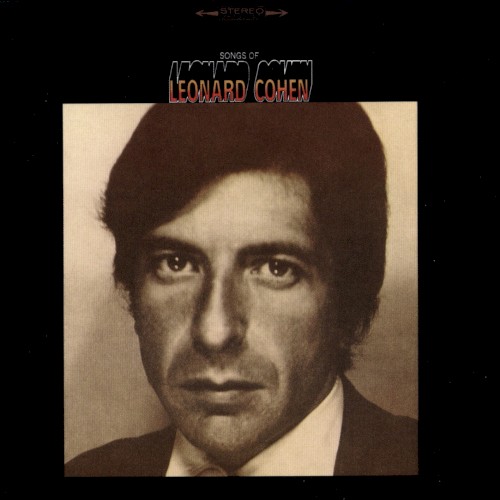
曲目
- A1Suzanne3:49
- A2Master Song5:55
- A3Winter Lady2:16
- A4The Stranger Song5:00
- A5Sisters of Mercy3:33
- B1So Long, Marianne5:39
- B2Hey, That’s No Way to Say Goodbye2:56
- B3Stories of the Street4:36
- B4Teachers3:02
- B5One of Us Cannot Be Wrong4:24
10 首 · 约 41 分钟 · 依据 1967-12 US 发行的版本,在 MusicBrainz 看这个版本。
介绍
这个词条没有中文维基百科条目,下面是英文维基百科的原文。
Songs of Leonard Cohen is the debut studio album by Canadian singer-songwriter Leonard Cohen, released on December 27, 1967, on Columbia Records. More successful in Europe than in North America, Songs of Leonard Cohen foreshadowed the kind of chart success Cohen would go on to achieve. It spent nearly a year and a half on the UK Albums Chart, peaking at number 13. In the US, it reached number 83 on the Billboard 200.
Background
Cohen had received positive attention from critics as a poet and novelist but had maintained a keen interest in music, having played guitar in a country and western band called the Buckskin Boys as a teenager. In 1966, Cohen set out for Nashville, where he hoped to become a country songwriter, but instead got caught up in New York City's folk scene. In November 1966, Judy Collins recorded and included Cohen's song "Suzanne" for her album In My Life and Cohen soon came to the attention of record producer John Hammond. Although Hammond (who initially signed Cohen to his contract with Columbia Records) was supposed to produce the record, he became sick and was replaced by the producer John Simon.
Recording
Initially, Hammond had Cohen work up guitar parts for "Master Song" and "Sisters of Mercy" with jazz bassist Willie Ruff, and then brought in some of New York's top session musicians to join them, a move that made Cohen nervous; as biographer Anthony Reynolds observes in his book Leonard Cohen: A Remarkable Life, the dynamic between Cohen and Ruff had been intimate and natural but "the arrival of more anonymous personnel unnerved Cohen, the studio novice put off by their proficiency." Cohen did ask that a full-length mirror be brought into the studio because, as he explained to Mojo in November 2001, "through some version of narcissism, I always used to play in front of a mirror. I guess it was the best way to look while playing the guitar, or maybe it was just where the chair was. But I was very comfortable looking at myself playing." After Hammond dropped out of the sessions, John Simon took over as producer and, by all accounts, Simon and Cohen clashed over instrumentation and mixing; Cohen wanted the album to have a sparse sound, while Simon felt the songs could benefit from arrangements that included strings and horns. Writing for Mojo in 2012, Sylvie Simmons recalls, "When Leonard heard the result, he was not happy; the orchestration on 'Suzanne' was overblown, while everything about 'Hey, That's No Way to Say Goodbye' felt too soft. Several tracks had too much bottom, and there were even drums; Leonard had clearly stipulated no drums." The singer and producer also quarreled over a slight stop in the middle of "So Long, Marianne" – a device Cohen felt interrupted the song. According to biographer Ira Nadel, although Cohen was able to make changes to the mix, some of Simon's additions "couldn't be removed from the four-track master tape".
The instrumentalists – not credited on the album sleeve – included Chester Crill, Chris Darrow, Solomon Feldthouse and David Lindley of Kaleidoscope, who had been recruited personally by Cohen after he saw the band play at a New York club.
Composition
The album features some of Cohen's most celebrated songs. Mojo has described the album as "not only the cornerstone of Cohen's remarkable career, but also a genuine songwriting landmark in terms of language, thematic developments and even arrangements." "Suzanne" was ranked 41st on Pitchfork's 'Top 200 Songs of the 1960s', while "So Long, Marianne" was also featured on the list at 190th. In a 1986 interview with the BBC Cohen explained, "The writing of 'Suzanne,' like all my songs, took a long time. I wrote most of it in Montreal - all of it in Montreal - over the space of, perhaps, four or five months. I had many, many verses to it. Sometimes the song would go off on a tangent, and you'll have perfectly respectable verses, but that have led you away from the original feel of the song. So, it's a matter of coming back. It's a very painful process because you have to throw away a lot of good stuff." In the same interview, Cohen also revealed that "Master Song" was written "on a stone bench at what was the corner of Burnside and Guy Street...I remember sitting on that bench, working out the lyric to that song."
正文摘自英文维基百科「Songs of Leonard Cohen」,按 CC BY-SA 4.0 使用;删去了参考文献、外部链接、表格和图片;篇幅所限只节选了前面一部分,全文见原条目。
资料卡
- 作品性质
- 音乐专辑
- 表演者
- 里奥纳德·科恩
- 发行日期
- 1967 年 12 月 27 日
- 时长
- 41 分 09 秒
- 流派
- 民俗音乐
- 语言
- 英语
- 唱片公司
- 哥伦比亚唱片
- 制作人
- 约翰·赛门
- 作曲
- 里奥纳德·科恩
资料来自 Wikidata Q923550(CC0)。
制作名单
- 厂牌
- Columbia(目录号 CL 2733)
制作
- 制作人
- John Simon
演奏与演唱
- 指挥
- John Simon
- 主唱
- 里奥纳德·科恩
词曲与编曲
- 作曲
- 里奥纳德·科恩
- 作词
- 里奥纳德·科恩
名单来自 MusicBrainz(CC0)这一发行版本的关系数据,由志愿者录入,不一定齐全。
更多资料与乐评
在哪听
里奥纳德·科恩 的其他专辑
艺人页 ›

相似的专辑

同在 1967 年发行