乐单
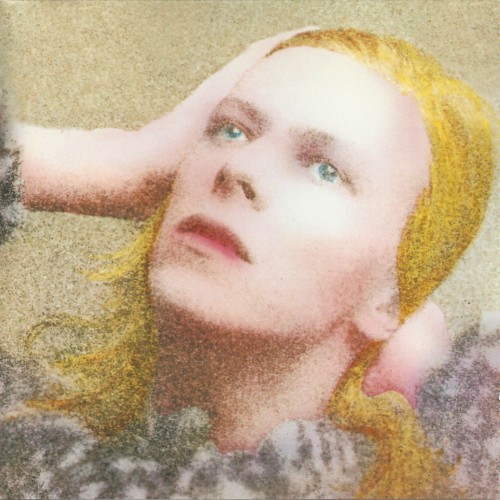
Hunky Dory (1971)
滚石 500(2020) #88滚石 500(2003) #1071001 张专辑
- 艺人
- 大卫·鲍伊
- 发行
- 1971-12-17
- 类型
- 专辑
- 唱片公司
- RCA Victor
- 制作人
- 肯·史考特
- 版本
- MusicBrainz 上有 34 个发行版本
曲目
- 1Changes3:37
- 2Oh! You Pretty Things3:12
- 3Eight Line Poem2:56
- 4Life on Mars?3:54
- 5Kooks2:53
- 6Quicksand5:07
- 7Fill Your Heart3:07
- 8Andy Warhol3:57
- 9Song for Bob Dylan4:12
- 10Queen Bitch3:19
- 11The Bewlay Brothers5:24
11 首 · 约 42 分钟 · 依据 1971-12 US 发行的版本,在 MusicBrainz 看这个版本。
介绍
《Hunky Dory》是英国摇滚歌手大卫·鲍伊的第四张录音室专辑,于1971年12月17日发行,发行方为RCA唱片。专辑的录制工作在伦敦的三叉戟工作室进行。专辑的制作人是肯·史考特。
《Hunky Dory》发行后在英国专辑排行榜达到第三名。乐评方面,《Hunky Dory》获得剧烈赞赏,包含滚石杂志在内给予其极高评价。《Hunky Dory》受RIAA认证为白金唱片。
正文摘自中文维基百科「Hunky Dory」,按 CC BY-SA 4.0 使用;已转为简体,删去了参考文献、外部链接、表格和图片。
英文维基百科上的更多内容(英文原文,约 3,157 字符)
Hunky Dory is the fourth studio album by the English musician David Bowie, released in the United Kingdom on 17 December 1971 through RCA Records. Following a break from touring and recording, Bowie settled down to write new songs, composing on piano rather than guitar as in earlier works. Bowie assembled Mick Ronson (guitar), Trevor Bolder (bass) and Mick Woodmansey (drums), and recorded the album in mid-1971 at Trident Studios in London. Rick Wakeman contributed piano shortly before joining Yes. Bowie co-produced the album with Ken Scott, who had engineered Bowie's previous two records.
Compared to the guitar-driven hard rock of The Man Who Sold the World, Bowie opted for a warmer, more melodic piano-based pop rock and art pop style on Hunky Dory. His lyrical concerns on the record range from the compulsive nature of artistic reinvention on "Changes" to occultism and Nietzschean philosophy on "Oh! You Pretty Things" and "Quicksand"; several songs make cultural and literary references. He was also inspired by his United States tour to write songs dedicated to three American icons: Andy Warhol, Bob Dylan and Lou Reed. The song "Kooks" was dedicated to Bowie's newborn son Duncan. The album's cover artwork, photographed in monochrome and subsequently recoloured, features Bowie in a pose inspired by actresses of the Hollywood Golden Age.
RCA offered little promotion for Hunky Dory and its lead single "Changes", wary that Bowie would transform his image shortly. Thus, the album initially sold poorly and failed to chart, despite very positive reviews from the British and American music press. After the commercial breakthrough of Bowie's Ziggy Stardust album in 1972, Hunky Dory garnered renewed interest, with sales peaking at number three on the UK Albums Chart. Retrospectively, Hunky Dory has been critically acclaimed as one of Bowie's best works, and features on several lists of the greatest albums of all time. Within the context of his career, Hunky Dory is considered the album where "Bowie starts to become Bowie", definitively discovering his voice and style.
Background
After David Bowie completed his third studio album, The Man Who Sold the World, in May 1970, he became less active in both the studio and on stage. His contract with the music publisher Essex had expired and his new manager Tony Defries was facing prior contractual challenges. Bowie was also without a backing band, as the musicians on The Man Who Sold the World – including its producer and bassist Tony Visconti, the guitarist Mick Ronson and the drummer Mick Woodmansey – departed in August 1970 due to personal conflicts with the artist. After hearing a demo of Bowie's "Holy Holy", recorded in autumn 1970, Defries signed the singer to a contract with Chrysalis, but thereafter limited his work with Bowie to focus on other projects. Bowie, who was devoting himself to songwriting, turned to Chrysalis's partner Bob Grace, who loved the demo of "Holy Holy" and subsequently booked time at Radio Luxembourg's studios in London for Bowie to record his demos. "Holy Holy", recorded in November 1970 and released as a single in January 1971, was a commercial flop.
这部分摘自英文维基百科「Hunky Dory」,按 CC BY-SA 4.0 使用;删去了参考文献、外部链接、表格和图片;篇幅所限只节选了前面一部分,全文见原条目。
资料卡
- 作品性质
- 音乐专辑
- 表演者
- 大卫·鲍伊
- 发行日期
- 1971 年 12 月 17 日
- 录音地点
- 三叉戟录音室
- 时长
- 39 分 04 秒
- 流派
- 华丽摇滚、艺术摇滚、民谣摇滚、艺术流行、流行摇滚
- 语言
- 英语
- 唱片公司
- RCA Victor
- 制作人
- 肯·史考特
资料来自 Wikidata Q755988(CC0)。
制作名单
- 厂牌
- RCA(目录号 LSP-4623)
- 录音室
- 录音:Trident Studios(Soho)
制作
- 制作人
- Ken Scott、大卫·鲍伊(其中 8 首)
- 录音
- Ken Scott
- 重混
- Ken Scott(其中 7 首)
- 助理制作人
- 大卫·鲍伊(第 2、4、11 首)
- 混音
- Ken Scott(第 2 首)
演奏与演唱
- 主唱
- 大卫·鲍伊
- 贝斯
- Trevor Bolder(其中 8 首)
- 鼓
- Mick Woodmansey(其中 8 首)
- 和声
- 麦克・朗森(其中 8 首)、大卫·鲍伊(第 1、6 首)
- 电吉他
- 麦克・朗森(第 1、2、3、4、5、10 首)
- 钢琴
- 瑞奇·威克曼(第 1、4、5、6、7、9 首)、大卫·鲍伊(第 2 首)
- 乐团
- BBC Symphony Orchestra(第 1、4、5、6、7 首)
- 十二弦吉他
- 大卫·鲍伊(第 5、6、9、10 首)
- 原声吉他
- 麦克・朗森(第 6、8、9 首)
- 萨克斯
- 大卫·鲍伊(第 1、7 首)
- 拍手
- 麦克・朗森(第 2、8 首)、大卫·鲍伊(第 2 首)
- 指挥
- 麦克・朗森(第 4 首)
- 美乐特朗
- 麦克・朗森(第 4 首)
- 小号
- Trevor Bolder(第 5 首)
- 打击乐
- 麦克・朗森(第 8 首)
- 合成器
- Ken Scott(第 8 首)
- 念白
- 大卫·鲍伊(第 8 首)、Ken Scott(第 8 首)
- 吉他
- 麦克・朗森(第 11 首)
词曲与编曲
- 作曲
- 大卫·鲍伊(其中 10 首)、丹尼尔·利赫特(第 1 首)
- 作词
- 大卫·鲍伊(其中 10 首)
- 器乐编曲
- 麦克・朗森(第 1、4、5、6、8 首)
- 词曲
- Biff Rose(第 7 首)、保罗·威廉斯(第 7 首)
名单来自 MusicBrainz(CC0)这一发行版本的关系数据,由志愿者录入,不一定齐全。
更多资料与乐评
在哪听
大卫·鲍伊 的其他专辑
艺人页 ›
相似的专辑
同在 1971 年发行