乐单
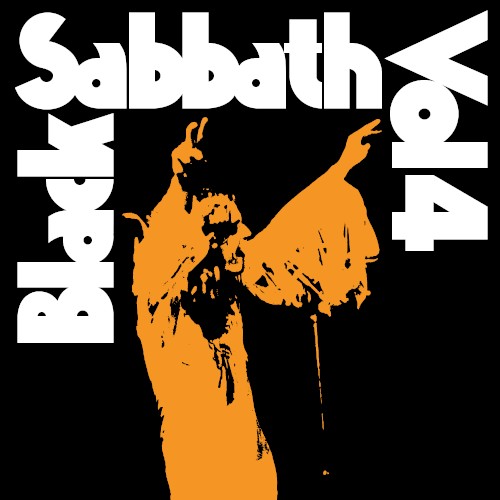
第四辑 (1972)
曲目
- A1Wheels of Confusion8:02
- A2Tomorrow’s Dream3:13
- A3Changes4:46
- A4FX1:43
- A5Supernaut4:40
- B1Snowblind5:34
- B2Cornucopia3:55
- B3Laguna Sunrise2:56
- B4St. Vitus’ Dance2:30
- B5Under the Sun5:51
10 首 · 约 43 分钟 · 依据 1972-09-25 US 发行的版本,在 MusicBrainz 看这个版本。
介绍
这个词条没有中文维基百科条目,下面是英文维基百科的原文。
Vol. 4 is the fourth studio album by the English heavy metal band Black Sabbath, released on 22 September 1972, by Vertigo Records. It was the first album by Black Sabbath not produced by Rodger Bain; guitarist Tony Iommi assumed production duties. Patrick Meehan, the band's then-manager, was listed as co-producer, though his actual involvement in the album's production was minimal.
The album continues the extremely heavy direction taken on the band's previous album, Master of Reality, while also featuring more experimental elements, such as on "Changes" and "FX".
Though it again failed to win the admiration of the music press, the album was again a major commercial success, peaking at No. 5 in the UK and No. 13 in the US, eventually being certified platinum in the latter. The album is today regarded as one of Sabbath's best albums, and has appeared on multiple lists of the greatest heavy metal albums.
Background
In spite of the success of the band's previous three albums, Black Sabbath, Paranoid, and Master of Reality, the band had begun to struggle. These issues mainly arose due to the band's drug usage, which had accelerated during the recording of Master of Reality.
Recording
Though the production of Vol. 4 is officially credited to Black Sabbath and Patrick Meehan, the bulk of the actual production was performed by guitarist Tony Iommi. "It's the first album we've produced ourselves," said vocalist Ozzy Osbourne in 1972. "Previously we had Rodger Bain as a producer – and, although he's very good, he didn't really feel what the band was doing. It was a matter of communication. This time, we did it with Patrick (Meehan), our manager, and I think we're all very happy… It was great to work in an American studio." Meehan had little actual involvement in the album's production but nonetheless insisted he be listed as producer, according to Iommi.
The recording was plagued with problems, many due to substance abuse. In the studio, the band regularly had speaker boxes full of cocaine delivered.
Struggling to record "Cornucopia" after "sitting in the middle of the room, just doing drugs", drummer Bill Ward feared that he was about to be fired: "I hated the song, there were some patterns that were just horrible. I nailed it in the end, but the reaction I got was the cold shoulder from everybody. It was like 'Well, just go home, you're not being of any use right now.' I felt like I'd blown it, I was about to get fired." According to the book How Black Was Our Sabbath, Ward "was always a drinker, but rarely appeared drunk. Retrospectively, that might have been a danger sign. Now, his self-control was clearly slipping." Iommi claims in his autobiography that Ward almost died after a prank-gone-wrong during recording. The Bel Air mansion the band was renting belonged to John du Pont and the band found several spray cans of gold DuPont paint in a room of the house; finding Ward naked and unconscious after drinking heavily, they proceeded to cover the drummer in gold paint from head to toe, blocking his pores and causing him to suffer a seizure.
In his autobiography I Am Ozzy, Osbourne speaks at length about the sessions: "In spite of all the arsing around, musically those few weeks in Bel Air were the strongest we'd ever been." But he admits, "Eventually we started to wonder where the fuck all the coke was coming from ... that coke was the whitest, purest, strongest stuff you could ever imagine. One sniff, and you were king of the universe." During a show in support of Vol. 4 at the Hollywood Bowl, the cocaine abuse caught up to Iommi. "Tony had been doing coke literally for days. We all had, but Tony had gone over the edge. He walked off the stage and collapsed," said Osbourne. During soundcheck earlier that same day, a crazed Christian man attempted to storm the stage and stab Iommi with a dagger, but he was tackled by members of the band's crew. According to Butler, "we wanted to take a break" at that point.
Osbourne also recounts the band's ongoing anxiety over the possibility of being busted, which worsened after they went to the cinema to see The French Connection (1971), about undercover New York City cops busting an international heroin-smuggling ring. "By the time the credits rolled," Osbourne recalled, "I was hyperventilating." In 2013, Butler admitted to Mojo magazine that heroin, too, had entered the picture: "We sniffed it, we never shot up ... I didn't realise how nuts things had gotten until I went home and the girl I was with didn't recognise me."
正文摘自英文维基百科「Vol. 4 (Black Sabbath album)」,按 CC BY-SA 4.0 使用;删去了参考文献、外部链接、表格和图片;篇幅所限只节选了前面一部分,全文见原条目。
资料卡
- 作品性质
- 音乐专辑
- 表演者
- 黑色安息日
- 发行日期
- 1972 年 9 月 25 日
- 录音地点
- 唱片工场
- 时长
- 42 分 23 秒
- 流派
- 重金属音乐
- 语言
- 英语
- 唱片公司
- 眩晕唱片
- 制作人
- 帕特·米汉 (制作人)
资料来自 Wikidata Q163950(CC0)。
制作名单
- 厂牌
- Warner Bros. Records(目录号 BS 2602)
- 录音室
- 录音:The Record Plant(Sausalito);录音:The Record Plant(Hollywood)
制作
- 工程师
- Colin Caldwell、Vic Coppersmith‐Heaven
- 制作人
- 黑色安息日、Patrick Meehan
演奏与演唱
- 鼓
- Bill Ward
- 打击乐
- Bill Ward
- 主唱
- 奥齐·奥斯本
- 贝斯
- Geezer Butler(第 A1、A2、B2、B4、B5 首)
- 吉他
- 托尼·艾奥米(第 A1、A2、B2、B4、B5 首)
- 电贝斯
- Geezer Butler(第 A3、A4、A5、B1、B3 首)
- 电吉他
- 托尼·艾奥米(第 A3、A4、A5、B1、B3 首)
- 原声吉他
- 托尼·艾奥米(第 B3 首)
词曲与编曲
- 编曲
- 黑色安息日
- 作曲
- Geezer Butler(其中 9 首)、托尼·艾奥米(其中 9 首)、奥齐·奥斯本(其中 9 首)、Bill Ward(其中 9 首)
- 作词
- Geezer Butler(其中 7 首)
- 词曲
- Geezer Butler(第 A1、B5 首)、托尼·艾奥米(第 A1、B5 首)、奥齐·奥斯本(第 A1、B5 首)、Bill Ward(第 A1、B5 首)
名单来自 MusicBrainz(CC0)这一发行版本的关系数据,由志愿者录入,不一定齐全。
更多资料与乐评
在哪听
黑色安息日 的其他专辑
艺人页 ›
相似的专辑
同在 1972 年发行