乐单
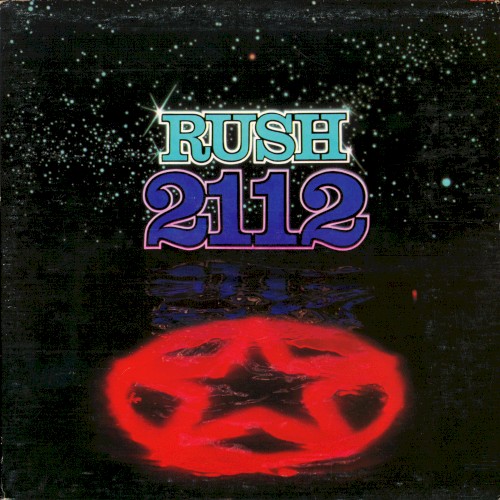
前进曼谷 (1976)
曲目
- A12112: I. Overture4:32
- A22112: II. The Temples of Syrinx2:13
- A32112: III. Discovery3:30
- A42112: IV. Presentation3:40
- A52112: V. Oracle: The Dream2:00
- A62112: VI. Soliloquy2:23
- A72112: VII. Grand Finale2:18
- B1A Passage to Bangkok3:30
- B2The Twilight Zone3:14
- B3Lessons3:48
- B4Tears3:29
- B5Something for Nothing3:56
12 首 · 约 39 分钟 · 依据 1976 US 发行的版本,在 MusicBrainz 看这个版本。
介绍
这个词条没有中文维基百科条目,下面是英文维基百科的原文。
2112 (pronounced "twenty-one twelve") is the fourth studio album by Canadian rock band Rush, released in the United States on March 24, 1976 by Mercury Records. Following the disappointing sales of their previous albums Caress of Steel and Fly by Night, in which both albums failed to chart in the top half of the Billboard 200, 2112 became the band's first major commercial success. The album reached No. 5 on the Canadian charts and No. 61 in the United States. 2112 has since become a steady seller over many decades, and has maintained a cult following among some Rush fans.
The band was in financial hardship due to the disappointing sales of 1975's Caress of Steel, which also got an unfavourable critical reception and a decline in attendance at its shows. Mercury, their international label, considered dropping them but granted one more album following negotiations with manager Ray Danniels. Rush were pressured to deliver more commercial material but decided to continue developing its progressive rock direction they had explored on Caress of Steel and made the 20-minute futuristic science-fiction title track occupy side one of 2112 with a collection of shorter songs on side two that display their hard rock roots.
2112 was released to favourable reviews from music critics and quickly outsold the band's previous albums. In Europe, the album was initially made available through imports by Phonogram Records in June 1976. Rush toured the album extensively in 1976 and 1977, which culminated in their debut concerts in Europe in June 1977. 2112 remains the band's second-highest-selling album behind Moving Pictures with more than 4 million copies sold in the US alone. It is listed in the book 1001 Albums You Must Hear Before You Die and ranked second on Rolling Stone's readers' poll of favourite prog rock albums of all time. 2112 has been reissued several times: a 40th Anniversary Edition was released in 2016 with previously unreleased material, including the album performed by numerous contemporary artists.
Background
In January 1976, Rush ended its tour to support 1975's Caress of Steel. The band had enjoyed writing and recording the album. However, guitarist Alex Lifeson recalled the group was in a state of confusion after the tour, sensing the disappointing reaction from crowds after playing songs from it on stage. The album marked the band's foray into progressive rock with lengthy, story-based songs, more complex song structures, and cerebral lyrics, which made it difficult to receive radio airplay and promote effectively. Vocalist and bassist Geddy Lee said the band could not understand the underwhelming response, and later dubbed the tour the "Down the Tubes Tour" as they struggled to meet their $125-a-week salary while crowds declined. Lee added, "That really shakes your confidence. We were so confused and disheartened." In 1980, Lifeson, who had formed the band in 1968, said this was the only moment in its history when he felt close to giving up.
In addition to their financial hardship, Rush's international label, Mercury Records, considered dropping them. Peart recalled seeing label owner Polygram's financial predictions for the forthcoming year, and the band were not listed. To help the situation Rush manager Ray Danniels flew to the label's head offices in Chicago to try to regain confidence and spoke highly of the band's ideas for a new album without having heard any of it. This followed the group's conscious decision to exclude Danniels from the writing and recording sessions, and only played the album to him when it was finished. Danniel's plea was a success, and Mercury approved one more album. Despite pressure from the label and management to make a more commercial record, the band ignored the advice and proceeded with material as they saw fit. Lifeson said, "I remember having these conversations about, 'What are we going to do? Are we going to try to make another mini-Led Zeppelin record or are we going to do what we are going to do and continue forward and whatever happens, happens?' ... We fully intended to [not] go down in flames but we were prepared to do that." Drummer and lyricist Neil Peart looked back on the situation: "We had been working towards something a little more ambitious on each of the previous two albums. We simply decided that 2112 would have to be the realization of all our hopes." Following the commercial success of 2112 and its tour, the band vowed to take full creative control of their music from that point on.
正文摘自英文维基百科「2112 (album)」,按 CC BY-SA 4.0 使用;删去了参考文献、外部链接、表格和图片;篇幅所限只节选了前面一部分,全文见原条目。
资料卡
- 作品性质
- 音乐专辑
- 表演者
- 匆促乐团
- 发行日期
- 1976 年 4 月 1 日
- 时长
- 38 分 46 秒
- 流派
- 交响摇滚、前卫金属
- 语言
- 英语
- 唱片公司
- Anthem唱片
- 制作人
- 匆促乐团
资料来自 Wikidata Q204404(CC0)。
制作名单
- 厂牌
- Mercury Records(目录号 SRM-1-1079)
- 录音室
- 录音:Toronto Sound Studios(Toronto);混音:Toronto Sound Studios(Toronto)
制作
- 制作人
- Terry Brown(第 B1、B2、B3、B4、B5 首)、匆促乐团(第 B1、B2、B3、B4、B5 首)
- 工程师
- Terry Brown(第 B1、B2、B3、B4、B5 首)
演奏与演唱
- 贝斯
- Geddy Lee(第 B1、B2、B3、B4、B5 首)
- 吉他
- Alex Lifeson(第 B1、B2、B3、B4、B5 首)
- 打击乐
- Neil Peart(第 B1、B2、B3、B4、B5 首)
- 演唱
- Geddy Lee(第 B1、B2、B3、B4、B5 首)
- 键盘
- Hugh Syme(第 B4 首)
词曲与编曲
- 作曲
- Alex Lifeson(其中 10 首)、Geddy Lee(其中 9 首)
- 作词
- Neil Peart(其中 10 首)、Alex Lifeson(第 B3 首)、Geddy Lee(第 B4 首)
- 编曲
- Terry Brown(第 B1、B2、B3、B4、B5 首)、匆促乐团(第 B1、B2、B3、B4、B5 首)
名单来自 MusicBrainz(CC0)这一发行版本的关系数据,由志愿者录入,不一定齐全。
更多资料与乐评
在哪听
匆促乐团 的其他专辑
艺人页 ›
相似的专辑
同在 1976 年发行