乐单
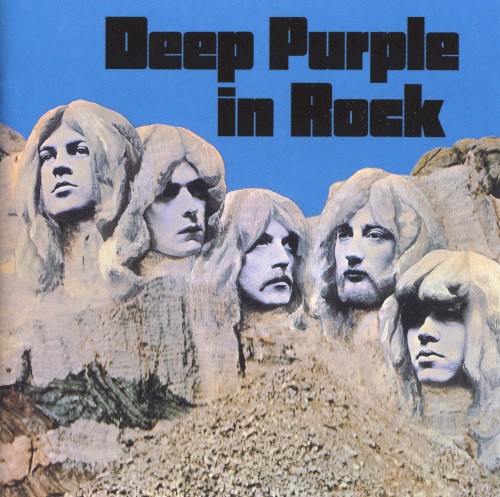
曲目
- A1Speed King5:54
- A2Bloodsucker4:10
- A3Child in Time10:19
- B1Flight of the Rat7:55
- B2Into the Fire3:29
- B3Living Wreck4:32
- B4Hard Lovin’ Man7:10
7 首 · 约 44 分钟 · 依据 1970-06-03 GB 发行的版本,在 MusicBrainz 看这个版本。
介绍
这个词条没有中文维基百科条目,下面是英文维基百科的原文。
Deep Purple in Rock is the fourth studio album by English rock band Deep Purple, released on 5 June 1970. It was the first studio album recorded by the Mark II line-up of Ritchie Blackmore, Ian Gillan, Roger Glover, Jon Lord and Ian Paice.
Work on In Rock began shortly after Gillan and Glover joined the band in June 1969, with rehearsals at Hanwell Community Centre. The music was intended to be loud and heavy, and accurately represent the group's live show. Recording took place at various studios around London in between extensive touring, during which time songs and arrangements were honed into shape.
In Rock was the band's breakthrough album in Europe and peaked at No. 4 in the UK, remaining in the charts for over a year. By contrast, it underperformed in the United States, where the band's Mark I albums had been more successful. An accompanying single, "Black Night," reached No. 2 in the UK, becoming their highest-charting single there. The album has continued to attract critical praise as a key early example of the hard rock and heavy metal genres.
Background
By mid-1969, Deep Purple had recorded three albums, and achieved commercial success in the US, but suffered from a lack of musical direction. Although the group contained experienced musicians, none of the original members were accomplished songwriters, and their earlier work ranged from psychedelic hard rock based around guitarist Ritchie Blackmore's riffs, classical-influenced tracks developed and arranged by organist Jon Lord, and cover songs from the Beatles, Joe South, Neil Diamond and Donovan.
After a US tour in May, Blackmore, Lord and drummer Ian Paice decided to replace original lead singer Rod Evans with someone who could tackle a hard rock style. The group had also recently signed a deal with Harvest Records in the UK, who were intending to represent progressive and underground bands, but label owner Malcolm Jones thought Deep Purple relied too much on gimmicks and only appealed to the US market. Lord and Blackmore had met with Paice during the tour to discuss the personnel change, and Blackmore said he wanted to "have a go at being really heavy" after hearing Led Zeppelin's debut album. Blackmore asked his former bandmate, drummer Mick Underwood, to see if he knew a suitable singer. Underwood suggested his Episode Six bandmate Ian Gillan. Blackmore, Lord and Paice went to see an Episode Six gig in Woodford Green on 4 June, and after Blackmore sat in with the band, they offered Gillan the job.
Gillan and Episode Six bassist Roger Glover were friends and had formed a songwriting partnership. However, Glover did not want to leave Episode Six, so Gillan suggested he could help out with Deep Purple's songwriting as a compromise. On 7 June, Gillan and Glover were asked to play on a Deep Purple recording session for their next single, "Hallelujah", with Glover performing as a session musician. Afterwards, Glover changed his mind and decided to join the band.
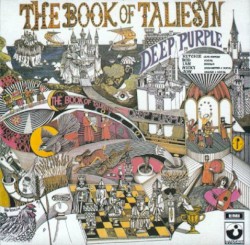
The group initially met and developed song ideas in secrecy, not telling Evans or original bassist Nick Simper because the original lineup still had tour dates to promote the album The Book of Taliesyn, which Harvest had finally released in the UK (several months after its October 1968 US release). Furthermore, Episode Six's management did not want Gillan and Glover to quit the group, and they attempted to get a settlement from Deep Purple. However, after a few weeks, both Evans and Simper discovered they had been fired, and were unimpressed with the underhanded way it had been done, particularly recording with a different line-up. Underwood later said he regretted recommending Gillan to Deep Purple because he did not want Simper to lose his job. The final show with Evans and Simper was on 4 July, with the new lineup playing their first gig at The Speakeasy Club in London on 10 July. Gillan and Glover continued to play several more dates with Episode Six, the final show taking place on 26 July. They were replaced by John Gustafson as singer and bassist.
Hanwell Community Centre was booked for the band to rehearse and write new material; according to Glover, it was chosen because "it was the only place we could find where we could make a lot of noise". The basic structure of "Child in Time" was worked out at these sessions, and both it and "Speed King" (then titled "Kneel and Pray") were in the live set by the line-up's seventh gig at the Paradiso, Amsterdam, on 24 August. The Mk II lineup began to tour extensively, and found they had good musical chemistry together. Work on the new material was briefly interrupted by Lord's Concerto for Group and Orchestra, which featured Deep Purple playing with the Royal Philharmonic Orchestra at the Royal Albert Hall on 24 September. Though the concerto was a different style to the material worked on at Hanwell, it led to increased publicity in the UK, which along with the group's live act, started to give them a following.
正文摘自英文维基百科「Deep Purple in Rock」,按 CC BY-SA 4.0 使用;删去了参考文献、外部链接、表格和图片;篇幅所限只节选了前面一部分,全文见原条目。
资料卡
- 作品性质
- 音乐专辑
- 表演者
- 深紫
- 发行日期
- 1970 年 6 月 5 日
- 流派
- 硬式摇滚、重金属音乐
- 语言
- 英语
- 唱片公司
- 收获唱片
- 制作人
- 深紫
资料来自 Wikidata Q211193(CC0)。
制作名单
- 厂牌
- Harvest(目录号 1E 062 º 91442)、Harvest(目录号 SHVL 777)
- 录音室
- 录音:IBC Studios(London);录音:Abbey Road Studios(St John's Wood);录音:De Lane Lea Studios(Soho)
制作
- 制作人
- 深紫
- 工程师
- Andy Knight(第 A1、A3、B1、B2、B3 首)、Martin Birch(第 B1、B2、B3、B4 首)、Phil McDonald(第 A2 首)
演奏与演唱
- 电吉他
- Ritchie Blackmore
- 电贝斯
- 罗杰·格洛弗
- 哈蒙德风琴
- 琼·洛德
- 鼓
- Ian Paice
- 主唱
- 伊恩·吉兰
词曲与编曲
- 词曲
- Ritchie Blackmore、伊恩·吉兰、罗杰·格洛弗、琼·洛德、Ian Paice
包装与设计
- 摄影
- Mike Brown、Alan Hall
名单来自 MusicBrainz(CC0)这一发行版本的关系数据,由志愿者录入,不一定齐全。
更多资料与乐评
在哪听
深紫 的其他专辑
艺人页 ›
相似的专辑
同在 1970 年发行