乐单
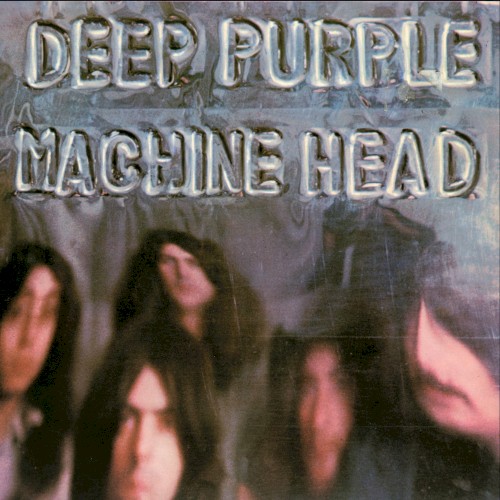
机械头 (1972)
曲目
- A1Highway Star6:09
- A2Maybe I’m a Leo4:52
- A3Pictures of Home5:07
- A4Never Before4:00
- B1Smoke on the Water5:42
- B2Lazy7:23
- B3Space Truckin’4:35
7 首 · 约 38 分钟 · 依据 1972-03 US 发行的版本,在 MusicBrainz 看这个版本。
介绍
这个词条没有中文维基百科条目,下面是英文维基百科的原文。
Machine Head is the sixth studio album by English rock band Deep Purple. It was recorded in December 1971 in Montreux, Switzerland, and released on 30 March 1972, by Purple Records. It is the band's third studio album to feature the Mark II line-up of Ritchie Blackmore, Ian Gillan, Roger Glover, Jon Lord, and Ian Paice.
Previous recording sessions had been slotted into the group's gigging schedule. This time, Deep Purple wanted to dedicate time to record an album away from the typical studio environment, hoping it would result in a sound closer to their live shows. They used the Rolling Stones Mobile Studio for recording and block-booked the Montreux Casino as a venue, but during a Frank Zappa and the Mothers of Invention concert immediately before the sessions, the casino burned to the ground after an audience member fired a flare gun into the ceiling. After a week of searching for an alternative venue, including a session at a nearby theatre that was abandoned due to noise complaints, the band managed to book the Grand Hotel, closed for the winter, and converted it into a live room suitable for recording. These events, particularly the casino fire, became the inspiration for the song "Smoke on the Water".
Machine Head became Deep Purple's most commercially successful album, topping the charts in several countries, including the UK. Influential in the development of heavy metal, it continues to be viewed favourably by music critics and has been reissued several times. It is widely considered one of the greatest and most influential rock albums of all time.
Background
By 1971, Deep Purple had been touring for two years and earlier studio albums, such as Deep Purple in Rock (1970) and Fireball (1971) were recorded in between live shows. The band felt that prior studio work did not sound as good as their live performances, and wanted to record in a stage environment. Drummer Ian Paice recorded his kit in the corridor for some of the Fireball sessions, believing it sounded better, and he wanted to find an alternative recording environment away from a typical sound-proofed studio. Deep Purple were advised to record outside the United Kingdom as they would not have to pay as much income tax.
The group toured the UK from September to October 1971 and previewed some new material that was ultimately released on Machine Head, in particular "Highway Star" and "Lazy". They then began a tour of the United States, but it was cancelled two gigs in when singer Ian Gillan contracted hepatitis. Guitarist Ritchie Blackmore started to think about possible solo work for the future, teaming up with Paice and Phil Lynott for a brief period as a possible side-project, and Deep Purple as a whole looked forward to a dedicated block of time to record, getting away from the pressures of touring.
Deep Purple initially planned to record Machine Head at Montreux Casino in Switzerland in December 1971. They had booked the Rolling Stones Mobile Studio and made hotel reservations. The casino was a large arena, containing several entertainment facilities. The band had performed there in May 1971, and befriended Claude Nobs, founder and general manager of the Montreux Jazz Festival. Among others, Led Zeppelin, Pink Floyd, and Black Sabbath had all performed at the casino. It closed for refurbishments each winter, allowing it to be used as a recording venue. Deep Purple arrived there on 3 December 1971. After a final concert, they would have the location to themselves. In return, the band tentatively proposed to perform a show at the casino, which would have allowed them to release a double album, half live and half studio.
Recording
The last gig at Montreux Casino was a matinée performance by Frank Zappa and the Mothers of Invention. At the time, the group included singers Flo & Eddie, multi-instrumentalist Ian Underwood and drummer Aynsley Dunbar. During the show, a member of the audience fired a flare into the building's roof. Although the audience were initially unaware of the incident because the roof was covered by a false bamboo ceiling, about an hour into the set, people started seeing sparks emerging. The group stopped playing; according to bassist Roger Glover, Zappa said that "no-one should panic, but ..... FIRE!" After this, management ordered a controlled evacuation. There were no fatalities, but a group were briefly trapped in the casino's basement before being rescued by Nobs. Shortly after everyone had been safely evacuated, the building went up in flames.
Nobs relocated Deep Purple to the Pavilion, a nearby theatre, where they recorded the basic tracks for a song provisionally named "Title No. 1". Glover recalled waking up one morning saying the title "Smoke on the Water" out loud. From this, Gillan wrote the lyrics which describe the experience in Montreux. A photograph of the burning Montreux Casino was included in the album's gatefold cover.
正文摘自英文维基百科「Machine Head (album)」,按 CC BY-SA 4.0 使用;删去了参考文献、外部链接、表格和图片;篇幅所限只节选了前面一部分,全文见原条目。
资料卡
- 作品性质
- 音乐专辑
- 表演者
- 深紫
- 发行日期
- 1972 年 3 月 25 日
- 流派
- 硬式摇滚
- 语言
- 英语
- 唱片公司
- 紫色唱片
- 制作人
- 深紫
资料来自 Wikidata Q211742(CC0)。
制作名单
- 厂牌
- Warner Bros. Records(目录号 BS 2607)
- 录音室
- 录音:Rolling Stones Mobile Studio(United Kingdom)
制作
- 工程师
- Martin Birch
- 助理工程师
- Jeremy Gee
- 制作人
- 深紫
- 混音
- Martin Birch(第 A1 首)
演奏与演唱
- 电吉他
- Ritchie Blackmore
- 电贝斯
- 罗杰·格洛弗
- 哈蒙德风琴
- 琼·洛德
- 鼓
- Ian Paice
- 主唱
- 伊恩·吉兰
词曲与编曲
- 词曲
- Ritchie Blackmore、伊恩·吉兰、罗杰·格洛弗、琼·洛德、Ian Paice
名单来自 MusicBrainz(CC0)这一发行版本的关系数据,由志愿者录入,不一定齐全。
更多资料与乐评
在哪听
深紫 的其他专辑
艺人页 ›
相似的专辑
同在 1972 年发行