乐单
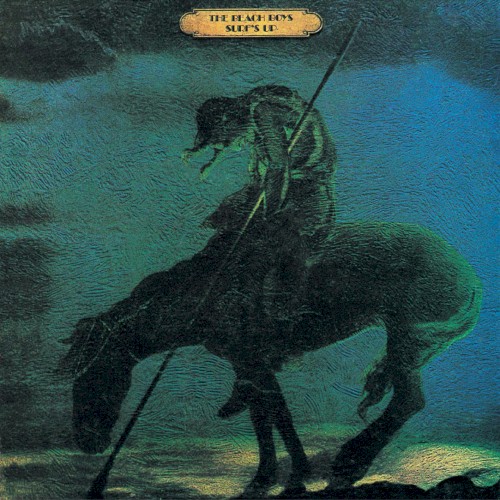
Surf's Up (1971)
曲目
- A1Don’t Go Near the Water2:37
- A2Long Promised Road3:28
- A3Take a Load Off Your Feet2:28
- A4Disney Girls (1957)4:07
- A5Student Demonstration Time3:54
- B1Feel Flows4:44
- B2Lookin’ at Tomorrow (A Welfare Song)1:54
- B3A Day in the Life of a Tree3:04
- B4’Til I Die2:29
- B5Surf’s Up4:11
10 首 · 约 33 分钟 · 依据 1971-08-30 US 发行的版本,在 MusicBrainz 看这个版本。
介绍
这个词条没有中文维基百科条目,下面是英文维基百科的原文。
Surf's Up is the seventeenth studio album by the American rock band the Beach Boys, released on August 30, 1971, on Brother/Reprise/Warner Bros. It received largely favorable reviews and reached number 29 on the U.S. record charts, becoming their highest-charting LP of new music in the country since 1967. In the UK, Surf's Up peaked at number 15, continuing a string of top-40 records that began in 1965.
The album's title and cover artwork (a painting based on the early 20th-century sculpture "End of the Trail") are a tongue-in-cheek, self-aware nod to the band's early surfing image. Originally titled Landlocked, the album took its name from the closing track "Surf's Up", originally intended for the unfinished album Smile. Most of Surf's Up was recorded from January to July 1971. In contrast to the previous LP Sunflower, Brian Wilson was not especially active in the production, which resulted in thinner vocal arrangements.
Lyrically, Surf's Up addresses environmental, social, and health concerns more than the group's previous releases. This was at the behest of newly recruited co-manager Jack Rieley, who strove to revamp the group's image and restore their public reputation following the negative reception to their recent albums and tours. His initiatives included a promotional campaign with the tagline "it's now safe to listen to the Beach Boys" and the appointment of Carl Wilson as the band's official leader. The record also included Carl's first major song contributions, "Long Promised Road" and "Feel Flows".
Two singles were issued in the U.S.: "Long Promised Road" and "Surf's Up". Only the former charted, when it was reissued with the B-side "'Til I Die" later in the year, peaking at number 89. In 1993, Surf's Up was ranked number 46 in NME's list of the "Top 100 Albums" in history. In 2000, it ranked number 230 in Colin Larkin's All Time Top 1000 Albums. Session highlights, outtakes, and alternate mixes from the album were collected for the 2021 compilation Feel Flows.
Background
On the evening of July 29, 1970, Brian Wilson, accompanied by bandmates Mike Love and Bruce Johnston, granted his first-ever full-length radio interview to KPFK DJ John Frank, also known as Jack Rieley. In the interview, Wilson stated that although he was "proud of the group and the name", he felt that "the clean American thing has hurt us. And we're really not getting any kind of airplay today." Among other topics, Wilson stated that the group was not "putting enough spunk in our production and I don't know who to blame. ... Another thing is that we haven't done enough to change our image, though. ... we sort of operate a democracy thing in our productions. Maybe that's the problem. I don't know." The subject eventually turned to "Surf's Up", an unreleased song from the band's unfinished album Smile. Wilson said he did not want to release the song because it was "too long".
On August 8, Rieley sent the band a six-page memo with advice on how to stimulate "increased record sales and popularity" for the Beach Boys. At the end of August, the group's latest record Sunflower was released as their first album on Reprise Records. It became the worst-selling album in the group's history. Band promoter and co-manager Fred Vail remembered one meeting with the band in which "we were talking about ... Sunflower not charting, and they were wondering why. I said to them, 'Listen, this is a phase right now. If you stay the course, your real audience won't forget you. They won't desert you.' But the Beach Boys really didn't believe in themselves." Vail was soon replaced by Rieley, primarily at the instigation of Love and Johnston.
Some of Rieley's earliest initiatives were to end the group's longstanding practice of wearing matching stage uniforms and to appoint Carl Wilson as the band's official leader. The group spent the majority of September and October rehearsing for upcoming concerts. On October 3, at the invitation of Van Dyke Parks, the band performed two sets at the eighth annual Big Sur Folk Festival in California to an audience of 6,000. According to music historian Keith Badman, the performances "help[ed] to establish the group's image in the eyes of the rock hierarchy, and they were subsequently 'rediscovered' as an important live act." Biographer David Leaf wrote that the concert inspired an apologetic review from Rolling Stone co-founder Jann Wenner, who had previously criticized the band for pulling out of the 1967 Monterey International Pop Festival. A rumor circulated among news outlets that Brian Wilson was writing music with Parks for an upcoming Beach Boys television special, H-2-0.
正文摘自英文维基百科「Surf's Up (album)」,按 CC BY-SA 4.0 使用;删去了参考文献、外部链接、表格和图片;篇幅所限只节选了前面一部分,全文见原条目。
资料卡
- 作品性质
- 音乐专辑
- 表演者
- 海滩男孩
- 发行日期
- 1971 年 8 月 30 日
- 流派
- 摇滚乐、前卫流行、迷幻流行
- 语言
- 英语
- 唱片公司
- 兄弟唱片、重复唱片
- 制作人
- 海滩男孩
资料来自 Wikidata Q940425(CC0)。
制作名单
- 厂牌
- Brother Records(目录号 RS 6453)
制作
- 工程师
- Stephen W. Desper
- 混音
- Stephen W. Desper
- 制作人
- 海滩男孩、Carl Wilson(第 A2、B4、B5 首)、布赖恩·道格拉斯·威尔逊(第 B4、B5 首)、Bruce Johnston(第 A4 首)
演奏与演唱
- 主唱
- Carl Wilson(第 A2、B5 首)、布赖恩·道格拉斯·威尔逊(第 B4、B5 首)、Bruce Johnston(第 A4 首)
词曲与编曲
- 作曲
- 布赖恩·道格拉斯·威尔逊(第 A3、B3、B4、B5 首)、艾尔·贾丁(第 A3、B2 首)、Gary Winfrey(第 A3、B2 首)、Carl Wilson(第 A2 首)、Bruce Johnston(第 A4 首)、Mike Stoller(第 A5 首)、Jack Rieley(第 B3 首)、凡·戴克·帕克斯(第 B5 首)
- 作词
- 布赖恩·道格拉斯·威尔逊(第 A3、B3、B4 首)、Jack Rieley(第 A2、B3 首)、艾尔·贾丁(第 A3 首)、Gary Winfrey(第 A3 首)、Bruce Johnston(第 A4 首)、Jerry Leiber(第 A5 首)、迈克·洛夫(第 A5 首)
- 词曲
- 艾尔·贾丁(第 A1 首)、迈克·洛夫(第 A1 首)、Jack Rieley(第 B1 首)、Carl Wilson(第 B1 首)
- 编曲
- 布赖恩·道格拉斯·威尔逊(第 B5 首)
包装与设计
- 美术指导
- Ed Thrasher
名单来自 MusicBrainz(CC0)这一发行版本的关系数据,由志愿者录入,不一定齐全。
更多资料与乐评
在哪听
海滩男孩 的其他专辑
艺人页 ›
同在 1971 年发行