乐单
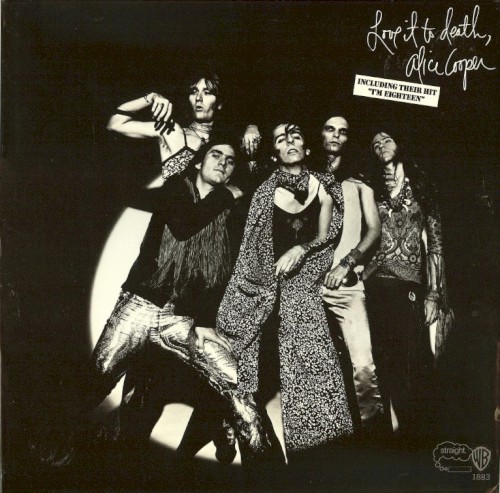
Love It to Death (1971)
- 艺人
- 埃利斯·库珀乐团
- 发行
- 1971-03-08
- 类型
- 专辑
- 唱片公司
- Straight唱片、华纳兄弟唱片公司
- 制作人
- 鲍伯·艾思林、Jack Richardson
- 版本
- MusicBrainz 上有 17 个发行版本
曲目
- A1Caught in a Dream3:11
- A2I’m Eighteen3:01
- A3Long Way to Go3:04
- A4Black Juju9:12
- B1Is It My Body2:40
- B2Hallowed Be My Name2:30
- B3Second Coming3:05
- B4Ballad of Dwight Fry6:33
- B5Sun Arise3:50
9 首 · 约 37 分钟 · 依据 1971 US 发行的版本,在 MusicBrainz 看这个版本。
介绍
这个词条没有中文维基百科条目,下面是英文维基百科的原文。
Love It to Death is the third studio album by American rock band Alice Cooper, released on March 9, 1971. It was the band's first commercially successful album and the first album that consolidated the band's aggressive hard-rocking sound, instead of the psychedelic and experimental rock style of their first two albums. The album's best-known track, "I'm Eighteen", was released as a single to test the band's commercial viability before the album was recorded.
Formed in the mid-1960s, the band took the name Alice Cooper in 1968 and became known for its outrageous theatrical live shows. The loose, psychedelic freak rock of the first two albums failed to find an audience. The band moved to Pontiac, MI in 1970 where they were influenced by the aggressive hard rock scene. A young Bob Ezrin was enlisted as producer; he encouraged the band to tighten its songwriting over two months of rehearsing ten to twelve hours a day. The single "I'm Eighteen" achieved Top 40 success soon after, peaking at No. 21. This convinced Warner Bros. that Alice Cooper had the commercial potential to release an album. After its release in March 1971, Love It to Death reached No. 35 on the Billboard 200 albums chart and has since been certified platinum. The album's second single, "Caught in a Dream", charted at No. 94.
The original album cover featured the singer Cooper posed with his thumb protruding so it appeared to be his penis; Warner Bros. soon replaced it with a censored version. The Love It to Death tour featured an elaborate shock rock live show: during "Ballad of Dwight Fry"—about an inmate in an insane asylum—Cooper would be dragged offstage and return in a straitjacket, and the show climaxed with Cooper's mock execution in a prop electric chair during "Black Juju". Ezrin and the Coopers continued to work together for a string of hit albums until the band's breakup in 1974. The album has come to be seen as a foundational influence on hard rock, punk, and heavy metal; several tracks have become live Alice Cooper standards and are frequently covered by other bands.
Background
Detroit-born vocalist Vincent Furnier co-formed the Earwigs in the mid-1960s in Phoenix, Arizona. The band released a few singles and went through a few name changes before settling on a lineup with guitarist Glen Buxton, guitarist and keyboardist Michael Bruce, bassist Dennis Dunaway, and drummer Neal Smith. In 1968 the band adopted the name Alice Cooper—a name Furnier later adopted as his own—and presented a story that it came from a 17th-century witch whose name they learned from a session with a ouija board.
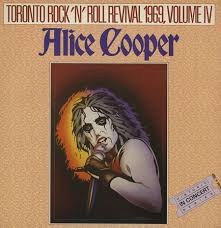
At some point Buxton painted circles under his eyes with cigarette ashes, and soon the rest followed with ghoulish black makeup and outlandish clothes. The band moved to Los Angeles and became known for its provocative, theatrical shock rock stage show. In an incident during a performance at the Toronto Rock and Roll Revival in 1969, Cooper threw a live chicken into the audience, who tore it to shreds.
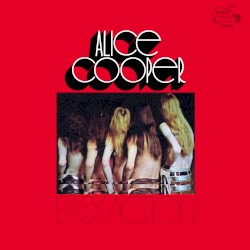
The group's first three albums, Pretties for You (1969), Easy Action (1970), and Love It to Death (1971), appeared on Frank Zappa and Herb Cohen's Straight Records label; Pretties for You and Easy Action failed to find an audience. The band relocated to Detroit and found itself in the midst of a music scene populated with the hard-driving rock of the MC5, the stage-diving Iggy Pop with the Stooges, and the theatricality of George Clinton's Parliament and Funkadelic. The Alice Cooper band incorporated these influences into a tight hard-rock sound coupled with an outrageous live show.
While at the Strawberry Fields Festival in Canada in April 1970, band manager Shep Gordon contacted producer Jack Richardson, who had produced hit singles for the Guess Who. Richardson was uninterested in producing the Alice Cooper band himself, and sent the young Bob Ezrin in his place. Cooper recalled the junior producer as "a nineteen-year-old Jewish hippie" who reacted to meeting the outlandish band "as if he had just opened a surprise package and found a box full of maggots".
Ezrin initially turned down working with the band, but changed his mind when he saw them perform at Max's Kansas City in New York City the following October. Ezrin was impressed with the band's audience-participation rock-theater performance and the cult-like devotion of the band's fans, who dressed up and knew the lyrics and actions to the music, which Ezrin compared to the later cult following of The Rocky Horror Picture Show. Ezrin returned to Toronto to convince Richardson to take on the band; Richardson did not want to work directly with such a group but agreed on condition that Ezrin take the lead.
Recording and production
The band and Ezrin did pre-production for the album in Pontiac, Michigan, in November and December 1970, and recorded at the RCA Mid-American Recording Center in Chicago in December. Richardson and Ezrin produced the album for Richardson's Nimbus 9 Productions, with Richardson as executive producer.
正文摘自英文维基百科「Love It to Death」,按 CC BY-SA 4.0 使用;删去了参考文献、外部链接、表格和图片;篇幅所限只节选了前面一部分,全文见原条目。
资料卡
- 作品性质
- 音乐专辑
- 表演者
- 埃利斯·库珀乐团
- 发行日期
- 1971 年 3 月 9 日
- 时长
- 37 分 21 秒
- 流派
- 硬式摇滚、重金属音乐、华丽摇滚、休克摇滚
- 语言
- 英语
- 唱片公司
- Straight唱片、华纳兄弟唱片公司
- 制作人
- 鲍伯·艾思林、Jack Richardson
- 下一部
- Killer
资料来自 Wikidata Q1754828(CC0)。
制作名单
- 厂牌
- Straight Records(目录号 WS 1883)
- 录音室
- 录音:RCA Mid-America(Chicago)
制作
- 工程师
- Brian Christian
- 制作人
- Bob Ezrin、Jack Richardson
- 执行制作人
- Jack Richardson
演奏与演唱
- 吉他
- Michael Bruce、Glen Buxton
- 键盘
- Michael Bruce、Bob Ezrin(第 A2、B1、B4 首)
- 贝斯
- Dennis Dunaway
- 鼓
- Neal Smith
- 和声
- Michael Bruce、Dennis Dunaway、Neal Smith
- 主唱
- 艾力斯·库珀
- 演出
- Bob Ezrin(第 A1、A3、B2、B3、B4 首)
- 口琴
- 艾力斯·库珀(第 A2 首)
- 念白
- Monica Lauer(第 B4 首)
词曲与编曲
- 编曲
- 埃利斯·库珀乐团、Bob Ezrin
- 词曲
- Michael Bruce(第 A2、B1、B4 首)、艾力斯·库珀(第 A2、B1、B4 首)、Glen Buxton(第 A2、B1 首)、Dennis Dunaway(第 A2、B1 首)、Neal Smith(第 A2、B1 首)、Harry Butler(第 B5 首)、Rolf Harris(第 B5 首)
- 作曲
- Michael Bruce(第 A1、A3 首)、Dennis Dunaway(第 A4 首)、Neal Smith(第 B2 首)、艾力斯·库珀(第 B3 首)
- 作词
- Michael Bruce(第 A1、A3 首)、Dennis Dunaway(第 A4 首)、Neal Smith(第 B2 首)、艾力斯·库珀(第 B3 首)
名单来自 MusicBrainz(CC0)这一发行版本的关系数据,由志愿者录入,不一定齐全。
更多资料与乐评
在哪听
埃利斯·库珀乐团 的其他专辑
艺人页 ›
相似的专辑
同在 1971 年发行