乐单
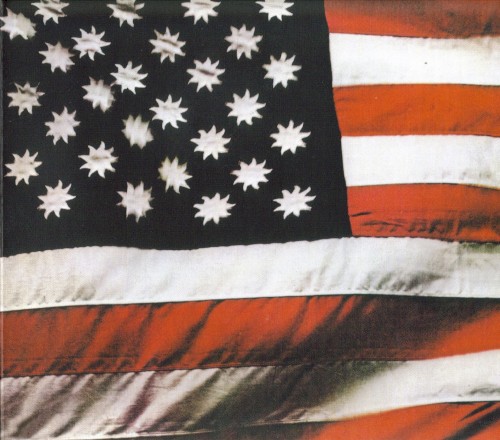
There's a Riot Goin' On (1971)
滚石 500(2020) #82滚石 500(2003) #991001 张专辑
- 艺人
- 史莱和史东家族合唱团
- 发行
- 1971-11-20
- 类型
- 专辑
- 唱片公司
- 史诗唱片
- 制作人
- 史莱·史东
- 版本
- MusicBrainz 上有 21 个发行版本
曲目
- 1Luv n’ Haight4:04
- 2Just Like a Baby5:13
- 3Poet3:03
- 4Family Affair3:08
- 5Africa Talks to You “The Asphalt Jungle”8:47
- 6Brave and Strong3:31
- 7(You Caught Me) Smilin’2:56
- 8Time3:03
- 9Spaced Cowboy4:01
- 10Runnin’ Away2:58
- 11Thank You for Talkin’ to Me Africa7:13
11 首 · 约 48 分钟 · 依据 1971-11 US 发行的版本,在 MusicBrainz 看这个版本。
介绍
这个词条没有中文维基百科条目,下面是英文维基百科的原文。
There's a Riot Goin' On is the fifth studio album by the American funk and soul band Sly and the Family Stone. It was released in November 1971 by Epic Records. The recording was dominated by band frontman-songwriter Sly Stone during a period of escalated drug use and intra-group tension. Recording sessions took place from 1970 to 1971 at Record Plant Studios in Sausalito, California and in Stone's home studio in Bel Air.
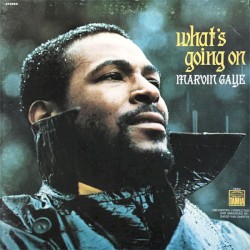
With the album, Sly and the Family Stone departed from the optimistic sound of their previous music and explored a darker, more challenging sound featuring edgy funk rhythms, a primitive drum machine, extensive overdubbing, and a dense mix. Conceptually and lyrically, There's a Riot Goin' On embraced apathy, pessimism, and disillusionment with both Stone's fame and 1960s counterculture amid a turbulent political climate in the United States at the turn of the 1970s, influenced by the decline of the civil rights movement and the rise of the Black Power movement. The album's title was originally planned to be Africa Talks to You, but it changed in response to Marvin Gaye's album What's Going On (1971), released six months before Riot.
A commercial success, There's a Riot Goin' On topped the Billboard Pop Album and Soul Album charts, while its lead single "Family Affair" reached number one on the Pop Singles chart. In 2001, the album was certified platinum by the Recording Industry Association of America (RIAA) for sales of at least one million copies in the US. Originally released to mixed reviews, the album has since been praised as one of the greatest and most influential recordings of all time, having impacted the funk, jazz-funk, and hip hop genres in particular. It has appeared in publications' best-album lists, including Rolling Stone's "500 Greatest Albums of All Time", on which it placed 99th in 2003 and 82nd in 2020.
In 1999, the album was inducted into the Grammy Hall of Fame.
Background
Having achieved great success with their 1969 album Stand! and performance at Woodstock, Sly & the Family Stone were due to have submitted an album of new recordings to Epic Records by 1970. However, Sly Stone missed several recording deadlines, worrying CBS executive Clive Davis, and a Greatest Hits album was released in an eighteen-month stretch during which the band released no new material, except for the single "Thank You (Falettinme Be Mice Elf Agin)". Relationships within the band were deteriorating, with friction between the Stone brothers and bassist Larry Graham.
Jewish-American manager David Kapralik claimed that the Black Panther Party was urging Stone to replace him with a black manager. After moving to Los Angeles, California, in late 1969, Stone and his bandmates began to use cocaine and PCP heavily rather than recording music. During this time Sly & the Family Stone released only one single, "Thank You (Falettinme Be Mice Elf Agin)" / "Everybody Is a Star", issued in December 1969. Although "Star" was a positive song in the vein of their previous hit "Everyday People" (1968), "Thank You" featured a darker political theme.
By 1970, Stone had become erratic and moody, missing nearly a third of the band's concert dates. He hired streetwise friends Hamp "Bubba" Banks and J.B. Brown as his personal managers, and they enlisted gangsters Edward "Eddie Chin" Elliott and Mafioso J.R. Valtrano as his bodyguards. Stone assigned these individuals to handle his business dealings, find drugs and protect him from those he considered enemies, among them his own bandmates and staff. A rift developed between Sly and the rest of the band, which led to drummer Gregg Errico's departure in early 1971. Speculation arose as to the release of new studio material. In a December 24, 1970 article for Rolling Stone magazine, journalist Jon Landau wrote:
The man from Epic tells me that Sly hasn't recorded much lately. His last album of new material was released well over a year ago and even 'Thank You', his last single, is old by now. Greatest Hits was released only as a last resort in order to get something salable into the record stores. It was a necessary release and stands as the final record of the first chapter in Sly & the Family Stone's career. Whatever the reasons for his recording abstinence, I hope it ends soon so that he can get back to making new music and we can get back to listening to it.
Stone's intention of a darker, more conceptual work was influenced by drug use and the events that writer Miles Marshall Lewis called "the death of the Sixties"; political assassinations, police brutality, the decline of the civil rights movement and social disillusionment. According to The Austin Chronicle, "slowed down, [Sly's] quest for post-stardom identity mirrored black America's quest for post-Sixties purpose."
正文摘自英文维基百科「There's a Riot Goin' On」,按 CC BY-SA 4.0 使用;删去了参考文献、外部链接、表格和图片;篇幅所限只节选了前面一部分,全文见原条目。
资料卡
- 作品性质
- 音乐专辑
- 表演者
- 史莱和史东家族合唱团
- 发行日期
- 1971 年 11 月 20 日
- 时长
- 47 分 33 秒
- 流派
- 放克、迷幻放克、先锋流行、前卫的士高
- 语言
- 英语
- 唱片公司
- 史诗唱片
- 制作人
- 史莱·史东
资料来自 Wikidata Q258003(CC0)。
制作名单
- 厂牌
- Epic(目录号 KE 30986)
制作
- 制作人
- 史莱·史东(第 2 首)
词曲与编曲
- 作曲
- 史莱·史东
- 作词
- 史莱·史东
名单来自 MusicBrainz(CC0)这一发行版本的关系数据,由志愿者录入,不一定齐全。
更多资料与乐评
在哪听
史莱和史东家族合唱团 的其他专辑
艺人页 ›

相似的专辑



同在 1971 年发行