乐单
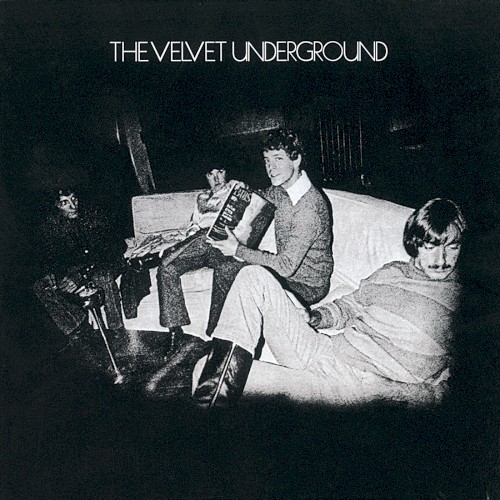
The Velvet Underground (1969)
滚石 500(2020) #143滚石 500(2003) #3141001 张专辑
- 艺人
- 地下丝绒
- 发行
- 1969-03-01
- 类型
- 专辑
- 唱片公司
- 米高梅唱片公司
- 制作人
- 地下丝绒
- 版本
- MusicBrainz 上有 28 个发行版本
曲目
- 1Candy Says4:04
- 2What Goes On4:55
- 3Some Kinda Love4:03
- 4Pale Blue Eyes5:42
- 5Jesus3:26
- 6Beginning to See the Light4:40
- 7I’m Set Free4:04
- 8That’s the Story of My Life2:04
- 9The Murder Mystery8:53
- 10After Hours2:07
10 首 · 约 44 分钟 · 依据 1969-03-01 XW 发行的版本,在 MusicBrainz 看这个版本。
介绍
这个词条没有中文维基百科条目,下面是英文维基百科的原文。
The Velvet Underground is the third studio album by the American rock band the Velvet Underground. Released in March 1969 by MGM Records, it was their first record with multi-instrumentalist Doug Yule, who replaced previous member John Cale. Recorded in 1968 at TTG Studios in Los Angeles, California, the album's sound—consisting largely of ballads and straightforward rock songs—marked a notable shift in style from the band's previous recordings. Lead vocalist Lou Reed intentionally did this as a result of their abrasive previous studio album White Light/White Heat (1968). Reed wanted other band members to sing on the album; Yule contributed lead vocals to the opening track "Candy Says" and the closing track "After Hours" is sung by drummer Maureen Tucker.
Thematically, The Velvet Underground discusses love, contrasting previous releases from the band. Reed devised its track order and based his songwriting upon relationships and religion. "Pale Blue Eyes" has been hailed as one of his best love songs, although "The Murder Mystery" is noted for its experimentation in a call-back to White Light/White Heat. Billy Name took the album's photograph of the band sitting on a couch at Andy Warhol's Factory. The recording process started at short notice and while the band had a high morale, they were ultimately disappointed that Reed had created his own mix of the final product.
Contemporary reviews praised the album, which was a turning point for the band. Nevertheless, The Velvet Underground failed to chart, again suffering from a lack of promotion by the band's record label. Reed played a dominant role in the mixing process and his own mix of the album, dubbed the "closet mix", was first released in the United States. MGM Director of Engineering Val Valentin was credited for a different mix which has been more widely distributed since then. Retrospective reviews have labeled it one of the greatest albums of the 1960s and of all time, with many critics noting its subdued production and personal lyrics. In 2020, Rolling Stone ranked it at number 143 on its list of the "500 Greatest Albums of All Time".
Background
Cale was fired from the group in September 1968, and Yule was brought in as a bassist. Yule was discovered by Morrison through the band's road manager Hans Onsager. Weeks after Yule joined the Velvet Underground, they began recording their third studio album. Lou Reed, the band's principal songwriter, believed that the band should not "make another White Light/White Heat. I thought it would be a terrible mistake, and I really believed that. I thought we had to demonstrate the other side of us. Otherwise, we would become this one-dimensional thing, and that had to be avoided at all costs."
According to Morrison, a majority of the band's equipment got stolen at JFK International Airport earlier in 1968, which influenced the album's sound. However, Yule rejects this claim, explaining that he has no recollection of such an event and clarifying that the band was simply playing more melodically—Tucker has corroborated this. Reed during this time had a growing taste for soothing music; in an interview with Lester Bangs he singled out tracks "Jesus" and "Candy Says", declaring the latter "probably the best song I've written ..." Reed considered White Light/White Heat to be as far as the band could go with such production and additionally called each album the band made a chapter. They started recording after touring in the West Coast and band manager Steve Sesnick obtained studio time at a short notice, so the band had provided little time to prepare. At the time, Reed was managing relationships between his girlfriend Shelley Albin and Name, which influenced his songwriting.
Recording
The Velvet Underground was recorded during November and through December 1968 at TTG Studios in Los Angeles. The band stayed at the hotel Chateau Marmont and toured frequently while recording. They wrote and rehearsed at the hotel in the afternoon, recording songs at night. Reed and Morrison played 12-string guitars from Fender. Morale in the studio was generally high—Yule said that recording the album "was a lot of fun. The sessions were constructive and happy and creative, everybody was working together". According to Yule, it took "a couple of weeks for the basic tracks", additionally describing it as a "studio live album". Reed intentionally tried to get Yule in the spotlight of it, and the band members suspected that this might have inflated his ego. Generally, the sessions had a happy atmosphere; Tucker said that she "was pleased with the direction we were going and with the new calmness in the group, and thinking about a good future, hoping people would smarten up and some record company would take us on and do us justice."
正文摘自英文维基百科「The Velvet Underground (album)」,按 CC BY-SA 4.0 使用;删去了参考文献、外部链接、表格和图片;篇幅所限只节选了前面一部分,全文见原条目。
资料卡
- 作品性质
- 音乐专辑
- 表演者
- 地下丝绒
- 发行日期
- 1969 年 3 月
- 录音地点
- TTG Studios
- 时长
- 42 分 56 秒
- 流派
- 民谣摇滚
- 语言
- 英语
- 唱片公司
- 米高梅唱片公司
- 制作人
- 地下丝绒
资料来自 Wikidata Q848781(CC0)。
制作名单
- 厂牌
- MGM Records
制作
- 工程师
- Val Valentin
- 制作人
- 地下丝绒
演奏与演唱
- 指挥
- 地下丝绒
- 主唱
- 卢·里德(其中 8 首)、Doug Yule(第 1 首)、莫林·塔克(第 10 首)
- 演唱
- Sterling Morrison(第 9 首)、莫林·塔克(第 9 首)、Doug Yule(第 9 首)
词曲与编曲
- 编曲
- 地下丝绒
- 作曲
- 卢·里德
- 作词
- 卢·里德
名单来自 MusicBrainz(CC0)这一发行版本的关系数据,由志愿者录入,不一定齐全。
更多资料与乐评
在哪听
地下丝绒 的其他专辑
艺人页 ›
相似的专辑

同在 1969 年发行