 乐单
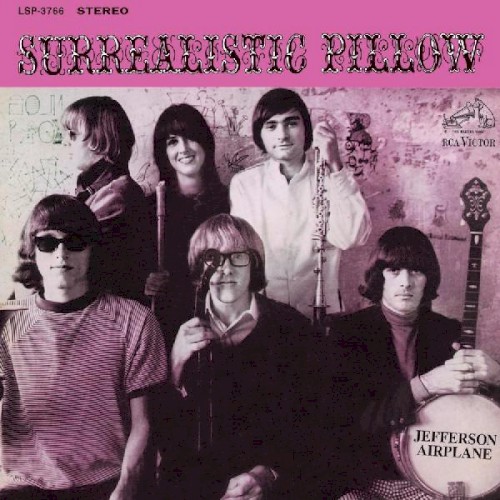
小白兔 (1967)
介绍
这个词条没有中文维基百科条目,下面是英文维基百科的原文。
"White Rabbit" is a song written by Grace Slick and recorded by the American rock band Jefferson Airplane for their 1967 album Surrealistic Pillow. It draws on imagery from Lewis Carroll's 1865 book Alice's Adventures in Wonderland and its 1871 sequel Through the Looking-Glass.
It was released as a single and became the band's second top-10 success, peaking at number eight on the Billboard Hot 100. The song was ranked number 478 on Rolling Stone's list of the 500 Greatest Songs of All Time in 2004, number 483 in 2010, and number 455 in 2021 and appears on The Rock and Roll Hall of Fame's 500 Songs that Shaped Rock and Roll. In 1998, the song was inducted into the Grammy Hall of Fame.
History
Background
"White Rabbit" was written and performed by Grace Slick while she was still with her previous band, the Great Society. Slick then left the Great Society to join Jefferson Airplane to replace their departing female singer, Signe Toly Anderson (who left the band after the recent birth to her child). The first album Slick recorded with Jefferson Airplane was Surrealistic Pillow, and Slick provided two songs from her previous group: her own "White Rabbit" and "Somebody to Love", written by her brother-in-law Darby Slick and recorded under the title "Someone to Love" by the Great Society. The Great Society's version of "White Rabbit" was much longer than the more aggressive version of Jefferson Airplane. Both songs became top-10 hits for Jefferson Airplane and have ever since been associated with that band.
Composition, lyrics and inspiration
"White Rabbit" is one of Grace Slick's earliest songs, written from December 1965 to January 1966. It uses imagery found in the fantasy works of Lewis Carroll — 1865's Alice's Adventures in Wonderland and its 1871 sequel Through the Looking-Glass — such as changing size after taking pills or drinking an unknown liquid.
Slick wrote the lyrics first, then composed the music at a red upright piano she had bought for US$50 with eight or ten keys missing — "that was OK because I could hear in my head the notes that weren't there" — moving between major chords for the verses and chorus. She said that the music was heavily influenced by Miles Davis's 1960 album Sketches of Spain, particularly Davis's treatment of the Concierto de Aranjuez (1939). She later said: "Writing weird stuff about Alice backed by a dark Spanish march was in step with what was going on in San Francisco then. We were all trying to get as far away from the expected as possible".
Slick said the song was supposed to be a wake-up call to parents who read their children novels such as these and then would wonder why their children used drugs. She later commented that all fairytales read to little girls have a Prince Charming who comes and saves them. But Alice did not; she was "on her own... in a very strange place, but she kept on going and she followed her curiosity – that's the White Rabbit. A lot of women could have taken a message from that story about how you can push your own agenda". Slick added that "The line in the song 'feed your head' is both about reading and psychedelics...feeding your head by paying attention: read some books, pay attention".
Characters Slick referenced include Alice, the White Rabbit, the hookah-smoking caterpillar, the White Knight, the Red Queen, and the Dormouse. Slick reportedly wrote the song after an acid trip. For Slick, "White Rabbit" "is about following your curiosity. The White Rabbit is your curiosity". For her and others in the 1960s, drugs were a part of mind expansion and social experimentation. With its enigmatic lyrics, "White Rabbit" became one of the first songs to sneak drug references in, bypassing censorship on the radio. Marty Balin, Slick's former bandmate and co-founder of Jefferson Airplane (and later Jefferson Starship), regarded the song as a "masterpiece". In interviews, Slick has related that Alice in Wonderland was often read to her as a child and remained a vivid memory well into her adulthood.
In an interview with The Wall Street Journal, Slick mentioned that, in addition to Alice in Wonderland, her other inspiration for the song was Ravel's Boléro. Like Boléro, "White Rabbit" is essentially one long crescendo. The music combined with the song's lyrics strongly suggests the sensory distortions experienced with hallucinogens, and the song was later used in pop culture to imply or accompany just such a state.
正文摘自英文维基百科「White Rabbit (song)」,按 CC BY-SA 4.0 使用;删去了参考文献、外部链接、表格和图片;篇幅所限只节选了前面一部分,全文见原条目。
资料卡
- 作品性质
- 音乐作品/乐曲
- 表演者
- 杰弗逊飞机
- 发行日期
- 1967 年 6 月 24 日
- 收录于 / 属于
- Surrealistic Pillow
- 流派
- 迷幻摇滚、酸摇滚
- 语言
- 英语
- 唱片公司
- RCA唱片
- 作曲
- 格蕾丝·斯利克
- 作词
- 格蕾丝·斯利克
- 改编自
- 爱丽丝梦游仙境
资料来自 Wikidata Q1138361(CC0)。
制作名单
词曲与编曲
- 作曲
- 格蕾丝·斯利克
- 作词
- 格蕾丝·斯利克
名单来自 MusicBrainz(CC0)这条录音的关系数据,由志愿者录入,不一定齐全。
更多资料
在哪听
杰弗逊飞机 的专辑
艺人页 ›
风格、年代相近的歌
- Tumbling Dice滚石乐队 · 1972
- 狂野之路卢·里德 · 1972
- School's Out艾力斯·库珀 · 1972
- Virginia Plain罗克西乐队 · 1972
- 通往天堂的阶梯齐柏林飞船 · 1971
- Life on Mars?大卫·鲍伊 · 1971
- Maggie May罗德·斯图尔特 · 1971
- Baba O'Riley谁人 · 1971
- 不会再被愚弄谁人 · 1971
- It's Too Late卡洛尔·金 · 1971
- 失去你哈利·尼尔森 · 1971
- 顺其自然披头士乐队 · 1970