 乐单
不会再被愚弄 (1971)
介绍
这个词条没有中文维基百科条目,下面是英文维基百科的原文。
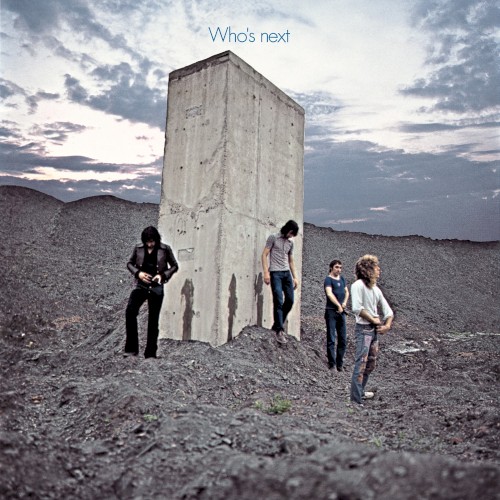
"Won't Get Fooled Again" is a song by the English rock band the Who, written by guitarist and primary songwriter Pete Townshend. It was released as a single in June 1971, reaching the top 10 in the UK, while the full eight-and-a-half-minute version appears as the final track on the band's fifth studio album Who's Next, released that August. In the US, the single entered Billboard on 17 July, reaching No. 15.
Townshend wrote the song as a closing number of the Lifehouse project, and the lyrics criticise revolution and power. The track is known for a staccato keyboard figure, played on a simple home organ fed through a synthesizer. The Who tried recording the song in New York in March 1971, but re-recorded a superior take at Stargroves the next month using the organ from Townshend's original demo. Ultimately, Lifehouse as a project was abandoned in favour of Who's Next, a straightforward album, where it also became the closing track. It has been performed as a staple of the band's setlist since 1971, often as the set closer, and was the last song drummer Keith Moon played live with the band.
As well as being a hit, the song has achieved critical praise, appearing as one of Rolling Stone's The 500 Greatest Songs of All Time. It has been covered by several artists, such as Van Halen, who took their version to No. 1 on the Billboard Album Rock Tracks chart. It has been used for several TV shows and films and in some political campaigns.
Background
The song was originally intended for a rock opera on which Townshend had been working, Lifehouse, which was a multi-media exercise based on his followings of the Indian religious avatar Meher Baba, showing how spiritual enlightenment could be obtained via a combination of band and audience. The song was written for the end of the opera, after the main character, Bobby, is killed and the "universal chord" is sounded. The main characters disappear, leaving behind the government and army, who are left to bully each other. Townshend described the song as one "that screams defiance at those who feel any cause is better than no cause". He later said that the song was not strictly anti-revolution despite the lyric "We'll be fighting in the streets", but stressed that revolution could be unpredictable, adding, "Don't expect to see what you expect to see. Expect nothing and you might gain everything." Bassist John Entwistle later said that the song showed Townshend "saying things that really mattered to him, and saying them for the first time".
The song's message is summarized in the last line "Meet the new boss, same as the old boss." Townshend was influenced to write the composition by an incident at Woodstock when he chased Abbie Hoffman off the stage, who had commandeered the microphone during a break in the band's performance. He explained to Creem in 1982, "I wrote 'Won't Get Fooled Again' as a reaction to all that – 'Leave me out of it: I don't think your lot would be any better than the other lot!' All those hippies wandering about thinking the world was going to be different from that day. As a cynical English arsehole, I walked through it all and felt like spitting on the lot of them, and shaking them and trying to make them realise that nothing had changed and nothing was going to change."
Townshend had been reading Universal Sufism founder Inayat Khan's The Mysticism of Sound and Music, which referred to spiritual harmony and the universal chord, which would restore harmony to humanity when sounded. Townshend realised that the newly emerging synthesizers would allow him to communicate these ideas to a mass audience. He had met the BBC Radiophonic Workshop which gave him ideas for capturing human personality within music. Townshend interviewed several people with general practitioner-style questions, and captured their heartbeat, brainwaves and astrological charts, converting the result into a series of audio pulses. For the demo of "Won't Get Fooled Again", he linked a Lowrey organ into an EMS VCS 3 filter that played back the pulse-coded modulations from his experiments. He subsequently upgraded to an ARP 2500. The synthesizer did not play any sounds directly as it was monophonic; instead it modified the block chords on the organ as an input signal. The demo, recorded at a half-time tempo compared to the version by the Who, was completed by Townshend overdubbing drums, bass, electric guitar, vocals and handclaps.
Recording
The Who's first attempt to record the song was at the Record Plant on W 44 Street, New York City, on 16 March 1971. Manager Kit Lambert had recommended the studio to the group, which led to his producer credit, though the de facto work was done by Felix Pappalardi. This take featured Pappalardi's Mountain bandmate, Leslie West, on lead guitar.
正文摘自英文维基百科「Won't Get Fooled Again」,按 CC BY-SA 4.0 使用;删去了参考文献、外部链接、表格和图片;篇幅所限只节选了前面一部分,全文见原条目。
资料卡
- 作品性质
- 音乐作品/乐曲
- 表演者
- 谁人
- 发行日期
- 1971 年
- 收录于 / 属于
- Who's Next
- 流派
- 硬式摇滚
- 语言
- 英语
- 作曲
- 皮特·汤申德
- 作词
- 皮特·汤申德
资料来自 Wikidata Q1754167(CC0)。
制作名单
- 录音室
- 混音:Basing Street Studios(Notting Hill);录音:Olympic Studios(Barnes);录音:Rolling Stones Mobile Studio(United Kingdom)
- ISRC
- GBA137100090、GBAKW7100100、GBAKW7100121
制作
- 混音
- Glyn Johns
- 制作人
- Glyn Johns、谁人
- 执行制作人
- Pete Kameron、Kit Lambert、Chris Stamp
- 录音
- Glyn Johns、皮特·汤申德
演奏与演唱
- 贝斯
- 约翰恩奎斯特
- 打击乐
- Keith Moon
- 鼓
- Keith Moon
- 合成器
- 皮特·汤申德
- 风琴
- 皮特·汤申德
- 原声吉他
- 皮特·汤申德
- 电吉他
- 皮特·汤申德
- 主唱
- 罗杰·多特里
- 演唱
- 约翰恩奎斯特、皮特·汤申德
词曲与编曲
- 作曲
- 皮特·汤申德
- 作词
- 皮特·汤申德
名单来自 MusicBrainz(CC0)这条录音的关系数据,由志愿者录入,不一定齐全。
更多资料
在哪听
谁人 的专辑
艺人页 ›
谁人 的其他歌(本站收录)
- Baba O'Riley谁人 · 1971
- My Generation谁人 · 1965
风格、年代相近的歌
- 英国无政府状态性手枪 · 1976
- More Than a Feeling波士顿乐队 · 1976
- The Boys Are Back in Town瘦李奇乐队 · 1976
- Station to Station大卫·鲍伊 · 1976
- Go Your Own Way佛利伍麦克 · 1976
- (Don't Fear) The Reaper蓝牡蛎 · 1976
- 波希米亚狂想曲皇后乐团 · 1975
- Born to Run布鲁斯·斯普林斯廷 · 1975
- Tangled Up in Blue鲍勃·迪伦 · 1975
- Gloria帕蒂·史密斯 · 1975
- Kashmir齐柏林飞船 · 1975
- Young Americans大卫·鲍伊 · 1975