 乐单
介绍
这个词条没有中文维基百科条目,下面是英文维基百科的原文。
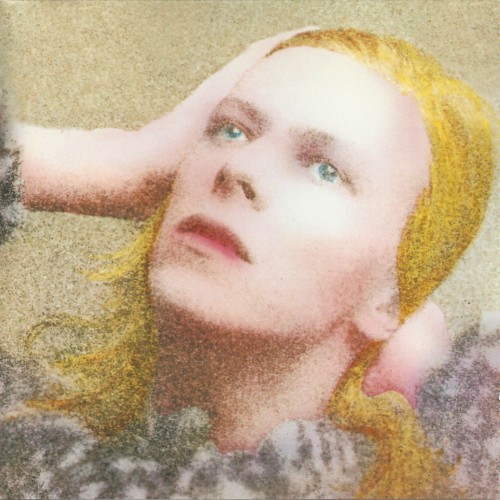
"Life on Mars?" is a song by the English musician David Bowie, first released on his 1971 album Hunky Dory. Conceived as a parody of Frank Sinatra's 1969 song "My Way", "Life on Mars?" was recorded on 6 August 1971 at Trident Studios in London, and was co-produced by Bowie and Ken Scott. The track features piano by the keyboardist Rick Wakeman and a string arrangement by the guitarist Mick Ronson. "Life on Mars?" is primarily a glam rock ballad, with elements of cabaret and art rock. The lyrics are about a girl who goes to a cinema to escape reality, and include surreal images that reflect optimism and the effects of Hollywood.
In June 1973, at the height of Bowie's fame as Ziggy Stardust, RCA Records issued "Life on Mars?" as a single in the United Kingdom, where it peaked at number three. To promote the single, Mick Rock filmed a video that shows Bowie in make-up and a turquoise suit singing the song against a white backdrop. Bowie frequently performed "Life on Mars?" during his concerts, and the track has appeared on numerous compilation albums.
Commentators generally consider "Life on Mars?" to be one of Bowie's finest songs; some have called it one of the greatest songs of all time. Critics have praised Bowie's vocal performance and the string arrangement. The song has appeared in films and television programmes, and the British television series Life on Mars was named after it. Artists including Barbra Streisand, and Nine Inch Nails members Trent Reznor and Atticus Ross, have recorded cover versions of the song; and following Bowie's death in 2016, "Life on Mars?" was frequently chosen as a tribute to the artist in live performances and cover versions. That year, a "stripped down" version of the song, remixed by Scott, was released, along with a reedited version of the promotional video including an extended outro.
Background and writing
In early 1968, David Bowie was hired by his music publisher David Platz to write English lyrics for the 1967 French song "Comme d'habitude", but his version, titled "Even a Fool Learns to Love", was rejected by the song's French publishers due to Bowie's obscurity. Soon after, the songwriter Paul Anka bought the rights to "Comme d'habitude" and rewrote it as "My Way", which was made famous by the singer Frank Sinatra in 1969. The success of "My Way" prompted Bowie to write "Life on Mars?" as a parody of Sinatra's recording. He told Michael Parkinson in a 2002 interview: "That really made me angry for so long—for about a year ... eventually I thought, 'I can write something as big as that, and I'll write one that sounds a bit like it'." Bowie believed using "Comme d'habitude"/"My Way" as a basis was not "theft" but "a statement of rightful ownership". He acknowledged "My Way"'s influence in the liner notes for Hunky Dory (1971), which state that "Life on Mars?" was "inspired by Frankie".
In the liner notes for the 2008 compilation iSelect, Bowie wrote that he began humming the melody in a park in Beckenham, Kent; after returning home to Haddon Hall, he wrote the rest of the song that afternoon on piano. Haddon Hall, an Edwardian mansion converted to a block of flats, served as a communal residence for Bowie, Mick Ronson and Tony Visconti starting in 1970. It was in this atmospheric setting, described by one visitor as having an ambiance "like Dracula's living room", that Bowie composed over three dozen songs, including many that would appear on Hunky Dory and its follow-up The Rise and Fall of Ziggy Stardust and the Spiders from Mars (1972). One Melody Maker reviewer said that "Life on Mars?" was written after "a brief and painful affair" with the actress Hermione Farthingale. While on tour in 1990, Bowie introduced the song by saying, "You fall in love, you write a love song. This is a love song." Bowie's original handwritten lyrics were vastly different from the finished recording, aside from the chorus; they were more akin to the tone of Hunky Dory's other Nietzsche-inspired songs: "There's a shoulder-rock movement and the trembling starts / And a great Lord signs in vain / What can you buy when there's no-one to tell you / What a bargain you made ..."
正文摘自英文维基百科「Life on Mars?」,按 CC BY-SA 4.0 使用;删去了参考文献、外部链接、表格和图片;篇幅所限只节选了前面一部分,全文见原条目。
资料卡
- 作品性质
- 音乐作品/乐曲
- 表演者
- 大卫·鲍伊
- 发行日期
- 1971 年
- 收录于 / 属于
- Hunky Dory
- 流派
- 华丽摇滚
- 语言
- 英语
- 作曲
- 大卫·鲍伊
- 作词
- 大卫·鲍伊
资料来自 Wikidata Q2077201(CC0)。
制作名单
- 录音室
- 录音:Trident Studios(Soho)
- ISRC
- USJT10500016、USJT10700254、USJT11400004
制作
- 助理制作人
- 大卫·鲍伊
- 制作人
- Ken Scott
- 录音
- Ken Scott
- 重混
- Ken Scott
演奏与演唱
- 指挥
- 麦克・朗森
- 贝斯
- Trevor Bolder
- 电吉他
- 麦克・朗森
- 美乐特朗
- 麦克・朗森
- 钢琴
- 瑞奇·威克曼
- 鼓
- Mick Woodmansey
- 乐团
- BBC Symphony Orchestra
- 主唱
- 大卫·鲍伊
词曲与编曲
- 作曲
- 大卫·鲍伊
- 器乐编曲
- 麦克・朗森
- 作词
- 大卫·鲍伊
名单来自 MusicBrainz(CC0)这条录音的关系数据,由志愿者录入,不一定齐全。
更多资料
在哪听
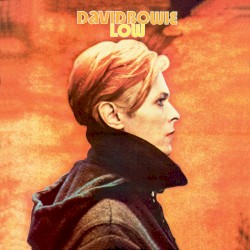
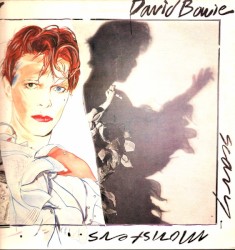
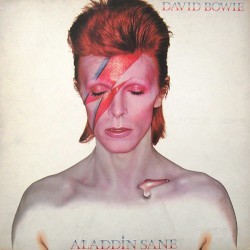
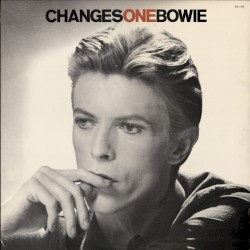
大卫·鲍伊 的专辑
艺人页 ›
大卫·鲍伊 的其他歌(本站收录)
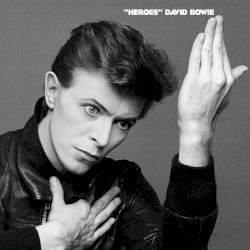
- 英雄大卫·鲍伊 · 1977
- 太空怪谈大卫·鲍伊 · 1969
- Changes大卫·鲍伊 · 1972
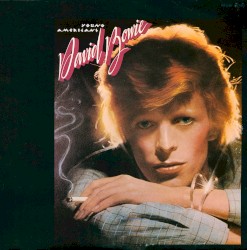
- Young Americans大卫·鲍伊 · 1975
- Station to Station大卫·鲍伊 · 1976
风格、年代相近的歌
- 英国无政府状态性手枪 · 1976
- More Than a Feeling波士顿乐队 · 1976
- The Boys Are Back in Town瘦李奇乐队 · 1976
- Go Your Own Way佛利伍麦克 · 1976
- (Don't Fear) The Reaper蓝牡蛎 · 1976
- 波希米亚狂想曲皇后乐团 · 1975
- Born to Run布鲁斯·斯普林斯廷 · 1975
- Tangled Up in Blue鲍勃·迪伦 · 1975
- Gloria帕蒂·史密斯 · 1975
- Kashmir齐柏林飞船 · 1975
- 愿你在此平克·弗洛伊德 · 1975
- 彻夜摇滚Kiss合唱团 · 1975