乐单
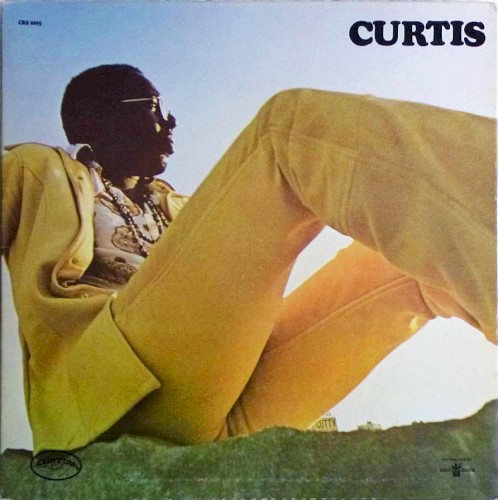
Curtis (1970)
曲目
- A1(Don’t Worry) If There’s a Hell Below We’re All Going to Go7:52
- A2The Other Side of Town4:03
- A3The Makings of You3:45
- A4We the People Who Are Darker Than Blue6:05
- B1Move On Up8:55
- B2Miss Black America3:00
- B3Wild and Free3:19
- B4Give It Up3:45
8 首 · 约 41 分钟 · 依据 1970-09 US 发行的版本,在 MusicBrainz 看这个版本。
介绍
这个词条没有中文维基百科条目,下面是英文维基百科的原文。
Curtis is the debut studio album by American soul musician Curtis Mayfield, released in September 1970. Produced by Mayfield, it was released on his own label Curtom Records. The musical styles of Curtis moved further away from the pop-soul sounds of Mayfield's previous group The Impressions and featured more of a funk and psychedelic-influenced sound. The album's subject matter incorporates political and social concerns of the time.
Curtis sold well at the time charting at number one on the Billboard Black albums (for five nonconsecutive weeks) and number nineteen on the Billboard Pop albums charts. Only the single "(Don't Worry) If There's a Hell Below, We're All Going to Go" charted in the United States; however, an edited version of "Move On Up" would spend 10 weeks in the top 50 of the UK Singles Chart.
In 2020, the album was ranked at number 275 on Rolling Stone's 500 greatest albums of all time list.
Background
Mayfield began work on his own self-titled album in 1970. Although he never intended to leave the Impressions permanently, he would officially leave them in 1971, under recommendation from his business manager Marv Stuart and given the trend for both R&B and rock artists to go solo.
Recording and production
Like with some of his later Impressions work, Mayfield's lyrics reflected the social and political concern rising in black America at the time. Mayfield was one of the earliest artists to speak openly about African-American pride and community struggle. Mayfield reflected upon this time as a "happening era...when people stopped wearing tuxedos...people were getting down a little more."
The album had a more hard edged sound than the Impressions had before. On this new sound Mayfield claimed it was something he "long wanted to do...but were out of category of what was expected of me and the Impressions. What I got off in the Curtis album allowed me to be more personal for myself.". The two singles off the album "(Don't Worry) If There's a Hell Below, We're All Going to Go" and "Move On Up" showcased Mayfield's new funk musical style, while the rest of the tracks were much softer soul based songs. Not having any traditional music lessons, Mayfield claimed his backing band would occasionally comment "gosh, this is a terribly strange key to play in", but still played it accordingly as written. According to Joseph L. Tirabassi of Tiny Mix Tapes, "We the People Who Are Darker Than Blue" exemplified the "gliding soul" and "hard-hitting funk" the rest of the album veered between.
Critical reception
In a contemporary review for Rolling Stone, John Wendell was disappointed by Curtis, finding much of Mayfield's music more rhythmic than melodic, "fragmentary, garbled and frustrating to listen to"; he called the lyrics haphazardly written and mealy-mouthed. "He tries to deal with some pretty serious and complex subjects by stringing together phrases that end with the same sound—whether they make sense together or not", Wendell critiqued. "Sure, it's all subjective, but I can't myself see that what we need is 'Respect for the steeple/power to the people.'" The Village Voice critic Robert Christgau was also somewhat unmoved by the album's "essentially middle-class guides to black pride" but qualified his judgment as reflecting a certain degree of cultural relativism on his part, making note of African-American audiences having embraced the record. In the British publication Blues & Soul, John Abbey described the reception of the album in the United States as being "the most exciting project since Isaac Hayes' Hot Buttered Soul" and that it was "certainly one of the most creative and personal albums that I've heard in a long time." Finding it "more progressive musically than anything that Curtis ever did with the Impressions." Abbey commented that "In the States, Curtis is sometimes misunderstood and even considered by some to be a racialist. In truth, he is the complete opposite because every one of his political songs pleads and cries for togetherness as opposed to segregation."
正文摘自英文维基百科「Curtis (Curtis Mayfield album)」,按 CC BY-SA 4.0 使用;删去了参考文献、外部链接、表格和图片;篇幅所限只节选了前面一部分,全文见原条目。
资料卡
- 作品性质
- 音乐专辑
- 表演者
- 柯蒂斯·梅菲尔德
- 发行日期
- 1970 年 9 月
- 流派
- 灵魂乐、放克
- 语言
- 英语
- 唱片公司
- Curtom唱片
资料来自 Wikidata Q717750(CC0)。
制作名单
- 厂牌
- Curtom Records(目录号 CRS 8005)
制作
- 工程师
- Roger Anfinsen、Tom Flye
- 助理工程师
- Danny Turbeville
- 制作人
- 柯蒂斯·梅菲尔德
演奏与演唱
- 演唱
- 柯蒂斯·梅菲尔德(第 A1、A2、A3、B1 首)
- 长号
- Lorin Binford(第 A1、A2、A3 首)
- 小提琴
- Sol Bobrob(第 A1、A2、A3 首)、Elloit Golub(第 A1、A2、A3 首)
- 萨克斯
- Clifford Davis(第 A1、A2、A3 首)、Leonard Druss(第 A1、A2、A3 首)
- 木管
- Harold Dessent(第 A1、A2、A3 首)
- 吉他
- Patrick Ferreri(第 A1、A2、A3 首)、Phil Upchurch(第 A1、A2、A3 首)
- 打击乐
- Master Henry Gibson(第 A1、A2、A3 首)、Robert "Snake" Sims(第 A1、A2、A3 首)
- 演奏
- Sam Heiman(第 A1、A2、A3 首)、Harold Lepp(第 A1、A2、A3 首)、Richard Single(第 A1、A2、A3 首)、Gary Slabo(第 A1、A2、A3 首)
- 小号
- John Howell(第 A1、A2、A3 首)、Rudolph Stauber(第 A1、A2、A3 首)
- 中提琴
- Harold D. Klatz(第 A1、A2、A3 首)
- 铜管
- Robert Lewis(第 A1、A2、A3 首)
- 上低音萨克斯
- Ron Kolber(第 A1、A2、A3 首)
- 键盘
- John Ross(第 A1、A2、A3 首)
- 鼓
- Donald Simmons(第 A1、A2、A3 首)、Robert "Snake" Sims(第 A1、A2、A3 首)
词曲与编曲
- 编曲
- Riley Hampton、Gary Slabo、William Parker(第 A4 首)
- 作曲
- 柯蒂斯·梅菲尔德
- 作词
- 柯蒂斯·梅菲尔德
包装与设计
- 设计
- Bob Cato
- 摄影
- Bob Cato
名单来自 MusicBrainz(CC0)这一发行版本的关系数据,由志愿者录入,不一定齐全。
更多资料与乐评
在哪听
柯蒂斯·梅菲尔德 的其他专辑
艺人页 ›




相似的专辑



同在 1970 年发行