乐单
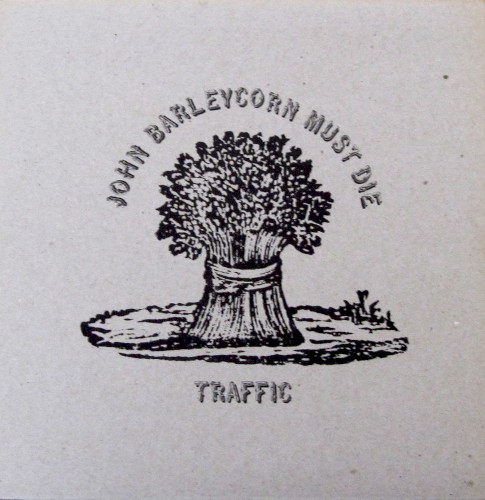
John Barleycorn Must Die (1970)
- 艺人
- Traffic乐队
- 发行
- 1970-07
- 类型
- 专辑
- 唱片公司
- 小岛唱片
- 制作人
- Chris Blackwell
- 版本
- MusicBrainz 上有 29 个发行版本
曲目
- A1Glad7:00
- A2Freedom Rider5:29
- A3Empty Pages4:37
- B1Stranger to Himself3:55
- B2John Barleycorn6:27
- B3Every Mother’s Son7:06
6 首 · 约 35 分钟 · 依据 1970 US 发行的版本,在 MusicBrainz 看这个版本。
介绍
这个词条没有中文维基百科条目,下面是英文维基百科的原文。
John Barleycorn Must Die is the fourth studio album by English rock band Traffic, released in 1970. It marked the band's comeback after a brief disbandment, and peaked at number 5 on the Billboard Top LPs chart, making it their highest-charting album in the US, and has been certified a gold record by the RIAA. In addition, the single "Empty Pages" spent eight weeks on the Billboard Hot 100, peaking at number 74. The album was marginally less successful in the UK, reaching number 11 on the UK Albums Chart.
The album was released as Island ILPS 9116 in the United Kingdom, United Artists UAS 5504 in the United States, and as Polydor 2334 013 in Canada.
Background and content
In late 1968, Traffic disbanded, with guitarist Dave Mason leaving the group for the second time prior to the completion of the band's eponymous album Traffic. In 1969, Steve Winwood joined the supergroup Blind Faith, while drummer and lyricist Jim Capaldi and woodwinds player Chris Wood turned to session work. Wood and Winwood also joined Blind Faith's drummer Ginger Baker in his post-Blind Faith group Ginger Baker's Air Force for their debut album, Ginger Baker's Air Force (1970).
At the beginning of 1970, after the demise of Blind Faith, Winwood returned to the studio ostensibly to make his debut solo album, originally to be titled Mad Shadows. He recorded two tracks with producer Guy Stevens, "Stranger to Himself" and "Every Mother's Son", but yearned for like-minded musicians to accompany, inviting Wood and Capaldi to join him. Thus Winwood's erstwhile solo album became the reunion of Traffic (minus Dave Mason), and a re-launch of the band's career. Mad Shadows would go on to be the title of Mott the Hoople's second album, also produced by Guy Stevens, and the new Winwood/Traffic album took its title from one of its tracks and became John Barleycorn Must Die.
The album featured influences from jazz and blues, but the version of the traditional English folk tune that provided the album's title, "John Barleycorn", also showed the musicians attending to a modern interpretation of traditional folk music in the vein of contemporary British bands Pentangle and Fairport Convention. Whereas previous Traffic albums had been dominated by more concise song structures, John Barleycorn saw the group develop into a looser, jam-oriented progressive rock and jazz fusion style, setting the tone for their subsequent output in the 1970s.
The album was reissued for compact disc in the UK on 1 November 1999, with five bonus tracks, including three recorded in concert from the Fillmore East in New York City. In the US, the remastered reissue of 27 February 2001 included only the two studio bonus tracks.
The opening instrumental "Glad" was later sampled in the American singer Christina Aguilera's track "Makes Me Wanna Pray" (from her 2006 album Back to Basics), with Winwood credited as a featured artist.
Steve Winwood oversaw a deluxe edition that was released on 15 March 2011, featuring the original studio album, digitally remastered on disc one, plus a second disc of bonus material, including more of the Fillmore East concert, with alternate mixes and versions of album tracks.
Cover
The original LP release of the album had the front cover design on a background consisting of a photograph of burlap. Later LP copies had the design on a grey background. The cover is displayed prominently during a party scene in the 1971 movie by Dario Argento, Four Flies on Grey Velvet.
Reception
Retrospective reviews of the album have been mixed. AllMusic criticised the vocal sections as "excuses for Winwood to exercise his expressive voice as punctuation to the extended instrumental sections", but made note of how the album took the band's jazz/rock leanings beyond mere jamming. Village Voice critic Robert Christgau said the departure of Mason hurt Traffic's songwriting on the album, leaving the band to depend on Winwood's "feckless improvised rock, or is it folksong-based jazz?"
However, John Barleycorn Must Die was voted number 369 in Colin Larkin's All Time Top 1000 Albums 3rd Edition (2000). It was also included in The MOJO Collection: The Greatest Albums of All Time, which described it as "a magnificent album" that provided "a remarkable showcase" for Winwood's gifts. The album was also included in the book 1001 Albums You Must Hear Before You Die.
Personnel
Traffic
Steve Winwood – acoustic piano (1, 2, 5), organ (1, 2, 3), percussion (1, 2), vocals (2–6), electric piano (3), bass guitar (1, 3), all instruments (4), acoustic guitar (5), all other instruments (6)
Jim Capaldi – drums (1, 2, 3, 5, 6), percussion (1, 2, 3), backing vocals (4, 5), tambourine (5)
Chris Wood – percussion (1, 2, 5), saxophone (1, 2), electric saxophone (1, 2), flute (1, 2, 5), organ (3)
Production
Chris Blackwell – producer (1, 2, 3, 5)
Steve Winwood – producer (1, 2, 3, 5)
Guy Stevens – producer (4, 6)
- Brian Humphries – engineer
- Andy Johns – engineer
- Lee Hulko – mastering
- Mike Sida – album design
- Richard Polak – photography
正文摘自英文维基百科「John Barleycorn Must Die」,按 CC BY-SA 4.0 使用;删去了参考文献、外部链接、表格和图片。
资料卡
- 作品性质
- 音乐专辑
- 表演者
- Traffic乐队
- 发行日期
- 1970 年 7 月
- 流派
- 交响摇滚、民谣摇滚、融合爵士乐
- 语言
- 英语
- 唱片公司
- 小岛唱片
- 制作人
- Chris Blackwell
- 上一部
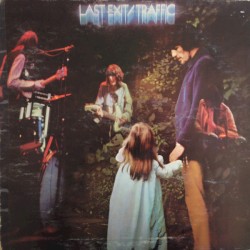
- Last Exit
- 下一部
- Welcome to the Canteen
资料来自 Wikidata Q914549(CC0)。
制作名单
- 厂牌
- Island(目录号 90058-1)
- 录音室
- 录音:Island Studios(Hammersmith);录音:Olympic Studios(Barnes)
制作
- 工程师
- Brian Humphries、Andy Johns
- 制作人
- Chris Blackwell(第 A1、A2、A3、B2 首)、史蒂夫·温伍德(第 A1、A2、A3、B2 首)、Guy Stevens(第 B1、B3 首)
演奏与演唱
- 演唱
- 史蒂夫·温伍德(第 A2、A3、B1、B2、B3 首)、吉姆·卡帕尔蒂(第 B1、B2 首)
- 鼓
- 吉姆·卡帕尔蒂(第 A1、A2、A3 首)、史蒂夫·温伍德(第 B1 首)
- 打击乐
- 吉姆·卡帕尔蒂(第 A1、A2、A3 首)、史蒂夫·温伍德(第 A1、A2 首)、Chris Wood(第 A1、A2 首)
- 风琴
- 史蒂夫·温伍德(第 A1、A2 首)、Chris Wood(第 A3 首)
- 钢琴
- 史蒂夫·温伍德(第 A1、A2 首)
- 长笛
- Chris Wood(第 A1、A2 首)
- 萨克斯
- Chris Wood(第 A1、A2 首)
- 贝斯
- 史蒂夫·温伍德(第 A3 首)
- 电钢琴
- 史蒂夫·温伍德(第 A3 首)
- 原声吉他
- 史蒂夫·温伍德(第 B1 首)
- 电吉他
- 史蒂夫·温伍德(第 B1 首)
- 铃鼓
- 吉姆·卡帕尔蒂(第 B2 首)
- 哈蒙德风琴
- 史蒂夫·温伍德(第 B3 首)
词曲与编曲
- 词曲
- 吉姆·卡帕尔蒂(第 A2、A3、B1、B3 首)、史蒂夫·温伍德(第 A2、A3、B1、B3 首)、[traditional](第 B2 首)
- 作曲
- 史蒂夫·温伍德(第 A1 首)
- 编曲
- 史蒂夫·温伍德(第 B2 首)
名单来自 MusicBrainz(CC0)这一发行版本的关系数据,由志愿者录入,不一定齐全。
更多资料与乐评
在哪听
Traffic乐队 的其他专辑
艺人页 ›
相似的专辑

同在 1970 年发行