乐单
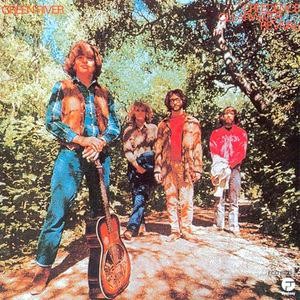
曲目
- A1Green River2:37
- A2Commotion2:44
- A3Tombstone Shadow3:40
- A4Wrote a Song for Everyone4:59
- B1Bad Moon Rising2:21
- B2Lodi3:12
- B3Cross‐Tie Walker3:20
- B4Sinister Purpose3:23
- B5The Night Time Is the Right Time3:09
9 首 · 约 29 分钟 · 依据 1969-08-03 US 发行的版本,在 MusicBrainz 看这个版本。
介绍
这个词条没有中文维基百科条目,下面是英文维基百科的原文。
Green River is the third studio album by the American rock band Creedence Clearwater Revival, released on August 7, 1969, by Fantasy Records. It was the second of three albums they released in that year, preceded by Bayou Country in January and followed by Willy and the Poor Boys in October.
Background
In January 1969, Creedence Clearwater Revival released their second studio album Bayou Country featuring their breakout single "Proud Mary" (backed with "Born on the Bayou"), which reached No. 2 on the Billboard Hot 100. Producer and primary songwriter John Fogerty was the driving creative force behind CCR, which would record three albums in 1969 alone. The band saw themselves as more disciplined than other San Francisco-based bands, with drummer Doug Clifford recalling to Jeb Wright of Goldmine in 2013, "We went to see the local bands and they were so stoned they weren’t even in tune and they were really terrible...We made a pact on the floor of the Fillmore, right then, where we would do no drugs or alcohol. We decided to get high on the music, or get out of the business."
Going against the grain at the times, Creedence eschewed the acid-inspired free-form jams favored by many rock bands, for tightly structured roots music with an unmistakable rockabilly edge. "I didn't like the idea of those acid-rock, 45-minute guitar solos," Fogerty explained to Uncut's David Cavanagh in 2012. "I thought music should get to the point a little more quickly than that."
Songwriting
CCR's third studio album includes two of their biggest hits, "Bad Moon Rising" and "Green River", both of which peaked on the U.S. chart at No. 2, as well as the highly regarded "Lodi" (No. 52) and "Commotion" (No. 30). "Bad Moon Rising" is notable for its jaunty, happy music juxtaposed with its dark, ominous lyrics. It was inspired by a scene in the 1941 film The Devil and Daniel Webster involving a hurricane, with John Fogerty stating that the words told of "the apocalypse that was going to be visited upon us. It wasn't until the band was learning the song that I realized the dichotomy. Here you got this song with all these hurricanes and blowing and raging ruin and all that, but...It's a happy-sounding tune, right? Regarding the title track, Fogerty recalled in 1993:Green River is really about this place where I used to go as a kid on Putah Creek, near Winters, California. I went there with my family every year until I was ten. Lot of happy memories there. I learned how to swim there. There was a rope hanging from the tree. Certainly dragonflies, bullfrogs. There was a little cabin we would stay in owned by a descendant of Buffalo Bill Cody. That's the reference in the song to Cody Jr. The actual specific reference, "Green River," I got from a soda pop-syrup label. You used to be able to go into a soda fountain, and they had these bottles of flavored syrup. My flavor was called Green River. It was green, lime flavored, and they would empty some out over some ice and pour some of that soda water on it, and you had yourself a Green River.In 2012, Fogerty stated:
What really happened is that I used a setting like New Orleans, but I would actually be talking about things from my own life. Certainly a song like "Green River" – which you may think would fit seamlessly into the Bayou vibe, but it's actually about the Green River, as I named it – it was actually called Putah Creek by Winters, California. It wasn't called Green River, but in my mind I always sort of called it Green River. All those little anecdotes are part of my childhood, those are things that happened to me actually, I just wrote about them and the audience shifted at the time and place.
"Lodi" did not make the Top 40 but went on to become a rock radio staple and a fan favorite. It describes the plight of a down-and-out musician whose career has landed him playing a gig in the town of Lodi (pronounced "low-die"), a small agricultural city in California's Central Valley about 70 miles from Fogerty's hometown of Berkeley. After playing in local bars, the narrator finds himself stranded and unable to raise bus or train fare to leave. Fogerty later said he had never actually visited Lodi before writing the song, and simply picked it for the song because it had "the coolest sounding name." The song's chorus, "Oh Lord, stuck in Lodi again", has been the theme of several city events in Lodi).
"Commotion" has been cited as a metaphor for the social and political unrest that America was experiencing at the time. Fogerty asserted in 2012 to Uncut, "I didn’t think 'Commotion' was social commentary, ’cause all this stuff was just in the air. But I was writing about what was in the air, and that was what came out of me. I was just doing what came naturally."
正文摘自英文维基百科「Green River (album)」,按 CC BY-SA 4.0 使用;删去了参考文献、外部链接、表格和图片;篇幅所限只节选了前面一部分,全文见原条目。
资料卡
- 作品性质
- 音乐专辑
- 表演者
- 克里登斯清水复兴合唱团
- 发行日期
- 1969 年 8 月 5 日
- 时长
- 29 分 25 秒
- 流派
- 摇滚、南方摇滚、根源摇滚、乡村摇滚
- 语言
- 英语
- 唱片公司
- Fantasy唱片
- 制作人
- 约翰·弗格蒂
资料来自 Wikidata Q926391(CC0)。
制作名单
- 厂牌
- Fantasy(目录号 8393)
- 录音室
- 录音:Ernst‐Merck‐Halle(Hamburg)
制作
- 制作人
- 约翰·弗格蒂
演奏与演唱
- 鼓
- Doug Clifford
- 贝斯
- Stu Cook
- 吉他
- 约翰·弗格蒂、Tom Fogerty
- 演唱
- 约翰·弗格蒂(其中 8 首)
- 主唱
- 约翰·弗格蒂(第 B1、B5 首)
- 原声吉他
- 约翰·弗格蒂(第 B1 首)
- 演出
- 克里登斯清水复兴合唱团(第 B1 首)
词曲与编曲
- 编曲
- 约翰·弗格蒂
- 作曲
- 约翰·弗格蒂(其中 8 首)、Herman Lubinsky(第 B5 首)
- 作词
- 约翰·弗格蒂(其中 8 首)
名单来自 MusicBrainz(CC0)这一发行版本的关系数据,由志愿者录入,不一定齐全。
更多资料与乐评
在哪听
克里登斯清水复兴合唱团 的其他专辑
艺人页 ›
相似的专辑
同在 1969 年发行