乐单
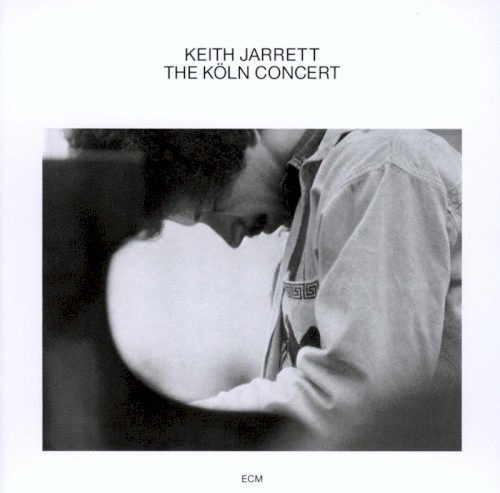
科隆音乐会 (1975)
- 艺人
- 凯斯·杰瑞
- 发行
- 1975-11-30
- 类型
- 专辑
- 唱片公司
- ECM Records
- 制作人
- Manfred Eicher
- 版本
- MusicBrainz 上有 30 个发行版本
曲目
第 1 张 · 12" Vinyl
- AKöln, January 24, 1975, Part I26:15
- BKöln, January 24, 1975, Part II a15:00
第 2 张 · 12" Vinyl
- CKöln, January 24, 1975, Part II b19:19
- DKöln, January 24, 1975, Part II c6:59
4 首 · 约 68 分钟 · 依据 1975 US 发行的版本,在 MusicBrainz 看这个版本。
介绍
这个词条没有中文维基百科条目,下面是英文维基百科的原文。
The Köln Concert is a live solo double album by pianist Keith Jarrett recorded at the Opera House in Köln (Cologne), West Germany, on 24 January 1975 and released on ECM Records later that year. It is the best-selling solo album in jazz history and the best-selling piano album. In 2025, the album was deemed "culturally, historically, or aesthetically significant" by the Library of Congress and selected for preservation in the National Recording Registry.
Concert and recording
The concert was organized by 18-year-old Vera Brandes, then Germany's youngest concert promoter. The concert took place on a Friday at the late hour of 11:30 pm, following an earlier opera performance. The late time was the only one the administration would make available to Brandes for a jazz concert—the first at the Köln Opera House. The show was sold out, filled to capacity at over 1,400 people at a ticket price of 4 DM.
At Jarrett's request, Brandes had selected a Bösendorfer 290 Imperial concert grand piano for the performance. However, there was some confusion by the opera house staff and instead they found another Bösendorfer piano backstage—a much smaller baby grand piano—and, assuming it was the one requested, placed it on the stage. The error was discovered too late for the correct Bösendorfer to be delivered to the venue in time for the evening's concert. The piano they had was intended for rehearsals only and was in poor condition and required several hours of tuning and adjustment to make it playable. The instrument was tinny and thin in the upper registers and weak in the bass register, and the pedals did not work properly. While Brandes made an attempt and procured another grand piano up to Jarrett's standards to be delivered as an emergency, the piano tuner who had meanwhile arrived to fix the baby grand warned her that transporting a grand piano without the proper equipment at low temperatures in the middle of a rainstorm would irreparably damage the instrument, forcing Brandes to stick to the small one.
Jarrett had performed a few days earlier in Lausanne, Switzerland and although Brandes had sent him a ticket for a flight to Cologne on the record company's request, he exchanged the ticket for cash and joined ECM Records producer Manfred Eicher travelling to Cologne by car in Eicher's old Renault 4, so they arrived at the opera house late in the afternoon tired after the exhaustingly long drive. Jarrett had not slept well in several nights and was in pain from back problems, having to wear a brace as a result. After trying out the substandard piano and learning a replacement instrument was not available, Jarrett nearly refused to play and was about to leave, but Brandes was able to convince him to perform anyway as the concert was scheduled to begin in just a few hours. Brandes had booked a table at a restaurant in advance of the performance, but delays meant Jarrett was able to eat very little of the meal before leaving. Ultimately, Jarrett decided to play largely because the recording equipment was already set up. Jarrett used ostinatos and rolling left-hand rhythmic figures during his performance to give the effect of stronger bass notes, and concentrated his playing in the middle portion of the keyboard. Eicher later said: "Probably [Jarrett] played it the way he did because it was not a good piano. Because he could not fall in love with the sound of it, he found another way to get the most out of it."
A notable aspect of the concert was Jarrett's ability to produce very extensive improvised material over a vamp of one or two chords for prolonged periods of time. In Part I, he spends almost 12 minutes vamping over the chords Am7 (A minor 7) to G major, sometimes in a slow, rubato feel, and other times in a bluesy, gospel rock feel. For about the last 6 minutes of Part I, he vamps over an A major theme. Roughly the first 8 minutes of Part II A is a vamp over a D major groove with a repeated bass vamp in the left hand, and in Part IIb, Jarrett improvises over an F♯ minor vamp for about the first 6 minutes.
The performance was recorded by ECM Records engineer Martin Wieland using a pair of Neumann U 67 vacuum-tube powered condenser microphones and a Telefunken M-5 portable tape machine. The recording is in three parts, lasting about 26 minutes, 34 minutes, and 7 minutes respectively. As it was originally programmed for vinyl LP, the second part was split into sections labelled "IIa" and "IIb". The third part, labelled "IIc", was actually the final piece, a separate encore. "IIc" is a reinterpretation of a composition by Keith Jarrett, "Memories of Tomorrow", which can be heard during a trio concert with Gus Nemeth (double bass) and Paul Motian (percussion) given in Oslo in December 1969 and broadcast in 1972 on the Norwegian public television channel NRK.
正文摘自英文维基百科「The Köln Concert」,按 CC BY-SA 4.0 使用;删去了参考文献、外部链接、表格和图片;篇幅所限只节选了前面一部分,全文见原条目。
资料卡
- 作品性质
- 音乐专辑
- 表演者
- 凯斯·杰瑞
- 发行日期
- 1975 年 12 月 12 日
- 录制时间
- 1975 年 1 月 24 日
- 录音地点
- 科隆歌剧院
- 流派
- 爵士乐
- 语言
- 没有该语言的内容
- 唱片公司
- ECM Records
- 制作人
- Manfred Eicher
资料来自 Wikidata Q532850(CC0)。
制作名单
- 厂牌
- ECM Records(目录号 ECM 1064/65)
- 录音室
- 录音:Oper Köln(Köln)
制作
- 工程师
- Martin Wieland
- 制作人
- Manfred Eicher
演奏与演唱
- 钢琴
- 凯斯·杰瑞
词曲与编曲
- 作曲
- 凯斯·杰瑞
名单来自 MusicBrainz(CC0)这一发行版本的关系数据,由志愿者录入,不一定齐全。
更多资料与乐评
在哪听
凯斯·杰瑞 的其他专辑
艺人页 ›

相似的专辑



同在 1975 年发行