乐单
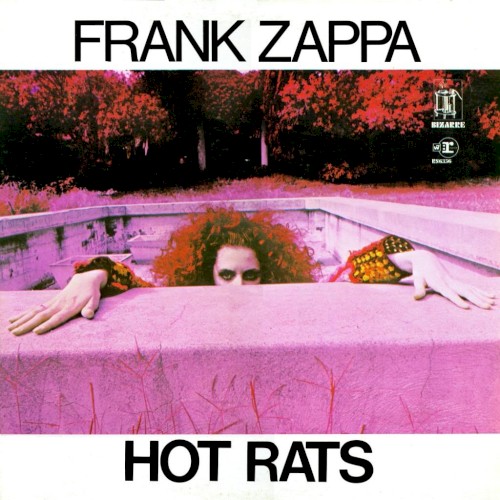
曲目
- 1Peaches en Regalia3:58
- 2Willie the Pimp9:25
- 3Son of Mr. Green Genes8:58
- 4Little Umbrellas3:09
- 5The Gumbo Variations12:55
- 6It Must Be a Camel5:15
6 首 · 约 44 分钟 · 依据 1969-10-15 US 发行的版本,在 MusicBrainz 看这个版本。
介绍
这个词条没有中文维基百科条目,下面是英文维基百科的原文。
Hot Rats is the second solo album and eighth overall album by Frank Zappa, released in October 1969. It was Zappa's first recording project after the dissolution of the original lineup of the Mothers of Invention. Five of the six songs are instrumental, while "Willie the Pimp" features vocals by Captain Beefheart. In his original sleeve notes, Zappa described the album as "a movie for your ears".
Zappa dedicated the album to his newborn son, Dweezil. In February 2009, Dweezil's tribute band to his father, Zappa Plays Zappa, won a Grammy for Best Rock Instrumental Performance for their rendition of "Peaches en Regalia".
Background
After the release of Uncle Meat in April 1969, The Mothers of Invention embarked on a short UK tour, followed by extensive touring of the US and Canada from June through August. It was during this period that the financial strain of supporting a ten-piece band (each of whom was paid $200 a week) began to weigh on Zappa, who considered splitting up the group. One indication that he would do so was the start of work on his second solo album, which began in mid-July. Besides Zappa, multi-instrumentalist Ian Underwood was the only member of the current Mothers lineup to appear on the album, with Underwood also acting as Zappa's primary musical collaborator. Other featured musicians were bassists Max Bennett and Shuggie Otis (who was 15 years old at the time of the session); drummers John Guerin, Paul Humphrey and Ron Selico; and electric violinists Don "Sugarcane" Harris and Jean-Luc Ponty. Just after the sessions were finished in late August, Zappa formally disbanded the original Mothers of Invention.
Recording
The album was recorded on what Zappa described as a "homemade 16-track" recorder; the machine was custom built by engineers at TTG Studios in Hollywood in late 1968. Additional tracks made it possible for Zappa to add multiple horn, percussion and keyboard overdubs. For the first time on a rock album, 16-track recording made it possible to create a stereo drum sound, with four of the 16 tracks assigned to the drum kit alone. With this technology, only a few musicians were required to create an especially rich instrumental texture, which mimics the sound of a large group. It was this use of advanced overdubbing that was the main motivation for Zappa, who hated playing in a studio. Because Hot Rats largely consists of instrumental jazz-influenced compositions with extensive soloing, the music sounds very different from earlier Zappa albums, which had featured satirical vocal performances along with extensive use of musique concrète and editing.
Sessions began on July 18, 1969 at T.T.G. Studios with Ian Underwood playing two piano compositions. A part of the first, "Piano Music (Section 1)", would be included in "The Little House I Used to Live In" on the following album Burnt Weeny Sandwich while an excerpt of "Piano Music (Section 3)" became "Aybe Sea" on the same album. When sessions resumed on July 28, 18 takes of section one of "Peaches en Regalia" were attempted, with take 18 providing the master. This was followed by two "Peaches Jam" takes, which was meant to comprise the middle portion of the song but edited out of the final version. Finally, 10 takes of section three (with take 10 being the master) were taped. In addition, 12 takes of "Arabesque" (which would later be used as the first part of "Toads of the Short Forest" on Weasels Ripped My Flesh) and three takes of "Dame Margret's Son to Be a Bride" (which would be retitled "Lemme Take You to the Beach" on Studio Tan) were recorded.
On July 29, 9 takes of "It Must Be a Camel" (with take 9 providing the master), 4 takes of "Natasha" (renamed "Little Umbrellas"), one take of the unreleased jam "Bognor Regis", one 15-minute master take of "Willie the Pimp" along with various guitar overdubs, 14 takes of "Transition" (an excerpt of which was titled "Twenty Small Cigars" on 1970's Chunga's Revenge) and one take of the unreleased jam "Lil' Clanton Shuffle" were all cut. On July 30, one take of "Directly from My Heart to You" (edited for inclusion on Weasels Ripped My Flesh), one take of the 28-minute jam "Another Waltz" (a large part of which was included in "The Little House I Used to Live In"), a remake of "Dame Margret's Son to Be a Bride", three takes of "Son of Mr. Green Genes" and two takes of "Big Legs" (to be edited and renamed "Gumbo Variations") were completed.
The sessions then moved to Sunset Sound Recorders and Whitney Studios between August 25-30 for overdubs, including guitars, bass, keyboards, woodwinds and percussion all played by Zappa and Underwood, in addition to Jean-Luc Ponty's violin on "It Must Be a Camel."
正文摘自英文维基百科「Hot Rats」,按 CC BY-SA 4.0 使用;删去了参考文献、外部链接、表格和图片;篇幅所限只节选了前面一部分,全文见原条目。
资料卡
- 作品性质
- 音乐专辑
- 表演者
- 弗兰克·扎帕
- 发行日期
- 1969 年 10 月 10 日
- 录音地点
- TTG Studios
- 流派
- 融合爵士乐
- 语言
- 没有该语言的内容
- 唱片公司
- Bizarre唱片、重复唱片
- 制作人
- 弗兰克·扎帕
资料来自 Wikidata Q79195(CC0)。
制作名单
- 厂牌
- Bizarre(目录号 RS 6356)
制作
- 制作人
- 弗兰克·扎帕
演奏与演唱
- 单簧管
- Ian Underwood
- 长笛
- Ian Underwood
- 风琴
- Ian Underwood
- 钢琴
- Ian Underwood
- 萨克斯
- Ian Underwood
- 贝斯
- 弗兰克·扎帕、Max Bennett(第 3、4、5、6 首)、Shuggie Otis(第 1 首)
- 吉他
- 弗兰克·扎帕
- 打击乐
- 弗兰克·扎帕
- 鼓
- John Guerin(第 2、4、6 首)、Paul Humphrey(第 3、5 首)、Ron Selico(第 1 首)
- 小提琴
- Don “Sugarcane” Harris(第 2、5 首)、尚·卢克·邦提(第 6 首)
- 电贝斯
- Max Bennett(第 2 首)
- 主唱
- 牛心上尉(第 2 首)
词曲与编曲
- 编曲
- 弗兰克·扎帕
- 作曲
- 弗兰克·扎帕
- 作词
- 弗兰克·扎帕(第 2 首)
名单来自 MusicBrainz(CC0)这一发行版本的关系数据,由志愿者录入,不一定齐全。
更多资料与乐评
在哪听
弗兰克·扎帕 的其他专辑
艺人页 ›
相似的专辑
同在 1969 年发行