乐单
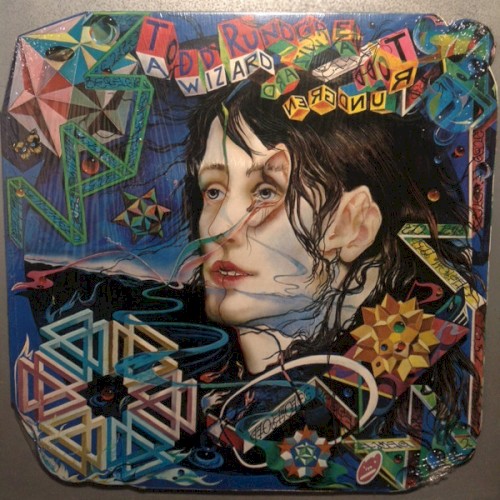
A Wizard, a True Star (1973)
曲目
- A1International Feel2:53
- A2Never Never Land1:25
- A3Tic Tic Tic It Wears Off1:15
- A4You Need Your Head1:07
- A5Rock and Roll Pussy1:10
- A6Dogfight Giggle1:10
- A7You Don’t Have to Camp Around1:05
- A8Flamingo2:35
- A9Zen Archer5:25
- A10Just Another Onion Head / Da da Dali2:25
- A11When the Shit Hits the Fan / Sunset Blvd4:01
- A12Le Feel Internacionale1:46
- B1Sometimes I Don’t Know What to Feel4:15
- B2Does Anybody Love You1:31
- B3Medley: I’m So Proud / Ooh Baby Baby / La La Means I Love You / Cool Jerk10:35
- B4Hungry for Love2:11
- B5I Don’t Want to Tie You Down1:56
- B6Is It My Name?3:50
- B7Just One Victory4:50
19 首 · 约 55 分钟 · 依据 1973-03-29 US 发行的版本,在 MusicBrainz 看这个版本。
介绍
这个词条没有中文维基百科条目,下面是英文维基百科的原文。
A Wizard, a True Star is the fourth studio album by the American musician Todd Rundgren, released on March 2, 1973 by Bearsville Records. It marked a departure from his previous album, Something/Anything? (1972), featuring fewer straightforward pop songs, a development he attributed to his experimentation with psychedelic drugs and his realization of "what music and sound were like in my internal environment, and how different that was from the music I had been making."
The album was produced, engineered, and largely performed by Rundgren alone. He envisioned it as a hallucinogenic-inspired "flight plan" with all the tracks segueing seamlessly into each other, starting with a "chaotic" mood and ending with a medley of his favorite soul songs. At the time of release, he stated that Wizard intended to advance utopian ideals; later, he said that the album had no definite meaning. No singles were issued from the album, as he wanted the tracks to be heard in the context of the LP. With 19 tracks, its nearly 56-minute runtime made it one of the longest single-disc LPs to date.
Upon release, A Wizard, a True Star received widespread critical acclaim, but sold poorly, reaching number 86 on the U.S. charts. According to Rundgren, "the result was a complete loss of about half of my audience at that point." Rundgren formed Utopia, his first official band since the Nazz, to tour in support of the album. Their technologically ambitious stage show was cancelled after about two weeks on the road. A Wizard, a True Star has since been recognized for its influence on later generations of bedroom musicians.
Background
In February 1972, Something/Anything? was issued as Todd Rundgren's third solo album, and his first credited under his own name rather than the sobriquet "Runt". It included many songs that would become among his best-known, as well as extended jams and studio banter. After the album's success, critics hailed Rundgren as the spiritual successor to the 1960s studio experiments of the Beatles and the Beach Boys' Brian Wilson; Rundgren became uncomfortable when these descriptions also came to include "the male Carole King" in reference to the album's singles "I Saw the Light" and "Hello It's Me". "With all due respect to Carole King," he said, "It wasn't what I was hoping to create as a musical legacy for myself."
Rundgren returned to New York, and for the first time in his life, started experimenting with psychedelic drugs. To his recollection, this included DMT, mescaline, psilocybin, and possibly LSD. He began to think that the writing on Something/Anything? was largely formulaic, and sought to create a "more eclectic and more experimental" follow-up album. His music tastes also had started to lean toward the progressive rock of artists such as Frank Zappa, Yes, and Mahavishnu Orchestra. He explained, "It wasn't like I suddenly threw away everything that I was doing before and decided that I was going to play the music of my mind", rather, the experiences allowed him "to actively put some of [my songwriting habits] away and to absorb new ideas and to also hear the final product in a different way." However, he "wasn't really aware, at that time, that I'd make such a radical shift".
Production
The sound and structure of Wizard was heavily informed by Rundgren's hallucinogenic experiences. He said, "It was very ADD ... and I wouldn't dwell on whether a musical idea was complete or not." Rundgren and keyboardist Moogy Klingman established a professional recording studio, Secret Sound, to accommodate the Wizard sessions. Located at Manhattan's 24th Street, the studio was designed to Rundgren's specifications and was created so that he could freely indulge in sound experimentation without having to worry about hourly studio costs. To this effect, he said, "I had the idea that a synthesizer was supposed to sound like a synthesizer, instead of sounding like strings or horns."
Two or three months were spent building the studio; the expenses were ultimately paid by the royalties gained from Something/Anything? and the $10,000 advance given to Klingman for his second solo album (Moogy II, co-produced by Rundgren). Rundgren remembered: "I have to say that, in some sense, A Wizard, a True Star was kind of rushed through because the studio wasn't finished. ... a lot of it seemed sorta ad hoc." According to Klingman, the studio equipment "was breaking down all the time" and was "barely held together with band-aids and bubble gum." The two differed in their recollection of the first song recorded for the album; Rundgren thought it was "Sometimes I Don't Know What to Feel", whereas Klingman believed it was "International Feel".
正文摘自英文维基百科「A Wizard, a True Star」,按 CC BY-SA 4.0 使用;删去了参考文献、外部链接、表格和图片;篇幅所限只节选了前面一部分,全文见原条目。
资料卡
- 作品性质
- 音乐专辑
- 表演者
- 托德·朗德格伦
- 发行日期
- 1973 年 3 月 2 日
- 流派
- 艺术摇滚、前卫流行
- 语言
- 英语
- 唱片公司
- Bearsville
资料来自 Wikidata Q260728(CC0)。
制作名单
- 厂牌
- Bearsville Records(目录号 BR 2133)
词曲与编曲
- 词曲
- 托德·朗德格伦(第 A1、B5 首)、Thom Bell(第 B3 首)、William Hart(第 B3 首)、Qrion(第 B3 首)、Warren “Pete” Moore(第 B3 首)、斯莫奇·罗宾逊(第 B3 首)
- 作曲
- 胡尔·斯泰恩(第 A2 首)、Donald Storball(第 B3 首)、柯蒂斯·梅菲尔德(第 B3 首)
- 作词
- Betty Comden(第 A2 首)、Adolph Green(第 A2 首)、Donald Storball(第 B3 首)、柯蒂斯·梅菲尔德(第 B3 首)
名单来自 MusicBrainz(CC0)这一发行版本的关系数据,由志愿者录入,不一定齐全。
更多资料与乐评
在哪听
托德·朗德格伦 的其他专辑
艺人页 ›
相似的专辑
同在 1973 年发行