乐单
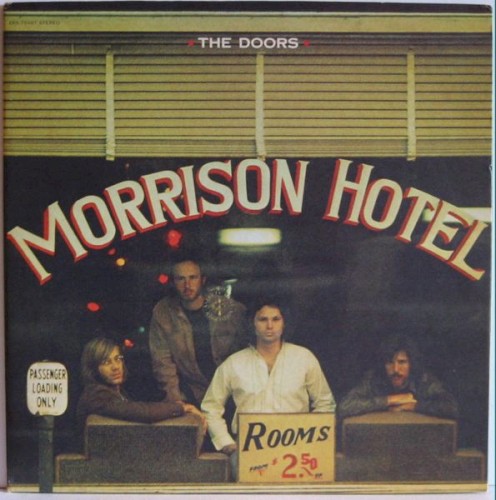
曲目
- A1Roadhouse Blues4:05
- A2Waiting for the Sun4:00
- A3You Make Me Real2:53
- A4Peace Frog2:50
- A5Blue Sunday2:13
- A6Ship of Fools3:11
- B1Land Ho!4:11
- B2The Spy4:17
- B3Queen of the Highway2:47
- B4Indian Summer2:36
- B5Maggie M’Gill4:23
11 首 · 约 37 分钟 · 依据 1970-02 US 发行的版本,在 MusicBrainz 看这个版本。
介绍
这个词条没有中文维基百科条目,下面是英文维基百科的原文。
Morrison Hotel is the fifth studio album by American rock band the Doors, released on February 9, 1970, by Elektra Records. After the use of brass and string arrangements recommended by producer Paul A. Rothchild on their previous album, The Soft Parade (1969), the Doors returned to their blues rock style and this album was largely seen as a return to form for the band.
The group entered Elektra Sound Recorders in Los Angeles in November 1969 to record the album, which is divided into two separately titled sides: "Hard Rock Café" and "Morrison Hotel". Blues rock guitar pioneer Lonnie Mack and Ray Neapolitan contributed to the album as session bassists.
The album reached No. 4 on the Billboard 200, and performed better overseas than the preceding album (it was the group's highest-charting studio album in the United Kingdom, where it peaked at No. 12). The accompanying "You Make Me Real" / "Roadhouse Blues" single peaked at No. 50 in May 1970 on the Billboard 100 chart. The cover photo was taken by Henry Diltz.
Background
On March 1, 1969, Jim Morrison performed while intoxicated at the Dinner Key Auditorium in Coconut Grove, Florida, in front of a crowd of nearly 12,000; he was charged for his performance and behavior with indecent exposure, on April 4. The incident negatively reflected on the band's publicity, sparking a "March for Decency" at the Miami Orange Bowl.
Consequently, 25 dates on the band's next tour were canceled, and their records were blacklisted from radio airplay, resulting in the band abandoning the rest of their potential tour, costing what John Densmore characterized as "a million dollars in gigs." Nevertheless, the band gradually regained momentum by playing concerts throughout the rest of the year, including the Toronto Rock and Roll Revival; they played alongside John Lennon, among others, who later said, "supposedly the Doors were top of the bill."
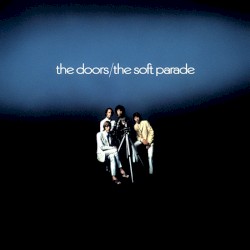
In July, the Doors had released their fourth album, The Soft Parade, a heavily orchestrated affair that augmented the band's sound with horns and strings. Around early 1969, Morrison traded in his stage leathers for more conventional attire, grew a beard and gained weight as he attempted to live down his "Lizard King" image; however, his worsening alcoholism often undermined his efforts.
In November, a drunken Morrison caused such a disturbance on a flight to Phoenix, Arizona, to see a Rolling Stones concert that he was charged with a new skyjacking law that carried up to a $10,000 fine and a ten-year prison sentence.
Recording and composition
Morrison Hotel's back-to-basics approach largely stemmed from the group's dismay over the protracted sessions for The Soft Parade, which took nine months to record and cost $86,000 (equal to $755,036 today), far more expensive than any previous Doors record. The band had also been stung by the critical reception to the record. On Morrison Hotel, there is a slight steer toward blues, which would be fully explored by the band on their next album L.A. Woman. Morrison Hotel was recorded between November 1969 and January 1970, with the exception of "Indian Summer", which was recorded on August 19, 1966 for The Doors, while "Waiting for the Sun" actually originated during the sessions for the band's third album.
Although Morrison Hotel contains no major hit singles, it features some of the band's most popular songs, including "Roadhouse Blues" and "Peace Frog", which would go on to become staples of classic rock radio. "Roadhouse Blues" took two days to record (November 4–5, 1969) with Paul Rothchild striving for perfection. Several takes from these sessions were included on the 2006 remastered album, with Morrison repeating the phrase "Money beats soul" over and over again. The sessions only took off on the second day, when distinguished blues guitarist Lonnie Mack (also signed to Elektra Records) joined in on bass and former Lovin' Spoonful bandleader John Sebastian (appearing under the pseudonym G. Puglese due to the constraint of his Reprise Records recording contract) joined in on harmonica. Over the course of the session, keyboardist Ray Manzarek switched from his Wurlitzer electric piano to a tack piano.
The hook of "Peace Frog" is a distorted G5 chord played three times by Krieger, followed by a brief percussive wah-wah effect. Morrison, who took the words from a notebook entitled Abortion Stories, begins nearly every line with the word "blood", often referring to "Blood in the streets", which is perhaps "addressing the civic unrest then gripping the nation". A brief musical interlude is next, followed by a guitar solo, and a spoken word verse ("Indians scattered on dawn's highway bleeding / Ghosts crowd the young child's fragile eggshell mind"). The song ends with a final chord as it segues into the next track, "Blue Sunday".
正文摘自英文维基百科「Morrison Hotel」,按 CC BY-SA 4.0 使用;删去了参考文献、外部链接、表格和图片;篇幅所限只节选了前面一部分,全文见原条目。
资料卡
- 作品性质
- 音乐专辑
- 表演者
- 门户乐团
- 发行日期
- 1970 年 1 月
- 时长
- 37 分 05 秒
- 流派
- 蓝调摇滚、迷幻摇滚
- 语言
- 英语
- 唱片公司
- 艾丽卡唱片
- 制作人
- Paul A. Rothchild
资料来自 Wikidata Q214139(CC0)。
制作名单
- 厂牌
- Elektra(目录号 EKS-75007)
制作
- 工程师
- Bruce Botnick
- 制作人
- Paul A. Rothchild
演奏与演唱
- 鼓
- John Densmore
- 吉他
- Robby Krieger
- 键盘
- Ray Manzarek
- 演唱
- 詹姆斯·道格拉斯·“吉姆”·莫里森
- 贝斯
- 朗尼·麦克(第 A1、B5 首)
- 钉锤钢琴
- Ray Manzarek(第 A1 首)
- 口琴
- 约翰·塞巴斯蒂安(第 A1 首)
词曲与编曲
- 作曲
- 詹姆斯·道格拉斯·“吉姆”·莫里森(第 A1、A2、A3、A5、B2、B5 首)、John Densmore(第 A1、A3、B5 首)、Robby Krieger(第 A1、A3、B5 首)、Ray Manzarek(第 A1、A3、B5 首)
- 作词
- 詹姆斯·道格拉斯·“吉姆”·莫里森(第 A1、A2、A5、B2、B5 首)
- 词曲
- Robby Krieger(第 A4、A6、B1、B3、B4 首)、詹姆斯·道格拉斯·“吉姆”·莫里森(第 A4、A6、B1、B3、B4 首)
包装与设计
- 设计
- Gary Burden
- 摄影
- Henry Diltz
名单来自 MusicBrainz(CC0)这一发行版本的关系数据,由志愿者录入,不一定齐全。
更多资料与乐评
在哪听
门户乐团 的其他专辑
艺人页 ›
相似的专辑
同在 1970 年发行