乐单
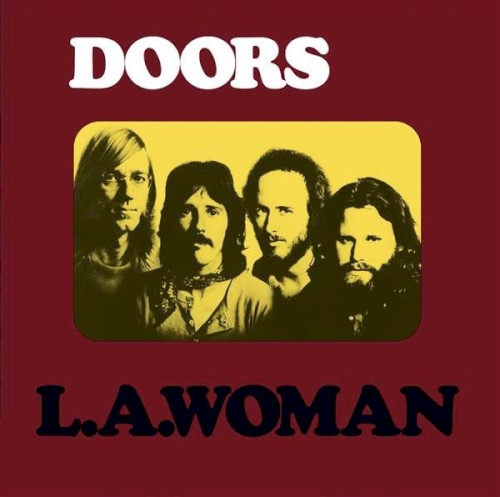
曲目
- A1The Changeling4:20
- A2Love Her Madly3:18
- A3Been Down So Long4:40
- A4Cars Hiss by My Window4:10
- A5L.A. Woman7:49
- B1L’America4:35
- B2Hyacinth House3:10
- B3Crawling King Snake4:57
- B4The WASP (Texas Radio and the Big Beat)4:12
- B5Riders on the Storm7:14
10 首 · 约 48 分钟 · 依据 1971 US 发行的版本,在 MusicBrainz 看这个版本。
介绍
这个词条没有中文维基百科条目,下面是英文维基百科的原文。
L.A. Woman is the sixth studio album by the American rock band the Doors, released on April 19, 1971, by Elektra Records. It is the last to feature lead singer Jim Morrison during his lifetime, though he would posthumously appear on the 1978 album An American Prayer. Even more so than its predecessors, the album is heavily influenced by blues. It was recorded without producer Paul A. Rothchild after he quit the band over the perceived lack of quality in their studio performances. Subsequently, the band co-produced the album with longtime sound engineer Bruce Botnick.
"Love Her Madly" was released as a single in March 1971, preceding the album's release, and reached the Top 20 on the Billboard Hot 100. Upon release, the album peaked at number nine on the Billboard 200 and reached number 28 on the UK Albums Chart. The track "Riders on the Storm" also achieved chart success.
Critics including Richie Unterberger and David Quantick have called L.A. Woman one of the Doors' best albums, citing Morrison's vocal performance and the band's stripped-down return to their blues-rock roots.
Background
The Doors had achieved commercial and critical success by 1969, but for much of that year they were blacklisted from radio playlists and their concert bookings dwindled after singer Jim Morrison had been charged with profanity and indecent exposure at a concert in Miami, Florida. Morrison had mentioned leaving the group at the end of 1968, only to be convinced by keyboardist Ray Manzarek to stay on another six months. On September 20, 1970, Morrison was convicted for the Miami incident. In a 1970 interview with Ben Fong-Torres, Morrison said of Miami, "I think subconsciously I was trying to get across in that concert, I was trying to reduce it to absurdity. And it worked too well."
In November 1970, shortly after Morrison's trial ended, the Doors entered Sunset Sound Recorders in Los Angeles to record early versions of the songs "L.A. Woman", "Riders on the Storm" and "Love Her Madly". The new songs were a departure from the heavily orchestrated pieces on the earlier album The Soft Parade, which burdened the group with long, drawn-out recording sessions. The simplified and straightforward style, progressing from Morrison Hotel, was well-received, noted by Jazz & Pop magazine as "a return to the tight fury of early Doors' music". The band conflicted with their record company, Elektra Records, who released the Doors' first compilation album, 13, to have a product for the Christmas market. It was released without the band's input, and featured a large image of a younger Morrison, upsetting him enough to threaten signing with another label. As their contract required one more album, the group were unable to follow through with the threat, so they continued rehearsing the new material.
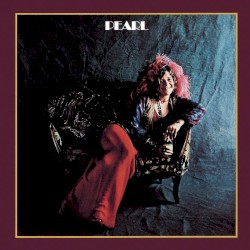
Record producer Paul A. Rothchild, who worked with the band on their first five albums, attended the early sessions but quit following friction with the band. This included his dissatisfaction with the song "Love Her Madly", which "drove [him] out of the studio." He felt that recording the composition was a step backwards artistically, calling it "cocktail music." Rothchild has denied a popular rumor that claimed he directed the remark toward "Riders on the Storm", explaining that he thought that song and "L.A. Woman" were "excellent in rehearsal". He maintains that his cocktail music comment was said to "make [the group] angry enough to do something good." Rothchild was frustrated that the group was slow in developing new material, especially as the band contained three songwriters. He was unable to persuade Morrison to consistently attend rehearsals. As Bruce Botnick revealed in the book Love Becomes a Funeral Pyre, another issue that led to Rothchild's leaving was the emotional devastation he felt at the death of Janis Joplin, having worked with her on Pearl. Rothchild left before any master takes were complete, recommending that the Doors co-produce L.A. Woman with Botnick, the sound engineer who had worked with Rothchild on the band's previous recordings. The artist Eve Babitz is cited as the woman who inspired the lyrics of the title song.
Recording
The group and Botnick organized a makeshift recording studio at their private rehearsal space, the Doors' Workshop, a two-story building at 8512 Santa Monica Boulevard. They could then record in a more comfortable and relaxed setting while avoiding the expenses of a professional studio. A mixing console previously owned by Elektra was installed upstairs in the Workshop, while studio monitors, microphones, and keyboards were set up downstairs. To compensate for the lack of an isolated vocal booth, Morrison recorded in the bathroom doorway, singing into the same microphone used on the Doors' final tour. According to Botnick, Morrison was easy to work with and spent long hours in the studio with little consumption of alcohol.
正文摘自英文维基百科「L.A. Woman」,按 CC BY-SA 4.0 使用;删去了参考文献、外部链接、表格和图片;篇幅所限只节选了前面一部分,全文见原条目。
资料卡
- 作品性质
- 音乐专辑
- 表演者
- 门户乐团
- 发行日期
- 1971 年 4 月
- 时长
- 48 分 24 秒
- 流派
- 酸摇滚、蓝调摇滚
- 语言
- 英语
- 唱片公司
- 艾丽卡唱片
- 制作人
- 门户乐团、Bruce Botnick
资料来自 Wikidata Q212846(CC0)。
制作名单
- 厂牌
- Elektra(目录号 EKS-75011)
- 录音室
- 录音:The Doors Workshop(West Hollywood)
制作
- 制作人
- Bruce Botnick、门户乐团
- 工程师
- Bruce Botnick(第 A2 首)
- 混音
- Bruce Botnick(第 A2 首)
演奏与演唱
- 鼓
- John Densmore
- 吉他
- Robby Krieger、Marc Benno(第 A3、A4、A5、B3 首)、Ray Manzarek(第 A3 首)
- 贝斯
- Jerry Scheff
- 主唱
- 詹姆斯·道格拉斯·“吉姆”·莫里森
- 键盘
- Ray Manzarek(其中 8 首)
- 哈蒙德风琴
- Ray Manzarek(第 A1 首)
- 罗兹电钢琴
- Ray Manzarek(第 B5 首)
词曲与编曲
- 作词
- 詹姆斯·道格拉斯·“吉姆”·莫里森(第 A1、A3、A5、B1、B2、B4 首)、约翰·李·霍克(第 B3 首)
- 作曲
- 门户乐团(第 A1、A3、B1、B2 首)、John Densmore(第 A5、B4 首)、Robby Krieger(第 A5、B4 首)、Ray Manzarek(第 A5、B4 首)、詹姆斯·道格拉斯·“吉姆”·莫里森(第 A5 首)、约翰·李·霍克(第 B3 首)
- 词曲
- John Densmore(第 A2、A4、B5 首)、Robby Krieger(第 A2、A4、B5 首)、Ray Manzarek(第 A2、A4、B5 首)、詹姆斯·道格拉斯·“吉姆”·莫里森(第 A2、A4、B5 首)
名单来自 MusicBrainz(CC0)这一发行版本的关系数据,由志愿者录入,不一定齐全。
更多资料与乐评
在哪听
门户乐团 的其他专辑
艺人页 ›
相似的专辑
同在 1971 年发行