乐单
曲目
- A1When I Kissed the Teacher3:03
- A2Dancing Queen3:53
- A3My Love, My Life3:53
- A4Dum Dum Diddle2:55
- A5Knowing Me, Knowing You4:03
- B1Money, Money, Money3:07
- B2That’s Me3:18
- B3Why Did It Have to Be Me3:23
- B4Tiger2:56
- B5Arrival3:02
10 首 · 约 34 分钟 · 依据 1976 US 发行的版本,在 MusicBrainz 看这个版本。
介绍
这个词条没有中文维基百科条目,下面是英文维基百科的原文。
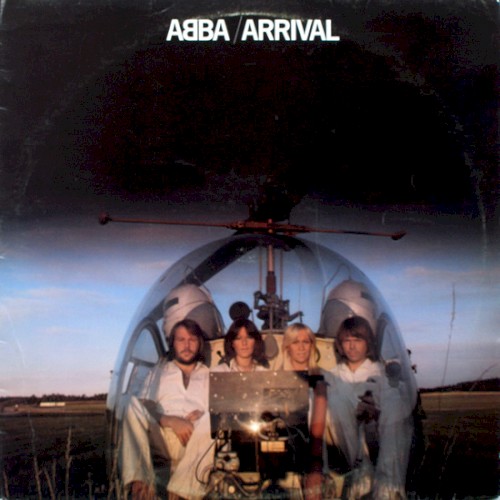
Arrival is the fourth studio album by the Swedish pop group ABBA. It was originally released in Sweden on 11 October 1976 by Polar Records. It became one of ABBA's most successful albums to date, producing some of their biggest hits: "Dancing Queen", "Money, Money, Money" and "Knowing Me, Knowing You". The track "Fernando", which had been released as a single in March 1976, was included on the Australian and New Zealand versions of the album. Arrival was the best-selling album of 1977 in the United Kingdom and was certified gold by the Recording Industry Association of America.
In 2024, the album was selected for preservation in the United States National Recording Registry by the Library of Congress as being "culturally, historically, or aesthetically significant".
Background and production
By the time ABBA began working on their fourth album in August 1975, they had achieved a modest level of success around the world. It was with Arrival however, that they would achieve global superstardom. Recording sessions began in August 1975 and continued until September 1976 at Metronome and Glen studios in Stockholm, Sweden.
The first song to enter the studio was a track called "Boogaloo" on 4 August. Taking inspiration from the current disco sound (and in particular George McCrae's "Rock Your Baby"), the backing track was laid down. The group knew that they had something big on their hands, as member Agnetha Fältskog remarked: "We knew immediately it was going to be massive". With re-written lyrics, the song became known as "Dancing Queen", and would go on to be ABBA's biggest ever hit. Work on the song continued intermittently until December 1975 due to the group's increasing commitments in the latter half of the year. This was a result of the sudden surge of popularity that they found in the United Kingdom and Australia. During this time they also recorded a song (in Swedish), "Fernando", for member Anni-Frid Lyngstad's solo album, Frida ensam.
In March 1976, "Fernando" was re-written with English lyrics and released as an ABBA single, becoming the group's biggest hit to date – hitting No.1 in many countries, including a 14-week stay at No.1 in Australia. It was featured as a brand new track on their Greatest Hits album which became the UK's biggest-selling album of the year. (In the Australian release of Arrival, "Fernando" was included between "Why Did It Have to Be Me" and "Tiger"). The next song they began working on, in late March, was "Knowing Me, Knowing You", which became another major hit worldwide. Member Benny Andersson has said that it is "one of our five best recordings".
By the end of April two other songs had been laid down: "That's Me" and "Why Did It Have to Be Me". The latter track was reworked into "Happy Hawaii" before being reverted to its original title, with new lyrics and vocals by Björn Ulvaeus ("Happy Hawaii" would later be released as a B-side). Similarly, "Money, Money, Money" was worked into "Gypsy Girl" and then reverted to its original title. The song was released as a single and became a major hit some months after the album's release.
In June 1976, a TV special dedicated to the group (entitled ABBA-dabba-dooo!!) was filmed. Around the same time, what was to become the album's opening track, "When I Kissed the Teacher", was recorded. By late July "Tiger" and "Dum Dum Diddle" were recorded, considered by biographer Carl Magnus Palm as the "complete antithesis" of each other,. Both Lyngstad and Ulvaeus have expressed dissatisfaction with "Dum Dum Diddle". In Ulvaeus own words, "I'd been working all night trying to come up with a decent lyric. And I thought, 'Well, I'd better take in something to prove that I've been working.' I showed them this song, thinking they'd say, 'Oh, no! We can't do that!'". "My Love My Life" was recorded next. Originally a more upbeat song titled "Monsieur Monsieur", it became a lush ballad with backing harmonies inspired by 10cc's hit "I'm Not in Love".
The final track to be recorded was an instrumental piece entitled "Ode to Dalecarlia". Mostly featuring Andersson on keyboards, the track was renamed to "Arrival" – a word that had already been decided as the title of their new album. By September 1976, work on the album was finished.
Release
Arrival was released on 11 October 1976. The album was first released on compact disc (CD) in 1984 and then re-issued in digitally remastered form a total of four times; first in 1997, then in 2001, 2005 as part of The Complete Studio Recordings box set, and again in 2006 (as a special Deluxe Edition).
正文摘自英文维基百科「Arrival (ABBA album)」,按 CC BY-SA 4.0 使用;删去了参考文献、外部链接、表格和图片;篇幅所限只节选了前面一部分,全文见原条目。
资料卡
- 作品性质
- 音乐专辑
- 表演者
- ABBA
- 发行日期
- 1976 年 10 月 11 日
- 流派
- 流行音乐、欧洲迪斯科
- 语言
- 英语
- 唱片公司
- Polar
- 制作人
- 班尼·安德森、比约恩·乌尔韦乌斯
资料来自 Wikidata Q162392(CC0)。
制作名单
- 厂牌
- Atlantic(目录号 SD 19115)
- 录音室
- 录音:Metronome Studio(Stockholm);录音:Glen Studio(Stockholms län);录音:KMH Studios(Stockholm)
制作
- 工程师
- Michael B. Tretow
- 制作人
- 班尼·安德森、比约恩·乌尔韦乌斯
演奏与演唱
- 键盘
- 班尼·安德森(其中 8 首)
- 鼓
- Ola Brunkert(其中 8 首)、Roger Palm(第 A2 首)
- 贝斯
- Rutger Gunnarsson(其中 8 首)
- 吉他
- 比约恩·乌尔韦乌斯(其中 7 首)、Janne Schaffer(第 A5、B3 首)
- 打击乐
- Malando Gassama(第 A1、A5、B2 首)
- 小提琴
- Martin Bylund(第 A2、A3、B5 首)、Anders Dahl(第 A2、A3、B5 首)、Gunnar Michols(第 A2、A3、B5 首)、Harry Teike(第 A2、A3、B5 首)、Lars Stegenberg(第 A2、A3 首)、Claes Nilsson(第 A2、A3 首)、Krzysztof Zdrzalka(第 A2、A3 首)、Bernt Nylund(第 A3、B5 首)、Bo Söderström(第 A3、B5 首)、Bertil Orsin(第 A2 首)、Sixten Strömvall(第 A2 首)、Per‐Erik Olsson(第 A3 首)、Leandr Pfeiler(第 A3 首)、Snorri Throvaldsson(第 A3 首)
- 电吉他
- Janne Schaffer(第 A3、B2、B3 首)、Lasse Wellander(第 A5、B4 首)、Anders Glenmark(第 B1 首)、比约恩·乌尔韦乌斯(第 B2 首)
- 演唱
- 昂内塔·费尔特斯科格(第 A1、A3 首)、安妮-弗里德·林斯塔德(第 A5、B1 首)、比约恩·乌尔韦乌斯(第 B3 首)
- 中提琴
- Håkan Roos(第 A2、A3 首)、Lars Arvinder(第 A3、B5 首)、Alm Nils Ersson(第 A3、B5 首)、Åke Arvinder(第 A2 首)、Lars Brolin(第 A2 首)、Nils Heie(第 A3 首)
- 克拉维琴
- 班尼·安德森(第 A2 首)
- 大提琴
- Hans‐Göran Eketorp(第 A2 首)、Åke Olofsson(第 A2 首)
- 主唱
- 昂内塔·费尔特斯科格(第 A2 首)、安妮-弗里德·林斯塔德(第 A2 首)
- 原声吉他
- 比约恩·乌尔韦乌斯(第 A4 首)、Lasse Wellander(第 A4 首)
- 萨克斯
- Lars O. Carlsson(第 B3 首)
- 次中音萨克斯
- Lars O. Carlsson(第 B3 首)
词曲与编曲
- 编曲
- 班尼·安德森、比约恩·乌尔韦乌斯
- 词曲
- 班尼·安德森(其中 9 首)、比约恩·乌尔韦乌斯(其中 9 首)、Stig Anderson(第 A2、A5、B2、B3 首)
- 器乐编曲
- Sven-Olof Walldoff(第 A2 首)、Rutger Gunnarsson(第 A3 首)
- 作词
- Stig Anderson(第 A3 首)、比约恩·乌尔韦乌斯(第 A4 首)
- 作曲
- 班尼·安德森(第 B5 首)、比约恩·乌尔韦乌斯(第 B5 首)
名单来自 MusicBrainz(CC0)这一发行版本的关系数据,由志愿者录入,不一定齐全。
更多资料与乐评
在哪听
ABBA 的其他专辑
艺人页 ›
相似的专辑
同在 1976 年发行