乐单
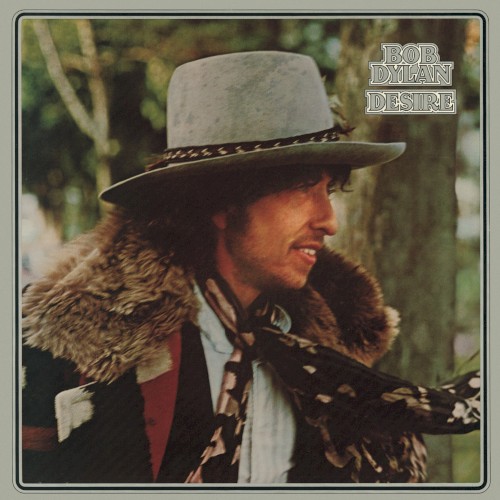
Desire (1976)
曲目
- A1Hurricane8:33
- A2Isis6:58
- A3Mozambique3:00
- A4One More Cup of Coffee3:43
- A5Oh, Sister4:05
- B1Joey11:05
- B2Romance in Durango5:50
- B3Black Diamond Bay7:30
- B4Sara5:29
9 首 · 约 56 分钟 · 依据 1976-01-05 US 发行的版本,在 MusicBrainz 看这个版本。
介绍
这个词条没有中文维基百科条目,下面是英文维基百科的原文。
Desire is the seventeenth studio album by American singer-songwriter Bob Dylan, released on January 5, 1976, through Columbia Records. It is one of Dylan's most collaborative efforts, featuring the same caravan of musicians as the acclaimed Rolling Thunder Revue tours the previous year (later documented on The Bootleg Series Vol. 5). Many of the songs also featured backing vocals by Emmylou Harris and Ronee Blakley. Most of the album was co-written by Jacques Levy, and is composed of lengthy story-songs, two of which quickly generated controversy: the 11-minute-long "Joey", which is seen as glorifying the violent gangster "Crazy Joey" Gallo, and "Hurricane", the opening track that tells a passionate account of the murder case against boxer Rubin "Hurricane" Carter, whom the song asserts was framed. Carter was released in 1985, after a judge overturned his conviction on appeal.
A well-received follow-up to Blood on the Tracks, Desire reached No. 1 on the Billboard Pop Albums chart for five weeks, becoming one of Dylan's best-selling studio albums, and was certified double Platinum; the album reached No. 3 in the UK. It claimed the No. 1 slot on NME Album of the Year. Rolling Stone named Desire No. 174 on its list of the 500 Greatest Albums of All Time. It was voted number 761 in the third edition of Colin Larkin's All Time Top 1000 Albums (2000).
Context
Desire was released between the two legs of Dylan's Rolling Thunder Revue tour. By 1975, Dylan had extensive experience playing with a number of bands, but these groups were assembled by others. In the case of the Hawks (later known as The Band), the group had performed for a number of years before ever meeting Dylan.
Dylan's idea of forming his own band, who would later be known as the Rolling Thunder Revue, came when he saw Patti Smith and her group play at The Other End (previously, and after, named The Bitter End) on June 26, 1975. Smith had yet to record an album, but she was already attracting a lot of attention from the music press and industry. According to Clinton Heylin, these were her first shows with drummer Jay Dee Daugherty, the culmination of four years spent "compiling a unique rock & roll sound". According to Smith, Dylan was immediately struck by the chemistry between Smith and her band, and expressed a wish that he had chosen to stay with a single band.
Dylan would spend many nights over the next two weeks in New York's Greenwich Village and The Other End in particular, eventually meeting Rob Stoner and reacquainting himself with Bob Neuwirth. Stoner would later join his Rolling Thunder Revue, and Dylan would meet the remaining members through Neuwirth. According to Smith, he was thinking about improvisation and extending himself "language-wise".
Recording sessions
Around the time of his first meetings with Smith and Stoner, Dylan began work on several new songs, finishing at least one song called "Abandoned Love". Then, sometime in late June, while traveling in a car around the Village, Dylan spotted Scarlet Rivera walking with her violin in the case. Dylan stopped to converse with Rivera and invited her to his rehearsal studio where she spent the afternoon playing along with several of the new songs. Afterwards both attended a gig by Muddy Waters, during which Dylan was invited on stage and surprised Rivera by announcing her as his new violinist. "If I had crossed the street seconds earlier," said Rivera in 2012, "it never would have happened." According to Rivera, "One More Cup of Coffee (Valley Below)", "Isis" and "Mozambique" were all rehearsed with Dylan on guitar and Rivera accompanying on violin. As the rehearsals progressed, Dylan attempted some of the same songs on piano, experimenting with different keys in the process. Soon after, Dylan would ask Rivera to join him for his next album.
As early as mid-July, the concept of the Rolling Thunder Revue was beginning to solidify. According to Don DeVito, a representative for Columbia Records, the possibility of forming a band and touring the United States playing unannounced concerts was already being discussed at this point.
Meanwhile, Dylan's songwriting partnership with Jacques Levy continued to grow. Jacques Levy was then best known for "Chestnut Mare", a collaboration with Roger McGuinn that ultimately became one of The Byrds' last hits. Dylan had met Levy the previous spring, but they became reacquainted at The Other End.
正文摘自英文维基百科「Desire (Bob Dylan album)」,按 CC BY-SA 4.0 使用;删去了参考文献、外部链接、表格和图片;篇幅所限只节选了前面一部分,全文见原条目。
资料卡
- 作品性质
- 音乐专辑
- 表演者
- 鲍勃·迪伦
- 发行日期
- 1976 年 1 月 5 日
- 时长
- 56 分 13 秒
- 流派
- 摇滚乐、民谣摇滚
- 语言
- 英语
- 唱片公司
- 哥伦比亚唱片
资料来自 Wikidata Q1200744(CC0)。
制作名单
- 厂牌
- Columbia(目录号 PC 33893)
制作
- 制作人
- Don DeVito
- 工程师
- Don Meehan
- 录音
- Lou Waxman
演奏与演唱
- 吉他
- 鲍勃·迪伦(第 A1 首)、Steven Soles(第 A1 首)
- 口琴
- 鲍勃·迪伦(第 A1 首)
- 小提琴
- Scarlet Rivera(第 A1 首)
- 康加鼓
- Luther Rix(第 A1 首)
- 贝斯
- Rob Stoner(第 A1 首)
- 鼓
- Howard Wyeth(第 A1 首)
- 和声
- Ronee Blakley(第 A1 首)、Steven Soles(第 A1 首)
- 演唱
- 鲍勃·迪伦(第 A1 首)
- 钢琴
- 鲍勃·迪伦(第 A2 首)
词曲与编曲
- 作曲
- 鲍勃·迪伦
- 作词
- 鲍勃·迪伦、Jacques Levy(其中 7 首)
名单来自 MusicBrainz(CC0)这一发行版本的关系数据,由志愿者录入,不一定齐全。
更多资料与乐评
在哪听
鲍勃·迪伦 的其他专辑
艺人页 ›
相似的专辑
同在 1976 年发行