乐单
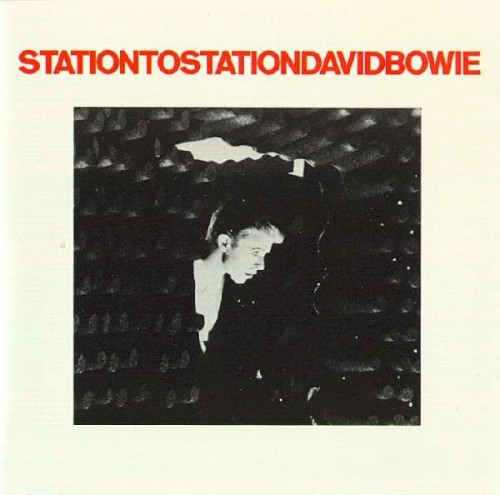
Station to Station (1976)
滚石 500(2020) #52滚石 500(2003) #3231001 张专辑
- 艺人
- 大卫·鲍伊
- 发行
- 1976-01-23
- 类型
- 专辑
- 唱片公司
- RCA Victor
- 制作人
- 大卫·鲍伊
- 版本
- MusicBrainz 上有 32 个发行版本
曲目
- 1Station to Station10:14
- 2Golden Years4:01
- 3Word on a Wing6:04
- 4TVC 155:34
- 5Stay6:15
- 6Wild Is the Wind6:00
6 首 · 约 38 分钟 · 依据 1976 US 发行的版本,在 MusicBrainz 看这个版本。
介绍
这个词条没有中文维基百科条目,下面是英文维基百科的原文。
Station to Station is the tenth studio album by the English musician David Bowie, released on 23 January 1976 through RCA Records. Regarded as one of his most significant works, the album was the vehicle for Bowie's performance persona the Thin White Duke. Co-produced by Bowie and Harry Maslin, Station to Station was mainly recorded at Cherokee Studios in Los Angeles in late 1975, after Bowie completed shooting the film The Man Who Fell to Earth; the cover art featured a still from the film. During the sessions, Bowie was suffering from various drug addictions, most prominently cocaine, and subsequently stated that he recalled almost nothing of the production.
The commercial success of his previous release, Young Americans (1975), allowed Bowie greater freedom when he began recording his next album. The sessions established the lineup of guitarist Carlos Alomar, bassist George Murray and drummer Dennis Davis that Bowie used for the rest of the decade, and also featured contributions by guitarist Earl Slick and pianist Roy Bittan. Musically, Station to Station was a transitional album for Bowie, developing the funk and soul of Young Americans while presenting a new direction influenced by German krautrock, particularly bands such as Neu! and Kraftwerk. The lyrics reflected Bowie's preoccupations with Friedrich Nietzsche, Aleister Crowley, mythology and religion.
Preceded by the single "Golden Years", Station to Station was a commercial success, reaching the top five on the UK and US charts. After scrapping a soundtrack for The Man Who Fell to Earth, Bowie supported the album with the Isolar Tour in early 1976, during which he attracted controversy with statements suggesting support for fascism. At the end of the tour, he moved to Europe to remove himself from L.A.'s drug culture. The styles explored on Station to Station culminated in some of Bowie's most acclaimed work with the Berlin Trilogy over the next three years. Positively received by music critics on its release, Station to Station has appeared on several lists of the greatest albums of the 1970s and of all time. It has been reissued multiple times and was remastered in 2016 as part of the Who Can I Be Now? (1974–1976) box set.
Background
David Bowie developed a cocaine addiction in the summer of 1974, following the release of the album Diamond Dogs. His decaying mental state was depicted in Alan Yentob's documentary Cracked Actor. Bowie later said in a 1987 interview: "I was so blocked ... so stoned ... I'm amazed I came out of that period, honest[ly]. When I see that now I cannot believe I survived it. I was so close to really throwing myself away physically, completely." After seeing an advanced screening of the film in early 1975, the director Nicolas Roeg contacted Bowie to discuss a role in his upcoming adaptation of Walter Tevis's 1963 novel The Man Who Fell to Earth. Bowie accepted the role and moved from New York to Los Angeles, California, to shoot the film.
On his arrival in L.A., Bowie stayed with Deep Purple's bassist Glenn Hughes. He also visited his old friend, singer Iggy Pop, in rehab. The two attempted to record some material in May 1975, but the sessions were unproductive due to Pop's heroin addiction. Hughes told the biographer Marc Spitz that Bowie lived in an increasingly paranoid state, recalling he refused to use elevators because of his fear of heights. His addiction severed friendships with the musicians Keith Moon, John Lennon and Harry Nilsson; he later said: "If you really want to lose all your friends and all of the relationships that you ever held dear, [cocaine is] the drug to do it with."
According to the biographer David Buckley, Bowie's diet now consisted primarily of red and green peppers, milk and cocaine. Bowie later admitted that he only weighed about 80 pounds and was "zonked out of his mind most of the time". Hughes said Bowie did not sleep for "three to four days at a time". Stories, mostly from one interview—pieces of which found their way into Playboy and Rolling Stone—circulated of the singer living in a house full of ancient Egyptian artefacts, burning black candles, seeing bodies fall past his window, having his semen stolen by witches, receiving secret messages from the Rolling Stones, and living in morbid fear of the Led Zeppelin guitarist Jimmy Page. In an interview with Melody Maker in 1977, Bowie described living in L.A.: "There's an underlying unease... You can feel it in every avenue... I've always been aware of how dubious a position it is to stay here for any length of time." Three years later, he told NME that the city "should be wiped off the face of the earth". Shooting for The Man Who Fell to Earth began in June 1975.
正文摘自英文维基百科「Station to Station」,按 CC BY-SA 4.0 使用;删去了参考文献、外部链接、表格和图片;篇幅所限只节选了前面一部分,全文见原条目。
资料卡
- 作品性质
- 音乐专辑
- 表演者
- 大卫·鲍伊
- 发行日期
- 1976 年 1 月 23 日
- 录音地点
- Cherokee录音室
- 时长
- 38 分 08 秒
- 流派
- 摇滚乐、艺术摇滚、放克摇滚、灵魂乐、节奏布鲁斯、太空摇滚
- 语言
- 英语
- 唱片公司
- RCA Victor
- 制作人
- 大卫·鲍伊
资料来自 Wikidata Q831890(CC0)。
制作名单
- 厂牌
- RCA(目录号 APL1-1327)
- 录音室
- 录音:Cherokee Studios(Hollywood)
制作
- 制作人
- 大卫·鲍伊、Harry Maslin
演奏与演唱
- 吉他
- Carlos Alomar、大卫·鲍伊、Earl Slick
- 钢琴
- Roy Bittan
- 鼓
- Dennis Davis、Roy Bittan(第 2 首)
- 贝斯
- George Murray
- 演唱
- 大卫·鲍伊(第 1、3、5、6 首)
- 主唱
- 大卫·鲍伊(第 2、4 首)
- 萨克斯
- 大卫·鲍伊(第 4 首)
词曲与编曲
- 编曲
- 大卫·鲍伊
- 作曲
- 大卫·鲍伊(第 1、2、3、4、5 首)、Dimitri Tiomkin(第 6 首)
- 作词
- 大卫·鲍伊(第 1、2、3、4、5 首)、Ned Washington(第 6 首)
名单来自 MusicBrainz(CC0)这一发行版本的关系数据,由志愿者录入,不一定齐全。
更多资料与乐评
在哪听
大卫·鲍伊 的其他专辑
艺人页 ›








相似的专辑





同在 1976 年发行