乐单
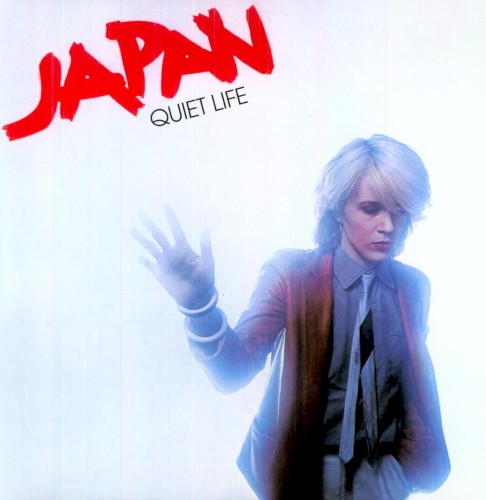
曲目
- A1Quiet Life4:51
- A2Fall in Love With Me4:37
- A3Despair6:00
- A4In Vogue6:33
- B1Halloween4:25
- B2All Tomorrow’s Parties5:43
- B3Alien5:03
- B4The Other Side of Life7:27
8 首 · 约 45 分钟 · 依据 1979-12 GB 发行的版本,在 MusicBrainz 看这个版本。
介绍
这个词条没有中文维基百科条目,下面是英文维基百科的原文。
Quiet Life is the third studio album by English new wave band Japan, first released on 7 December 1979 in Canada, Japan and The Netherlands by record label Hansa and on 18 January 1980 in the UK.
The album was a transition from the glam rock-influenced style of previous albums to a synth-pop style. Though sales were initially slow, Quiet Life was the band's first album to chart and was later certified Gold by the British Phonographic Industry for sales in excess of 100,000 copies.
Background and recording
In 1979 Japan collaborated with famed disco producer Giorgio Moroder for the stand alone single, "Life in Tokyo", which featured a dramatic stylistic shift away from the mostly guitar-driven glam rock of their first two albums into an electronic dance style, prefiguring their work on Quiet Life. However, the group did not feel that Moroder was the right choice to produce a full album.
Early material for an album had been considered and dropped, including the proposed title track "European Son", which later appeared on the compilation Assemblage. The band then approached Roxy Music producer John Punter, but he was unavailable at the time and the group began to record with manager Simon Napier-Bell. However, the band learned that Punter was available later in the year and waited for him. Punter worked closely with the group and went on to produce two more albums and tour with them.
With the exception of 'All Tomorrow's Parties' (which was recorded during the early sessions for Quiet Life in the summer of 1979 at DJM Studios in London, produced by Simon Napier-Bell and Japan, and then re-mixed by John Punter), the album was recorded in September 1979 at AIR Studios in London and mastered on 5 November at Trident Studios, with John Punter producing.
Quiet Life was the last of the three albums the band made for the Hansa-Ariola label. The band switched to Virgin Records in 1980. However, Hansa later issued a compilation album (Assemblage) of singles and album highlights from the band's time with the label.
Content
Quiet Life has been described as one of the first albums released during the New Romantic era, though the band themselves always strongly refuted they had any connection or involvement with the New Romantic movement, which was essentially a fashion-based nightclub scene.
In a retrospective review of the band's work, The Quietus characterised the album as defining "a very European form of detached, sexually-ambiguous and thoughtful art-pop, one not too dissimilar to what the ever-prescient David Bowie had delivered two years earlier with Low". The album is notable for being the first album where singer David Sylvian used his newfound baritone vocal style, which became one of the band's most distinctive hallmarks.
Lyrically the title track refers to problems the band was going through at the time, having lost their US record contract and the lack of commercial success in the UK. It has been suggested that the rest of the songs reflect a travelogue relating to impressions the band had gained from touring the world. The oriental sounding "A Foreign Place" was left off the album but later appeared as the B-side on the single "Quiet Life".
In a 1982 interview, Sylvian commented that Quiet Life was the only Japan album that the band worked on together in a truly collaborative manner, as he would come to dominate the recording sessions for subsequent albums, a decision he later regretted. Later in his career, Sylvian said of the album: "I still feel very attached to it – unusual for me. We reached a peak with this album – we knew what we were doing."
Release
Quiet Life was first released in December 1979 in Canada, with journalist Rosalind Russell describing Japan as being a "cult band in Canada" and that the album was "shifting copies like candles in a power strike". The band travelled to Toronto to perform two sets at the Ryerson Theatre on 24 November, which was their first show in six months (and also their last ever performance in North America), and was the first to feature Jane Shorter on saxophone. The album was released in Japan on 20 December 1979 and in the UK on 18 January 1980.
While largely ignored in their home country, Quiet Life was a success in Japan, where it had the distinction of becoming the first foreign rock record to enter the national chart, and went straight in at number 8 in Canada, and also had some success in continental Europe.
Though initially unsuccessful upon its release in the band's native UK (where it peaked at No. 72 in February 1980), the album returned to the charts in early 1982 after the commercial success of 1981's Tin Drum and the Hansa Records compilation Assemblage. It peaked at No. 53, two years after its original release, and was eventually certified "Gold" by the BPI in 1984 for 100,000 copies sold.
正文摘自英文维基百科「Quiet Life」,按 CC BY-SA 4.0 使用;删去了参考文献、外部链接、表格和图片;篇幅所限只节选了前面一部分,全文见原条目。
资料卡
- 作品性质
- 音乐专辑
- 表演者
- 日本
- 发行日期
- 1979 年 12 月
- 流派
- 新浪潮、新浪漫主义、合成器流行乐
- 语言
- 英语、法语
- 唱片公司
- 汉萨唱片
资料来自 Wikidata Q250629(CC0)。
制作名单
- 厂牌
- Hansa(目录号 AHAL 8011)
- 录音室
- 录音:Eventim Apollo(Hammersmith);录音:AIR Studios(Hampstead)
制作
- 工程师
- Colin Fairley(其中 7 首)、Jon Jacobs、Keith Bessey(第 B2 首)
- 混音
- John Punter
- 制作人
- John Punter(其中 7 首)、日本(第 B2 首)、Simon Napier-Bell(第 B2 首)
- 重混
- John Punter(第 B2 首)
演奏与演唱
- 吉他
- Rob Dean(第 A1、B4 首)、大卫·西尔维安
- 指挥
- Martyn Ford
- 键盘
- Richard Barbieri
- 合成器
- Richard Barbieri
- 鼓类乐器
- Steve Jansen
- 打击乐
- Steve Jansen
- 贝斯
- 米克·卡恩
- 萨克斯
- 米克·卡恩
- 和声
- 米克·卡恩、大卫·西尔维安
- 主唱
- 大卫·西尔维安
词曲与编曲
- 编曲
- 日本、Ann O'Dell
- 器乐编曲
- 米克·卡恩
- 作曲
- 大卫·西尔维安(其中 7 首)、卢·里德(第 B2 首)
- 作词
- 大卫·西尔维安(其中 7 首)、卢·里德(第 B2 首)
名单来自 MusicBrainz(CC0)这一发行版本的关系数据,由志愿者录入,不一定齐全。
更多资料与乐评
在哪听
日本 的其他专辑
艺人页 ›
相似的专辑





同在 1979 年发行