乐单
曲目
- A1Future Days9:34
- A2Spray8:28
- A3Moonshake3:02
- B1Bel Air20:00
4 首 · 约 41 分钟 · 依据 1973 GB 发行的版本,在 MusicBrainz 看这个版本。
介绍
这个词条没有中文维基百科条目,下面是英文维基百科的原文。
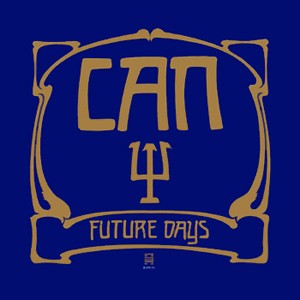
Future Days is the fourth studio album by the German Krautrock group Can, released by United Artists in 1 August 1973. The album employed significantly more complex production than any other album in the Can discography, and explored a more ambient–influenced sound. It was the group's final album to feature vocalist Damo Suzuki, who left the band within a few months after its release.
According to Can biographer Rob Young, Future Days distinguishes itself as the group's "most weightless achievement, perpetuum mobile, solar-powered in an eternal peach sunset, skipping over the tips of green coastal sierras, gulping lungfuls of delicious air."
Background and production
In the aftermath of the Ege Bamyası tour spanning February—May 1973, Can drew their attention back towards the recording studio to capitalise on the recent live appearances. Before they started working on a new album, the band took a four-week vacation, which put them into a "sunny" mood that left an impression on the core sonic themes of Future Days. Holger Czukay took a trip to southeast Asia, his admired region since he sampled traditional Vietnamese music for his Canaxis 5 project. Damo Suzuki traveled back to his native Japan for the first time in six years, and returned with his hair cropped to just below the ears. He recalled feeling that his home country was very busy, and preferred to stay in the slower-paced West Germany. Irmin Schmidt took his family to the south of France, and Michael Karoli visited his family's summer villa at Carvoeiro on the Portuguese coast.
Future Days was recorded at the band's Inner Space Studio in Weilerswist, North Rhine-Westphalia. The recording process started in July and ended in early September, and was their most complex production to date. "Bel Air" was the first song recorded, captured on tape during one session. While they were recording the track, the studio's heating system sprung a gas leak. As noted on the original LP sleeve, "Bel Air" is dedicated to Hedy Lamarr, the Vienna-born Hollywood actress and the co-creator (with American composer George Antheil) of a frequency-hopping system for the United States Navy's torpedoes; Schmidt greatly admired her story.
Composition
Future Days emphasises the ambient elements explored by Can on previous albums, dispensing with traditional rock song structures and instead "creating hazy, expansive soundscapes dominated by percolating rhythms and evocative layers of keys". In a retrospective review, PopMatters described the album as "driven by a coastal breeze, exuding a more pleasant, relaxed mood than anything the band had previously recorded."
Schmidt took into account the elite music scene some of the band members previously inhabited, which centered around the notion that it "had bought the whole spirit and culture for itself". Schmidt wanted to create music "related to [the] body", a quality which he felt was "lacking in the music he was making before". Young felt that the resulting music featured the band as a unified and harmonious whole. He felt that it displayed elements of psychedelic rock and space rock, but in a less "performative and theatrical" tone.
Songs
The opening track "Future Days" begins with a minute of abstract electroacoustic music, which builds into a Latin-tinged groove that languidly cruises through a "turbulent, undulating course". Karoli imagined the song as portraying a science fiction narrative with a Jules Verne-esque nineteenth-century spaceship. It has notes of melancholy and the disillusionment heard on "Doko E" from Unlimited Edition, which expresses Suzuki's negative feelings from his recent visit to Japan. The song manifests a picture of a "daily existence that feels empty of meaning, a life postponed". The shimmering, scouring texture, reminiscent of buzzing cicadas, was created by "overloading the organ through the Farfisa [organ]'s rotating speaker, processed with the Alpha 77 [Schmidt's custom effects unit], with extra gating in the mix." Another sound was created as a looped recording of a crunching cushion from Can's studio. Czukay integrated an editing trick for the song's coda, looping a segment of the rhythm track at double speed.
"Spray", while masterfully performed, does not sound "showy or professionalised" according to band biographer Rob Young, with Liebezeit drumming with "minimal loss of energy" in perpetual motion, "relentlessly ricochet[ing] off the pulse in seething drifts". It has been compared to Miles Davis' Bitches Brew and Isaac Hayes' Hot Buttered Soul. "Moonshake" has been identified by Young among the "Can catalogue of perfectly formed pop songs", alongside "She Brings the Rain" from Soundtracks and "Sing Swan Song" from Ege Bamyası. It introduces "elements of rock convention" while "erasing any sense of cliché around them".
正文摘自英文维基百科「Future Days (album)」,按 CC BY-SA 4.0 使用;删去了参考文献、外部链接、表格和图片;篇幅所限只节选了前面一部分,全文见原条目。
资料卡
- 作品性质
- 音乐专辑
- 表演者
- 罐头
- 发行日期
- 1973 年 8 月
- 流派
- 德国摇滚、氛围音乐、电子音乐、交响摇滚
- 语言
- 英语
- 唱片公司
- 联美
资料来自 Wikidata Q1004420(CC0)。
制作名单
- 厂牌
- United Artists(目录号 UAS 29505)
- 录音室
- 录音:Inner Space Studio(Weilerswist)
制作
- 剪辑
- 霍尔格·克苏卡伊
- 制作人
- 罐头
- 录音
- 霍尔格·克苏卡伊、Volker Liedtke、Chris Sladdin
演奏与演唱
- 贝斯
- 霍尔格·克苏卡伊
- 吉他
- Michael Karoli
- 鼓
- Jaki Liebezeit
- 键盘
- Irmin Schmidt
- 演唱
- Damo Suzuki
词曲与编曲
- 作曲
- 霍尔格·克苏卡伊、Michael Karoli、Jaki Liebezeit、Irmin Schmidt、Damo Suzuki
- 作词
- 霍尔格·克苏卡伊、Michael Karoli、Jaki Liebezeit、Irmin Schmidt、Damo Suzuki
名单来自 MusicBrainz(CC0)这一发行版本的关系数据,由志愿者录入,不一定齐全。
更多资料与乐评
在哪听
罐头 的其他专辑
艺人页 ›



相似的专辑






同在 1973 年发行