乐单
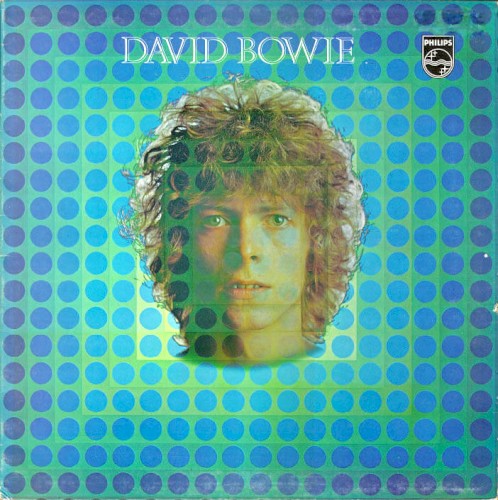
他的第二张同名专辑 (1969)
- 艺人
- 大卫·鲍伊
- 发行
- 1969-11-04
- 类型
- 专辑
- 唱片公司
- 飞利浦唱片、水星唱片
- 制作人
- 托尼·维斯康蒂
- 版本
- MusicBrainz 上有 38 个发行版本
曲目
- 1Space Oddity5:16
- 2Unwashed and Somewhat Slightly Dazed6:12
- 3(Don’t Sit Down)0:44
- 4Letter to Hermione2:37
- 5Cygnet Committee9:36
- 6Janine3:25
- 7An Occasional Dream3:01
- 8Wild Eyed Boy From Freecloud4:52
- 9God Knows I’m Good3:22
- 10Memory of a Free Festival7:11
10 首 · 约 46 分钟 · 依据 1969 US 发行的版本,在 MusicBrainz 看这个版本。
介绍
这个词条没有中文维基百科条目,下面是英文维基百科的原文。
David Bowie (commonly known as Space Oddity) is the second studio album by the English musician David Bowie, released in the United Kingdom on 14 November 1969 through Mercury affiliate Philips Records. Financed by Mercury on the strength of the success of the single, "Space Oddity", the album was recorded from June to October 1969 at Trident Studios in London. Gus Dudgeon produced "Space Oddity", while Tony Visconti produced the rest of the album. Session musicians included Herbie Flowers, Rick Wakeman, Terry Cox and the band Junior's Eyes.
Departing from the music hall style of Bowie's 1967 self-titled debut, David Bowie contains folk rock and psychedelic rock songs, with lyrical themes influenced by events happening in Bowie's life at the time, including former relationships and festivals he attended. "Space Oddity", a tale about a fictional astronaut, was released as a single in July 1969 and became Bowie's first commercial hit, reaching the UK top five.
The album was a commercial failure due to a lack of promotion, despite receiving some positive reviews from music critics. For its release in the United States, Mercury retitled the album Man of Words/Man of Music and used different artwork. RCA Records reissued the album under the title of Space Oddity following Bowie's commercial breakthrough with Ziggy Stardust in 1972, using a contemporary photo of Bowie as the artwork. The reissue charted in both the UK and the US.
David Bowie has received mixed reviews in later decades, with many finding a lack of cohesiveness. Bowie himself later stated that it lacked musical direction. Debate continues as to whether it should stand as Bowie's first "proper" album. David Bowie has been reissued numerous times, with bonus tracks and variance on the inclusion and listing of the hidden track "Don't Sit Down". Labels have used both David Bowie and Space Oddity as the title, with Space Oddity being used for a 2019 remix by Visconti.
Background
David Bowie released his music hall-influenced self-titled debut studio album through Deram Records in 1967. It was a commercial failure and did little to gain him notice, becoming his last release for two years. After its failure, Bowie's manager Kenneth Pitt authorised a promotional film in an attempt to introduce Bowie to a larger audience. At the request of Pitt, Bowie wrote "Space Oddity", a tale about a fictional astronaut, as a song for the film. The film, Love You till Tuesday, went unreleased until 1984, and marked the end of Pitt's mentorship to Bowie.
Stanley Kubrick's 2001: A Space Odyssey (1968) inspired the title and subject matter of "Space Oddity". Bowie demoed the song in January 1969, recording the final Love You till Tuesday version on 2 February. In April, Bowie recorded demos of tracks with guitarist John Hutchinson, including "Janine", "An Occasional Dream", "I'm Not Quite" ("Letter to Hermione"), "Lover to the Dawn" ("Cygnet Committee") and another demo of "Space Oddity". In May, Bowie secured a record contract with Mercury Records on the strength of "Space Oddity". The contract granted him enough finances to make a new studio album, to be distributed through Mercury in the United States and its affiliate Philips Records in the UK.
Recording
To produce the new album, Pitt hired Tony Visconti, the producer of Bowie's later Deram sessions. Visconti saw "Space Oddity", the chosen lead single, as a "novelty record" and passed the production responsibility for the song to Bowie's former engineer Gus Dudgeon. Dudgeon recalled: "I listened to the demo and thought it was incredible. I couldn't believe that Tony didn't want to do it". Comparing the two producers in a 1969 interview, Bowie stated:
Gus is the technician, the arch 'mixer'. He listens to music and says, 'Yes, I like it – it's a groove.' His attitudes to music are very different from a lot of people in the business. With Tony Visconti, who's producing my LP, it's part of his life. He lives with music all day long, it's going on in his room, he writes it, arranges it, produces it, plays it, thinks it, and believes very much in its spiritual source – his whole life is like this.
正文摘自英文维基百科「David Bowie (1969 album)」,按 CC BY-SA 4.0 使用;删去了参考文献、外部链接、表格和图片;篇幅所限只节选了前面一部分,全文见原条目。
资料卡
- 作品性质
- 音乐专辑
- 表演者
- 大卫·鲍伊
- 发行日期
- 1969 年 11 月 4 日
- 时长
- 45 分 13 秒
- 流派
- 民谣摇滚、迷幻摇滚
- 语言
- 英语
- 唱片公司
- 飞利浦唱片、水星唱片
- 制作人
- 托尼·维斯康蒂
资料来自 Wikidata Q1648283(CC0)。
制作名单
- 厂牌
- Mercury Records(目录号 SR 61246)
- 录音室
- 录音:Trident Studios(Soho)
制作
- 制作人
- Tony Visconti(其中 9 首)、Gus Dudgeon(第 1 首)
- 工程师
- Barry Sheffield(其中 7 首)、Malcolm Toft(其中 7 首)
演奏与演唱
- 演唱
- 大卫·鲍伊(第 2、3、5、8、9、10 首)
- 主唱
- 大卫·鲍伊(第 1、4、6、7 首)
- 鼓
- John Cambridge(第 2、5、8 首)、Terry Cox(第 1 首)
- 和声
- 大卫·鲍伊(第 1、10 首)、Marc Bolan(第 10 首)、Bob Harris(第 10 首)、Tony Woollcott(第 10 首)
- 十二弦吉他
- Keith Christmas(第 2、5 首)、大卫·鲍伊(第 1 首)
- 贝斯
- John Lodge(第 2、5 首)、Herbie Flowers(第 1 首)、Tony Visconti(第 8 首)
- 吉他
- Tim Renwick(第 2、5 首)、Mick Wayne(第 2、5 首)
- 拍手
- 大卫·鲍伊(第 1 首)
- 触笔电子琴
- 大卫·鲍伊(第 1 首)
- 大提琴
- 保罗·巴克马斯特(第 1 首)
- 美乐特朗
- 瑞奇·威克曼(第 1 首)
- 电吉他
- Mick Wayne(第 1 首)
- 口琴
- Benny Marshall(第 2 首)
- 羽管键琴
- 瑞奇·威克曼(第 5 首)
- 打击乐
- John Cambridge(第 8 首)
词曲与编曲
- 作曲
- 大卫·鲍伊
- 作词
- 大卫·鲍伊
- 编曲
- 大卫·鲍伊(其中 8 首)、Tony Visconti(其中 7 首)、保罗·巴克马斯特(第 1 首)
名单来自 MusicBrainz(CC0)这一发行版本的关系数据,由志愿者录入,不一定齐全。
更多资料与乐评
在哪听
大卫·鲍伊 的其他专辑
艺人页 ›
相似的专辑




同在 1969 年发行