乐单
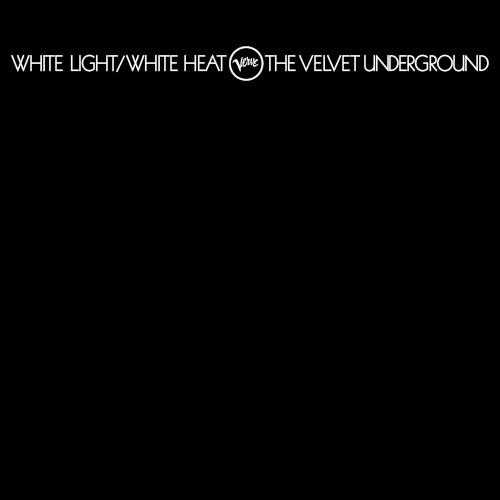
White Light/White Heat (1968)
滚石 500(2020) #272滚石 500(2003) #2921001 张专辑
- 艺人
- 地下丝绒
- 发行
- 1968-01-30
- 类型
- 专辑
- 唱片公司
- 神韵唱片
- 制作人
- 汤姆·威尔森
- 版本
- MusicBrainz 上有 19 个发行版本
曲目
- A1White Light/White Heat2:47
- A2The Gift8:19
- A3Lady Godiva’s Operation4:56
- A4Here She Comes Now2:04
- B1I Heard Her Call My Name4:39
- B2Sister Ray17:27
6 首 · 约 40 分钟 · 依据 1968-01-30 US 发行的版本,在 MusicBrainz 看这个版本。
介绍
这个词条没有中文维基百科条目,下面是英文维基百科的原文。
White Light/White Heat is the second studio album by the American rock band the Velvet Underground. Released on January 30, 1968, by Verve Records, it was the band's last studio album with multi-instrumentalist and founding member John Cale. Recorded after band leader Lou Reed fired Andy Warhol, who had produced their debut album The Velvet Underground & Nico, they hired Steve Sesnick as their new manager and Tom Wilson, who had worked on the band's debut, to produce the album. White Light/White Heat was engineered by Gary Kellgren.
Like The Velvet Underground & Nico, the album includes lyrically transgressive themes, exploring topics such as sex, amphetamines, and drag queens. Reed was inspired by a variety of authors, including William S. Burroughs and Alice Bailey, and the lyrics create a cast of characters, such as in "The Gift" and "Sister Ray". Musically, he took influence from avant-garde jazz musicians such as Ornette Coleman. Warhol conceived the album's cover art, although he is officially uncredited.
White Light/White Heat was recorded quickly and modeled after the band's live sound and techniques of improvisation, since they often played loud with new equipment from an endorsement deal with Vox. The final product was compressed and distorted as a result; most of the band was dissatisfied with this, and the album was followed with the less experimental The Velvet Underground the following year. Reed had Cale fired later in 1968. The album's extensive use of distortion became a prototype for later punk rock, shoegaze, and noise rock. The 17-minute "Sister Ray" is widely considered the standout track by critics and fans.
White Light/White Heat sold fewer copies than The Velvet Underground & Nico, and peaked at 199 on the Billboard Top LPs chart. The album's only single, "White Light/White Heat", failed to chart, which the band blamed on airplay bans and lack of promotion from Verve. The album was dismissed by many contemporary mainstream music critics, although underground newspapers took notice; ultimately, White Light/White Heat had a significant impact on the development of punk rock and no wave and has appeared on several lists of the greatest albums of all time, including being placed at number 272 on Rolling Stone's list of the "500 Greatest Albums of all Time" in 2020.
Background
After the disappointing sales of the Velvet Underground's first album, The Velvet Underground & Nico (1967), their relationship with Andy Warhol deteriorated. They toured throughout most of 1967, and many of their live performances featured noisy improvisations that would form a model for White Light/White Heat. The band fired Warhol, parted ways with Nico (which she would describe as being fired), and recorded their second album with Tom Wilson credited as producer. Jack Donohue, writing for The Tech (the student newspaper of MIT), would be one of the first to announce that the band were working on a follow-up. The band had access to new equipment through an endorsement deal with Vox. The sound of the album was designed to be a conscious antithesis to the psychedelic Summer of Love in San Francisco and also to capture their live sound.
Steve Sesnick was chosen as the replacement manager for the band, and he was accepted by all band members except John Cale; drummer Moe Tucker even considered him a fifth member of the group. The album was influenced by Lou Reed's obsession with astrology, especially his interest in the Virgo-Pisces astrological opposition. Rehearsal was similar to the band's debut, with the band's best pieces being reworked mostly in the studio. However, Cale would state that no one in the band "had the patience to rehearse" the album, even after numerous attempts to do so.
Recording
The album was recorded in a short time frame, and with a noticeably different style from that of The Velvet Underground & Nico. Decades after its release, John Cale (in the liner notes of Peel Slowly and See) described White Light/White Heat as "a very rabid record ... The first one had some gentility, some beauty. The second one was consciously anti-beauty." Sterling Morrison recalled: "We were all pulling in the same direction. We may have been dragging each other off a cliff, but we were all definitely going in the same direction." Tucker estimated that the album took two weeks to record across about seven sessions. It was "almost" recorded in one day—the band would not "accommodate what [they] were trying to do due to the limitations of the studio", according to Morrison. They were well prepared, and the tension between Cale and Reed was not apparent in the studio.
正文摘自英文维基百科「White Light/White Heat」,按 CC BY-SA 4.0 使用;删去了参考文献、外部链接、表格和图片;篇幅所限只节选了前面一部分,全文见原条目。
资料卡
- 作品性质
- 音乐专辑
- 表演者
- 地下丝绒
- 发行日期
- 1968 年 1 月 30 日
- 时长
- 40 分 13 秒
- 流派
- 实验摇滚
- 语言
- 英语
- 唱片公司
- 神韵唱片
- 制作人
- 汤姆·威尔森
资料来自 Wikidata Q523347(CC0)。
制作名单
- 厂牌
- Verve(目录号 V6-5046)
制作
- 制作人
- Tom Wilson
- 录音
- Gary Kellgren
词曲与编曲
- 作曲
- 卢·里德、约翰·凯尔(第 A2、A4、B2 首)、Sterling Morrison(第 A2、A4、B2 首)、莫林·塔克(第 A2、A4、B2 首)
- 作词
- 卢·里德
名单来自 MusicBrainz(CC0)这一发行版本的关系数据,由志愿者录入,不一定齐全。
更多资料与乐评
在哪听
地下丝绒 的其他专辑
艺人页 ›
相似的专辑
同在 1968 年发行