乐单
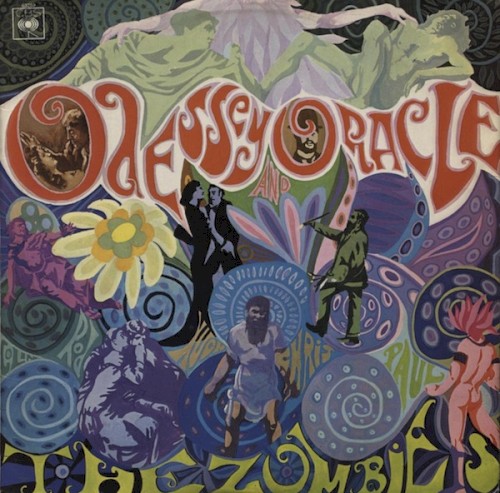
Odessey and Oracle (1968)
滚石 500(2020) #243滚石 500(2003) #801001 张专辑
- 艺人
- 僵尸合唱团
- 发行
- 1968-04-19
- 类型
- 专辑
- 唱片公司
- CBS
- 制作人
- 罗德·阿尔根特
- 版本
- MusicBrainz 上有 29 个发行版本
曲目
- 1 1Care of Cell 443:58
- 1 2A Rose for Emily2:17
- 1 3Maybe After He’s Gone2:31
- 1 4Beechwood Park2:43
- 1 5Brief Candles3:28
- 1 6Hung Up on a Dream3:00
- 2 1Changes3:17
- 2 2I Want Her She Wants Me2:50
- 2 3This Will Be Our Year2:06
- 2 4Butchers Tale (Western Front 1914)2:45
- 2 5Friends of Mine2:16
- 2 6Time of the Season3:32
12 首 · 约 35 分钟 · 依据 1968-06 US 发行的版本,在 MusicBrainz 看这个版本。
介绍
这个词条没有中文维基百科条目,下面是英文维基百科的原文。
Odessey and Oracle is the second studio album by the English rock band the Zombies. It was released on 19 April 1968, by CBS Records in the UK and on 15 July 1968, by Date Records in the US. The album was recorded primarily between June and August 1967 at EMI (now Abbey Road Studios) and Olympic Studios in London.
The Zombies, having been dropped from Decca Records, financed these sessions independently. After signing with CBS, two singles and later the album itself were released to critical and commercial indifference, and the band quietly dissolved. A third single from the album, "Time of the Season", became a surprise hit in the United States in early 1969 after CBS staff producer Al Kooper recommended it be released on Date Records.
The album gradually achieved critical praise and a cult following, and has since become one of the most acclaimed albums of the 1960s. It was ranked 80th on Rolling Stone magazine's list of the "500 Greatest Albums of All Time" in 2003. When Rolling Stone revised its list in 2020, the album was ranked 243rd.
Recording and production
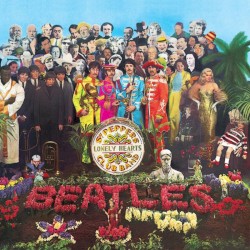
Odessey and Oracle was recorded after the Zombies signed a recording contract with the UK CBS label. They began work on the album in June 1967. Nine of the twelve songs were recorded at EMI Studios (now Abbey Road Studios), in Studio 3, where Pink Floyd had just finished recording their debut LP, The Piper at the Gates of Dawn. "Friends of Mine" was recorded on 1 June, "A Rose for Emily" was started on 1 June and completed on 10 July (take 5 reduction of take 3), "This Will Be Our Year" was recorded on 2 June (take 4) and 15 August (horn overdub), "Hung Up on a Dream" was recorded on 10–11 July (take 7 reduction of take 3), and "Butcher's Tale (Western Front 1914)" was recorded on 20 July (take 1). The EMI sessions used the same Studer four track machine used on Sgt. Pepper's Lonely Hearts Club Band.
In late July, when EMI was unavailable, the Zombies temporarily shifted base to Olympic Studios where they recorded "Beechwood Park", "Maybe After He's Gone" and "I Want Her, She Wants Me". They returned to EMI in mid-August to record "Care of Cell 44" (take 5 reduction of take 4) and "Brief Candles" (take 10 reduction of take 9) on 16–17 August and "Time of the Season" (14 September, take 1). The sessions ended in November and the final track to be recorded was "Changes" (take 5) on 7 November 1967.
Because the album was recorded to a deadline and tight budget, the Zombies worked quickly in the studio, having rehearsed rigorously beforehand. This meant that there would be no outtakes or unused songs recorded during the sessions. Cello and Mellotron parts were added to "A Rose for Emily" but left out at the final mixing stage.
Colin Blunstone and Paul Atkinson felt disillusioned and tempers flared during the recording of "Time of the Season". Blunstone was not at all keen on the song. When writer Rod Argent insisted that he sing it a certain way, Blunstone's patience snapped and he effectively told Argent to sing it himself. Blunstone finally sang the vocal as required.
Argent and Chris White mixed the album down into mono, but when they delivered the master to CBS, they were informed that a stereo mix was required. The recording budget having been spent, Argent and White used their own money to pay for the stereo mix. One major problem arose when it came time to mix "This Will Be Our Year" into stereo. Record producer Ken Jones had dubbed live horn parts directly onto the mono mix. With the horns not having been recorded on the multi-track beforehand, a "re-channeled" stereo mix had to be made of the mono master of this track. The stereo album mix was completed on 1 January 1968.
Morale within the band was at a low point at the end of the recording. Two singles, "Care of Cell 44" and "Friends of Mine", had been unsuccessful, and the band had a declining demand for live appearances, so after a final gig in mid-December 1967, the band split up.
Composition and music
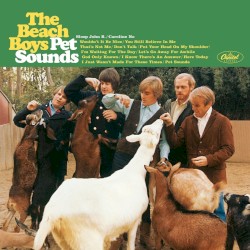
The style on Odessey and Oracle has been categorized as "lush, baroque-sounding chamber pop." The album's songwriting was characterized as "mixing trippy melodies, ornate choruses, and lush Mellotron sounds with a solid hard rock base." Bruce Eder of AllMusic characterized the album's instrumentation by "chiming, hard guitar, [and] highly melodic piano." Some of the material was categorized as white soul. Pat Long of NME noted the presence of jazz influence on the album, particularly within the keyboard stylings of Rod Argent. Some of the keyboard instruments incorporated by Argent include the harpsicord, organ and harmonium. Music critic Jim DeRogatis called the album "a melancholy look at England's lost innocence." The album's sound has drawn comparisons to Pet Sounds by the Beach Boys.
正文摘自英文维基百科「Odessey and Oracle」,按 CC BY-SA 4.0 使用;删去了参考文献、外部链接、表格和图片;篇幅所限只节选了前面一部分,全文见原条目。
资料卡
- 作品性质
- 音乐专辑
- 表演者
- 僵尸合唱团
- 发行日期
- 1968 年 4 月 19 日
- 流派
- 巴洛克流行
- 语言
- 英语
- 唱片公司
- CBS
- 制作人
- 罗德·阿尔根特
资料来自 Wikidata Q1187585(CC0)。
制作名单
- 厂牌
- CBS(目录号 TES 4013)
- 录音室
- 录音:Abbey Road Studios: Studio 3(St John's Wood)
词曲与编曲
- 词曲
- Chris White(第 1 5、2 4 首)
- 作曲
- Chris White(第 1 4 首)
- 作词
- Chris White(第 1 4 首)
名单来自 MusicBrainz(CC0)这一发行版本的关系数据,由志愿者录入,不一定齐全。
更多资料与乐评
在哪听
僵尸合唱团 的其他专辑
艺人页 ›
相似的专辑
同在 1968 年发行