乐单
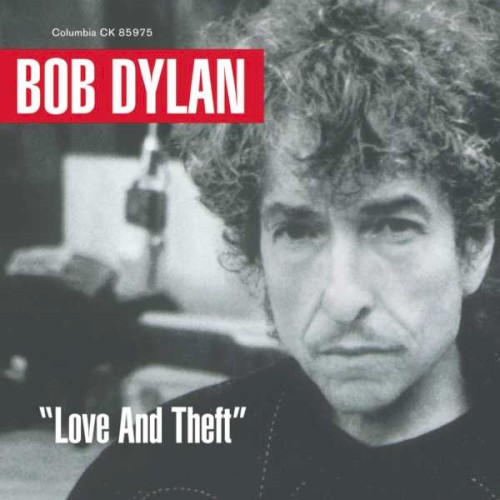
Love and Theft (2001)
滚石 500(2020) #411滚石 500(2003) #467
- 艺人
- 鲍勃·迪伦
- 发行
- 2001-09-10
- 类型
- 专辑
- 唱片公司
- 哥伦比亚唱片
- 制作人
- 鲍勃·迪伦
- 版本
- MusicBrainz 上有 20 个发行版本
曲目
- 1Tweedle Dee & Tweedle Dum4:46
- 2Mississippi5:21
- 3Summer Days4:53
- 4Bye and Bye3:16
- 5Lonesome Day Blues6:05
- 6Floater (Too Much to Ask)5:00
- 7High Water (For Charley Patton)4:05
- 8Moonlight3:23
- 9Honest With Me5:49
- 10Po' Boy3:06
- 11Cry a While5:05
- 12Sugar Baby6:41
12 首 · 约 58 分钟 · 依据 2001-09-11 US 发行的版本,在 MusicBrainz 看这个版本。
介绍
这个词条没有中文维基百科条目,下面是英文维基百科的原文。
"Love and Theft" is the thirty-first studio album by American singer-songwriter Bob Dylan, released on September 11, 2001, by Columbia Records. It featured backing by his touring band of the time, with keyboardist Augie Meyers added for the sessions. It peaked at No. 5 on the Billboard 200, and has been certified Gold by the RIAA. The album's highest chart positions worldwide were in Norway and Sweden, where it peaked at No. 1, giving Dylan his first No. 1 album in Norway since Infidels, and his first No. 1 album ever in Sweden. A limited edition release included a separate disc with two bonus tracks recorded in the early 1960s, and two years later, on September 16, 2003, this album was remixed into 5.1 surround sound and became one of 15 Dylan titles reissued and remastered for SACD playback.
Background and recording
"Love and Theft" was the first album Dylan recorded with his Never Ending Tour road band. This is a trend that would continue with his subsequent eight studio albums. Guitarist/multi-instrumentalist Larry Campbell recalls Dylan showing him the chord changes for the new song "Po' Boy" shortly after the band had recorded Dylan's Oscar-winning original and non-album song "Things Have Changed" in 1999: "They were relatively sophisticated changes for a Bob Dylan song [...] That was the first inkling of what the material might be like—taking elements from the jazz era and adding a folk sensibility to it".
David Kemper, Dylan's drummer at the time, described in an interview how the sound of "Love and Theft" arose from lessons the band had absorbed from Dylan: "I didn't realise we were actually headed somewhere. I wasn't smart enough to realise: you are in the School of Bob. But when we went in to record "Love And Theft", I realised then, because the influences were really so old on that record. It comes from really early Americana, way back at the turn of the century, and the 1920s. And not everybody in the band was familiar with that style of playing. And I know that the songs that he would bring in would be these amazing examples of early Americana. Nobody that I know, knows as much about American music as Bob Dylan. He has spent so much time trying to understand, and collecting these songs—it was like a never stopping resource. He was always coming up with these songs or artists that I had never heard of. And then when we went in and recorded "Love And Theft" it was like, oh my God, he's been teaching us this music—not literally these songs, but these styles. And as a band, we're familiar with every one of these. That's why we could cut a song a day [...] and the album was done".
As Kemper indicated, the twelve songs on "Love and Theft" were recorded in just 12 days in May 2001 at Clinton Recording in Midtown Manhattan. The recording sessions were notable for their spontaneity. According to engineer Chris Shaw, "What surprised me was how quickly [Dylan] would abandon an arrangement when he was working. He'd say, 'What's the tempo? Let's do it in F and drop the tempo down and do it like a Western swing tune, and I want the drummer to play brushes, not drums.' And suddenly the song was completely different. Nothing was set in stone until he found that key, tempo and style that fit that vocal and that lyric".
For his part, Dylan had been interested in working with Chris Shaw when he heard Shaw had gotten his start on Public Enemy's early records. Dylan praised Shaw's work as an engineer during a press conference in Rome to promote "Love and Theft" in 2001: After complaining that previous producers had botched the recording of his vocals, he was asked if he felt it was difficult to record his voice in the studio. Dylan referenced Shaw when he responded, "I don't think so […] On this particular record we had a young guy who understood how to do it." Dylan would subsequently employ Shaw to engineer and mix his albums Modern Times and Rough and Rowdy Ways as well as various non-album tracks.
Content
The album continued Dylan's artistic comeback following 1997's Time Out of Mind and was given an even more enthusiastic reception. The title of the album was apparently inspired by historian Eric Lott's book Love & Theft: Blackface Minstrelsy and the American Working Class, which was published in 1993. "Love and Theft becomes his Fables of the Reconstruction, to borrow an R.E.M. album title", writes Greg Kot in the Chicago Tribune (published September 11, 2001), "the myths, mysteries and folklore of the South as a backdrop for one of the finest roots rock albums ever made".
正文摘自英文维基百科「Love and Theft (Bob Dylan album)」,按 CC BY-SA 4.0 使用;删去了参考文献、外部链接、表格和图片;篇幅所限只节选了前面一部分,全文见原条目。
资料卡
- 作品性质
- 音乐专辑
- 表演者
- 鲍勃·迪伦
- 发行日期
- 2001 年 9 月 11 日
- 录制时间
- 2001 年 5 月
- 时长
- 57 分 25 秒
- 流派
- 民谣摇滚、蓝调摇滚、乡村蓝调、根源摇滚、电子蓝调
- 语言
- 英语
- 唱片公司
- 哥伦比亚唱片
- 制作人
- 鲍勃·迪伦
- 上一部
- Time Out of Mind
- 下一部
- Modern Times
资料来自 Wikidata Q425909(CC0)。
制作名单
- 厂牌
- Columbia(目录号 CK 85975)
制作
- 工程师
- Chris Shaw
- 混音
- Chris Shaw
- 制作人
- Jack Frost
- 录音
- Chris Shaw
- 助理录音
- Jeremy Welch
演奏与演唱
- 邦戈鼓
- Clay Meyers(第 1、9 首)
- 吉他
- Larry Campbell(第 11 首)、鲍勃·迪伦(第 11 首)、Charlie Sexton(第 11 首)
- 贝斯
- Tony Garnier(第 11 首)
- 鼓类乐器
- David Kemper(第 11 首)
- 键盘
- Augie Meyers(第 11 首)
- 演唱
- 鲍勃·迪伦(第 11 首)
词曲与编曲
- 作曲
- 鲍勃·迪伦
- 作词
- 鲍勃·迪伦
名单来自 MusicBrainz(CC0)这一发行版本的关系数据,由志愿者录入,不一定齐全。
更多资料与乐评
在哪听
鲍勃·迪伦 的其他专辑
艺人页 ›

相似的专辑

同在 2001 年发行