乐单
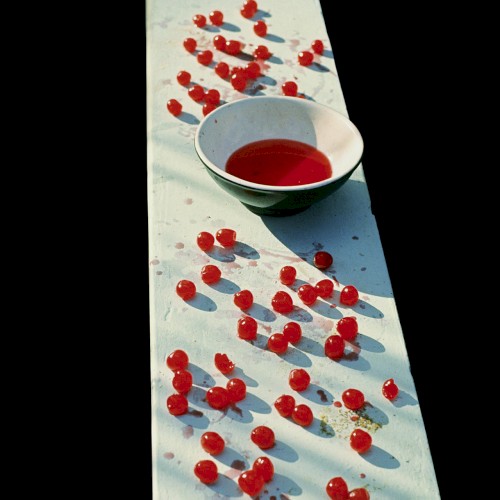
McCartney (1970)
曲目
- 1The Lovely Linda0:45
- 2That Would Be Something2:43
- 3Valentine Day1:44
- 4Every Night2:40
- 5Hot as Sun / Glasses2:08
- 6Junk1:57
- 7Man We Was Lonely3:01
- 8Oo You2:51
- 9Momma Miss America4:08
- 10Teddy Boy2:25
- 11Singalong Junk2:37
- 12Maybe I'm Amazed3:55
- 13Kreen-Akrore4:14
13 首 · 约 35 分钟 · 依据 1970 US 发行的版本,在 MusicBrainz 看这个版本。
介绍
《麦卡特尼》是英国歌手保罗·麦卡特尼首张个人专辑。
音乐
The Lovely Linda (页面存档备份,存于互联网档案馆)
That Would Be Something (页面存档备份,存于互联网档案馆)
Valentine Day (页面存档备份,存于互联网档案馆)
Every Night (页面存档备份,存于互联网档案馆)
Hot as Sun/Glasses (页面存档备份,存于互联网档案馆)
Junk (页面存档备份,存于互联网档案馆)
Man We Was Lonely (页面存档备份,存于互联网档案馆)
Oo You (页面存档备份,存于互联网档案馆)
Momma Miss America (页面存档备份,存于互联网档案馆)
Teddy Boy (页面存档备份,存于互联网档案馆)
Singalong Junk (页面存档备份,存于互联网档案馆)
Maybe I'm Amazed (页面存档备份,存于互联网档案馆)
Kreen-Akrore (页面存档备份,存于互联网档案馆)
正文摘自中文维基百科「McCartney (專輯)」,按 CC BY-SA 4.0 使用;已转为简体,删去了参考文献、外部链接、表格和图片。
英文维基百科上的更多内容(英文原文,约 3,221 字符)
McCartney is the debut solo studio album by the English rock musician Paul McCartney, released on 17 April 1970 by Apple Records. McCartney recorded it in secrecy, mostly using basic home-recording equipment at his house in St John's Wood. Mixing and some recording took place at professional London studios. In its loosely arranged performances, McCartney eschewed the polish of the Beatles' records in favour of a lo-fi style. Apart from occasional vocal contributions by his wife, Linda, McCartney performed the entire album alone by overdubbing on four-track tape.
McCartney recorded the album during a period of depression and confusion, following John Lennon's private departure from the Beatles in September 1969. Conflicts over the release of McCartney's album further estranged him from his bandmates, as he refused to delay the album's release to allow for Apple's previously scheduled titles, notably the Beatles' album Let It Be. A press release in the form of a self-interview supplied with UK promotional copies of McCartney led to the Beatles' break-up.
McCartney received mostly unfavorable reviews, while McCartney himself was vilified for seemingly ending the Beatles. The record was widely criticised for being under-produced and for its unfinished songs, although the ballad "Maybe I'm Amazed" was consistently singled out for praise. Commercially, McCartney benefited from the publicity surrounding the break-up; it held the number 1 position for three weeks on the US Billboard Top LPs before yielding that position to Let It Be. It peaked at number 2 in Britain.
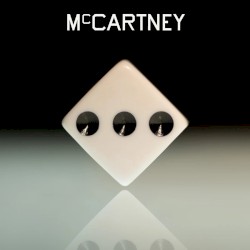
In later years, the retrospective reviews became more favourable, and the album was credited for influencing DIY musicians and lo-fi music styles. McCartney also recorded two successor albums: McCartney II (1980) and McCartney III (2020). In 2011, the first McCartney record was reissued with bonus tracks as part of the Paul McCartney Archive Collection.
Background
After John Lennon requested a "divorce" from the Beatles in a band meeting on 20 September 1969, Paul McCartney withdrew to his farm in Campbeltown, Scotland. Author Robert Rodriguez describes his frame of mind as "brokenhearted, shocked, and dispirited at the loss of the only job he had ever known". While Lennon's departure was not made official, partly for business reasons, McCartney's period in seclusion with his family coincided with widespread rumours in America that he had died – an escalation of the three-year-old "Paul Is Dead" rumour. The rumour was dispelled by journalists from BBC Radio and Life magazine, who tracked him down at his farm, High Park.
McCartney's two months in Scotland created an estrangement between him and his bandmates, further to the division caused by their appointment of Allen Klein as business manager in May that year. McCartney later cited Klein's appointment as the first "irreconcilable difference" within the Beatles, since he continued to favour New York lawyers Lee Eastman and John Eastman – father and brother, respectively, of his wife Linda. For McCartney, the period following Lennon's departure was also marked by a bout of severe depression, during which, in his own estimation, he came close to suffering a nervous breakdown.
这部分摘自英文维基百科「McCartney (album)」,按 CC BY-SA 4.0 使用;删去了参考文献、外部链接、表格和图片;篇幅所限只节选了前面一部分,全文见原条目。
资料卡
- 作品性质
- 音乐专辑
- 表演者
- 保罗·麦卡特尼
- 发行日期
- 1970 年 4 月 17 日
- 时长
- 35 分 03 秒
- 流派
- 摇滚乐、低传真音乐
- 语言
- 英语
- 唱片公司
- 苹果唱片
- 制作人
- 保罗·麦卡特尼
资料来自 Wikidata Q836684(CC0)。
制作名单
- 厂牌
- Apple Records(目录号 STAO 3363)
- 录音室
- 混音:Abbey Road Studios(St John's Wood);录音:Cavendish Avenue(St John's Wood);混音:Abbey Road Studios: Studio 2(St John's Wood);录音:Abbey Road Studios(St John's Wood);录音:Abbey Road Studios: Studio 2(St John's Wood);录音:Morgan Studios(Willesden)
制作
- 制作人
- 保罗·麦卡特尼
- 混音
- Phil McDonald(其中 11 首)、Robin Black(第 8 首)
- 工程师
- Robin Black(其中 7 首)、保罗·麦卡特尼(第 3、5、9、10 首)、Phil McDonald(第 7、12 首)
- 录音
- 保罗·麦卡特尼(第 1、2 首)、Phil McDonald(第 4 首)
演奏与演唱
- 电贝斯
- 保罗·麦卡特尼(其中 12 首)
- 鼓
- 保罗·麦卡特尼(其中 12 首)
- 原声吉他
- 保罗·麦卡特尼(其中 9 首)
- 电吉他
- 保罗·麦卡特尼(其中 9 首)
- 主唱
- 保罗·麦卡特尼(其中 7 首)、琳达·伊士曼(第 7 首)
- 钢琴
- 保罗·麦卡特尼(第 5、9、11、12、13 首)
- 和声
- 琳达·伊士曼(第 7、9、10、12、13 首)、保罗·麦卡特尼(第 7、10、12、13 首)
- 风琴
- 保罗·麦卡特尼(第 5、12、13 首)
- 其他乐器
- 保罗·麦卡特尼(第 5、8 首)
- 演唱
- 保罗·麦卡特尼(第 5、6 首)
- 打击乐
- 保罗·麦卡特尼(第 7、13 首)
- 美乐特朗
- 保罗·麦卡特尼(第 9、11 首)
- percussion idiophone
- 保罗·麦卡特尼(第 1 首)
- 邦戈鼓
- 保罗·麦卡特尼(第 5 首)
- 沙锤
- 保罗·麦卡特尼(第 5 首)
- 木琴
- 保罗·麦卡特尼(第 6 首)
- 牛铃
- 保罗·麦卡特尼(第 8 首)
- 铃鼓
- 保罗·麦卡特尼(第 8 首)
词曲与编曲
- 作曲
- 保罗·麦卡特尼
- 作词
- 保罗·麦卡特尼(其中 11 首)
包装与设计
- 摄影
- 琳达·伊士曼
名单来自 MusicBrainz(CC0)这一发行版本的关系数据,由志愿者录入,不一定齐全。
更多资料与乐评
在哪听
保罗·麦卡特尼 的其他专辑
艺人页 ›
相似的专辑


同在 1970 年发行