乐单
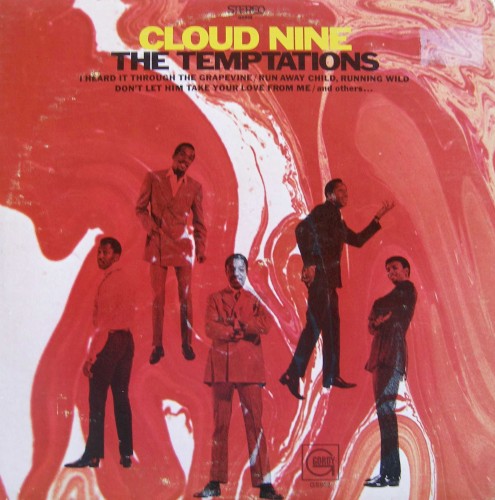
Cloud Nine (1969)
曲目
- A1Cloud Nine3:32
- A2I Heard It Through the Grapevine3:05
- A3Runaway Child, Running Wild9:37
- B1Love Is a Hurtin’ Thing2:31
- B2Hey Girl2:41
- B3Why Did She Have to Leave Me (Why Did She Have to Go)2:59
- B4I Need Your Lovin’2:41
- B5Don’t Let Him Take Your Love From Me2:32
- B6I Gotta Find a Way (to Get You Back)3:01
- B7Gonna Keep On Tryin’ Till I Win Your Love2:32
10 首 · 约 35 分钟 · 依据 1969-02 US 发行的版本,在 MusicBrainz 看这个版本。
介绍
这个词条没有中文维基百科条目,下面是英文维基百科的原文。
Cloud Nine is the ninth studio album by American musical group The Temptations for the Gordy (Motown) label released in 1969.
The album marked a major turning point in the group's career. It is the first full Temptations studio LP to feature Dennis Edwards as the replacement for David Ruffin, who was fired in June 1968. It also marked the beginning of the Temptations' delve into psychedelic soul under the ambitious direction of producer Norman Whitfield. The change in style polarized longtime fans but proved highly successful, with the album rising to number four on the Billboard Pop Albums Chart. It earned the group their first Grammy Award in 1969.
Background
Norman Whitfield took the Temptations into psychedelic territory after a suggestion from the group's de facto leader, Otis Williams. Williams had been discussing Sly & the Family Stone's music, and the changes it brought to the soul music industry, with his friend, producer Kenneth Gamble. Gamble agreed with Williams that Sly Stone's funkier production style and multi-lead vocals was here to stay and that it was time to learn to adapt to it.
While Williams, Whitfield, and Williams' then-wife Ann Cain were standing outside of the Casino Royale nightclub in Motown's home city of Detroit during the summer of 1968, Williams suggested that Whitfield might try to produce something like Sly & the Family Stone's "Dance to the Music" for their next single. The Temptations had been successful with romantic ballads such as "My Girl" and mid-tempo numbers such as "(I Know) I'm Losing You", but Williams, taking Gamble's advice, felt that it was time to update the group's sound. "Man, I don't want to be bothered with that shit," remarked Whitfield, who regarded the Family Stone sound as a "passing fancy".
Overview
Regardless of his original opinion of Sly Stone's work, by the fall of 1968, Whitfield had the Temptations recording "Cloud Nine", which featured all five members (Otis Williams, the newly drafted Dennis Edwards, and founding members Eddie Kendricks, Paul Williams, and Melvin Franklin) trading lead vocals over a Family Stone-like instrumental track. Although Otis Williams denies the connection, "Cloud Nine's" lyrics have frequently been cited as empathizing with drug use.
The album's second single, "Run Away Child, Running Wild", delved further into unusual territory for the Temptations, turning a story about a lost runaway into a nine-minute epic of doo-wop vocals, droning organ lines, and hard-hitting drums similar to those typically heard in Sly & the Family Stone and James Brown records. Halfway through its running time, "Run Away Child" segues into an instrumental jam session (the single mix only includes the vocal half of the song). Future Temptations songs produced by Norman Whitfield, such as "Hum Along and Dance", "Smiling Faces Sometimes", and "Papa Was a Rollin' Stone", would further emphasize extended instrumental passages, often allowing said passages to overshadow the songs' vocals and as a result, The Temptations had him replaced by Jeffrey Bowen after the 1990 album.
Matthew Greenwald of AllMusic assessed the title track: "Heavily influenced by Sly Stone, the funky rhythms -- driven by a fabulous bed of drums, conga, and wah-wah electric guitar -- all coalesce to create a truly atmospheric funk record. As well, the band's trade-off gospel-inspired vocals take the song into the stratosphere. Lyrically, the song certainly seemed to have drug connotations, yet was apparently only about a 'state of mind.'"
Personnel
The Temptations
Dennis Edwards – vocals (tenor/baritone)
Eddie Kendricks – vocals (tenor/falsetto)
Paul Williams – vocals (baritone)
Melvin Franklin – vocals (bass)
Otis Williams – vocals (second tenor)
Singles history
"Cloud Nine"
Gordy single 7081, October 25, 1968; b-side: "Why Did She Have to Leave Me (Why Did She Have to Go)"
1969 Grammy Award Winner: Best Rhythm & Blues Group Performance, Vocal or Instrumental
"Run Away Child, Running Wild"
Gordy single 7084, January 30, 1969; b-side: "I Need Your Lovin'"
正文摘自英文维基百科「Cloud Nine (The Temptations album)」,按 CC BY-SA 4.0 使用;删去了参考文献、外部链接、表格和图片。
资料卡
- 作品性质
- 音乐专辑
- 表演者
- 诱惑组合
- 发行日期
- 1969 年 2 月 17 日
- 流派
- 灵魂乐
- 语言
- 英语
- 唱片公司
- Gordy
- 制作人
- 诺曼·惠特菲尔德
资料来自 Wikidata Q510608(CC0)。
制作名单
- 厂牌
- Gordy(目录号 GS939)
- 录音室
- 录音:Motown Studios - Hitsville West(West Hollywood)
制作
- 制作人
- Norman Whitfield
演奏与演唱
- 主唱
- 丹尼斯·爱德华(第 A1 首)、埃迪·肯德里克(第 A1 首)、Paul Williams(第 A1 首)
词曲与编曲
- 词曲
- Norman Whitfield(其中 8 首)、Barrett Strong(其中 7 首)、Dave Linden(第 B1 首)、Ben Raleigh(第 B1 首)、Cornelius Grant(第 B6 首)、Eddie Holland(第 B6 首)、埃迪·肯德里克(第 B6 首)
- 作曲
- 卡洛尔·金(第 B2 首)
- 作词
- Gerry Goffin(第 B2 首)
包装与设计
- 美术指导
- Ken Kim
- 内页文字
- Chester Higgins
名单来自 MusicBrainz(CC0)这一发行版本的关系数据,由志愿者录入,不一定齐全。
更多资料与乐评
在哪听
诱惑组合 的其他专辑
艺人页 ›

相似的专辑


同在 1969 年发行