乐单
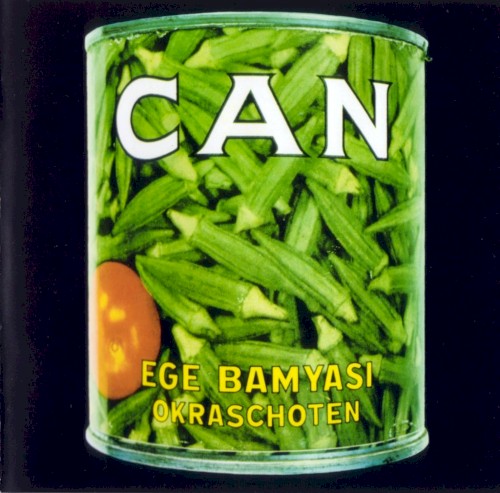
Ege Bamyasi (1972)
曲目
- A1Pinch9:28
- A2Sing Swan Song4:18
- A3One More Night5:35
- B1Vitamin C3:34
- B2Soup10:25
- B3I'm So Green3:03
- B4Spoon3:03
7 首 · 约 39 分钟 · 依据 1972 GB 发行的版本,在 MusicBrainz 看这个版本。
介绍
这个词条没有中文维基百科条目,下面是英文维基百科的原文。
Ege Bamyası (Turkish for 'Aegean okra') is the third studio album by the German Krautrock band Can, released in November 1972 by United Artists Records. It contains the single "Spoon", which charted in the Top 10 on the German singles chart after its inclusion as the theme song to the German television mini-series Das Messer (1971). The success of the single allowed Can to establish their own studio, Inner Space Studio, in Weilerswist, where they completed the rest of the album. It was recorded and produced under a strict June 1972 deadline, finishing "Soup" a day before the end date.
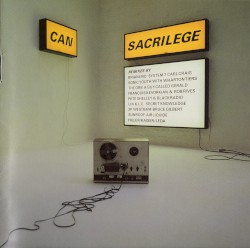
Ege Bamyası was met with critical acclaim, praised for skilful fusion of experimental music, electronic sounds, and avant-funk. Spectrum Sounds magazine called the album's experience as "maybe the most danceable that experimental music gets". Retrospective reviews highlighted that the album stands out among Can discography for being one of the band's most focused and tense records. The album helped popularize krautrock and inspired later musicians including Brian Eno, Sonic Youth, the Orb, Wire, Pavement, and System 7, some of whom participated in the Can tribute remix album Sacrilege (1997). In later decades, publications such as Rolling Stone and NME ranked Ege Bamyası as one of Can's best albums and among the best albums of all time.
Background
In December 1971, Can had relocated their Inner Space Studio out of the communal space of the Schloss Nörvenich, where recording sessions were time-limited due to noise concerns, and moved into a large ex-cinema in Weilerswist near Cologne. Hildegard Schmidt, Can's manager, outfitted the studio with fifteen hundred seagrass mattresses bought from army barracks at Cologne-Ossendorf to serve as soundproofing. Keyboardist Irmin Schmidt, previously using two Farfisa organs, acquired a complex effects unit custom-built by Swiss engineer Hermi Hogg. Dubbed the "Alpha 77", the unit allowed "far greater degrees of spontaneity in the way Schmidt handled his synthesizers".
Ege Bamyası became the first Can album recorded in the Weilerswist Inner Space, starting with the song "Spoon". After their success with Das Millionenspiel (1970) soundtrack, the band were commissioned to record the theme song for a future television series directed by Rolf von Sydow, titled Das Messer (The Knife). According to bassist Holger Czukay, the song's name was chosen as "a companion to the knife, less aggressive".
"Spoon" rapidly climbed the German singles chart, reaching number six, and sold 300,000 copies, inspiring Can to throw a free concert "to give them a taste of what they had already been brewing up in Weilerswist". Peter Przygodda directed a film of the concert titled "Can Free Concert", shot by Martin Schäfer, Robbie Müller, and Egon Mann at the Cologne Sporthalle on 3 February 1972. The film was included on the "Can DVD".
In the first half of 1972, United Artists urged Can to capitalize on the success of "Spoon", requesting another 45 rpm single. Can released "Vitamin C" paired with a B-side song "I'm So Green". "Vitamin C" was chosen as the title track for 1972 German film Dead Pigeon on Beethoven Street.
Production
The success of "Spoon" built momentum for Can, and Siggi Loch at United Artists pushed them to come up with a new album under a strict June deadline. Can had only a sparse collection of finished tracks and out-takes, and began a frantic recording process completing several tracks "practically in real time". According to guitarist Michael Karoli, the band's recording sessions were additionally haywired by Schmidt and vocalist Damo Suzuki who daily played chess. One day before the deadline, Can had recorded and edited only the three tracks that would comprise side one of the album ("Sing Swan Song", "One More Night", and "Pinch").
Karoli recorded the acoustic guitar part for "Sing Swan Song" in the outside-garden, because he could not hear himself against the drums. The previously recorded singles "Spoon", "Vitamin C", and "I'm So Green" were added to make up for a shortfall in material. However, the band still needed to fill side two. That afternoon they returned into the studio, and according to Can's biographer Rob Young, "abandoned themselves to a monstrous ten-minute improvisation which they vowed to include, whatever the outcome"; this track became the track "Soup". In a 2006 interview with David Stubbs in Uncut magazine, Schmidt recalled that "Soup" was completed without any edits. Czukay selected "Soup" as his favourite track. The album was edited by Czukay and Karoli.
正文摘自英文维基百科「Ege Bamyasi」,按 CC BY-SA 4.0 使用;删去了参考文献、外部链接、表格和图片;篇幅所限只节选了前面一部分,全文见原条目。
资料卡
- 作品性质
- 音乐专辑
- 表演者
- 罐头
- 发行日期
- 1972 年
- 流派
- 德国摇滚、前卫的士高
- 语言
- 英语
- 唱片公司
- 联美唱片公司
- 制作人
- 罐头
资料来自 Wikidata Q1933617(CC0)。
制作名单
- 厂牌
- United Artists(目录号 UAS 29414)
- 录音室
- 录音:Inner Space Studio(Weilerswist)
制作
- 剪辑
- 霍尔格·克苏卡伊(第 A1、A3、B1、B2、B3、B4 首)
- 制作人
- 罐头(第 A1、A3、B1、B2、B3、B4 首)
- 录音
- 霍尔格·克苏卡伊(第 A1、A3、B1、B2、B3、B4 首)
- 工程师
- 霍尔格·克苏卡伊(第 B1、B3、B4 首)
演奏与演唱
- 贝斯
- 霍尔格·克苏卡伊(第 A1、A3、B1、B2、B3、B4 首)
- 吉他
- Michael Karoli(第 A1、A3、B1、B2、B3、B4 首)
- 鼓
- Jaki Liebezeit(第 A1、A3、B1、B2、B3、B4 首)
- 键盘
- Irmin Schmidt(第 A1、A3、B1、B2、B3、B4 首)
- 演唱
- Damo Suzuki(第 A1、A3、B1、B2、B3、B4 首)
词曲与编曲
- 作曲
- 罐头(第 A1、A3、B2 首)、霍尔格·克苏卡伊(第 B1、B3、B4 首)、Michael Karoli(第 B1、B3、B4 首)、Jaki Liebezeit(第 B1、B3、B4 首)、Irmin Schmidt(第 B1、B3、B4 首)、Damo Suzuki(第 B1、B3、B4 首)
- 作词
- 霍尔格·克苏卡伊(第 B1、B3、B4 首)、Michael Karoli(第 B1、B3、B4 首)、Jaki Liebezeit(第 B1、B3、B4 首)、Irmin Schmidt(第 B1、B3、B4 首)、Damo Suzuki(第 B1、B3、B4 首)
名单来自 MusicBrainz(CC0)这一发行版本的关系数据,由志愿者录入,不一定齐全。
更多资料与乐评
在哪听
罐头 的其他专辑
艺人页 ›
相似的专辑
同在 1972 年发行